Background: The Pressing Need for Interconnect Innovation in AI Data Centers
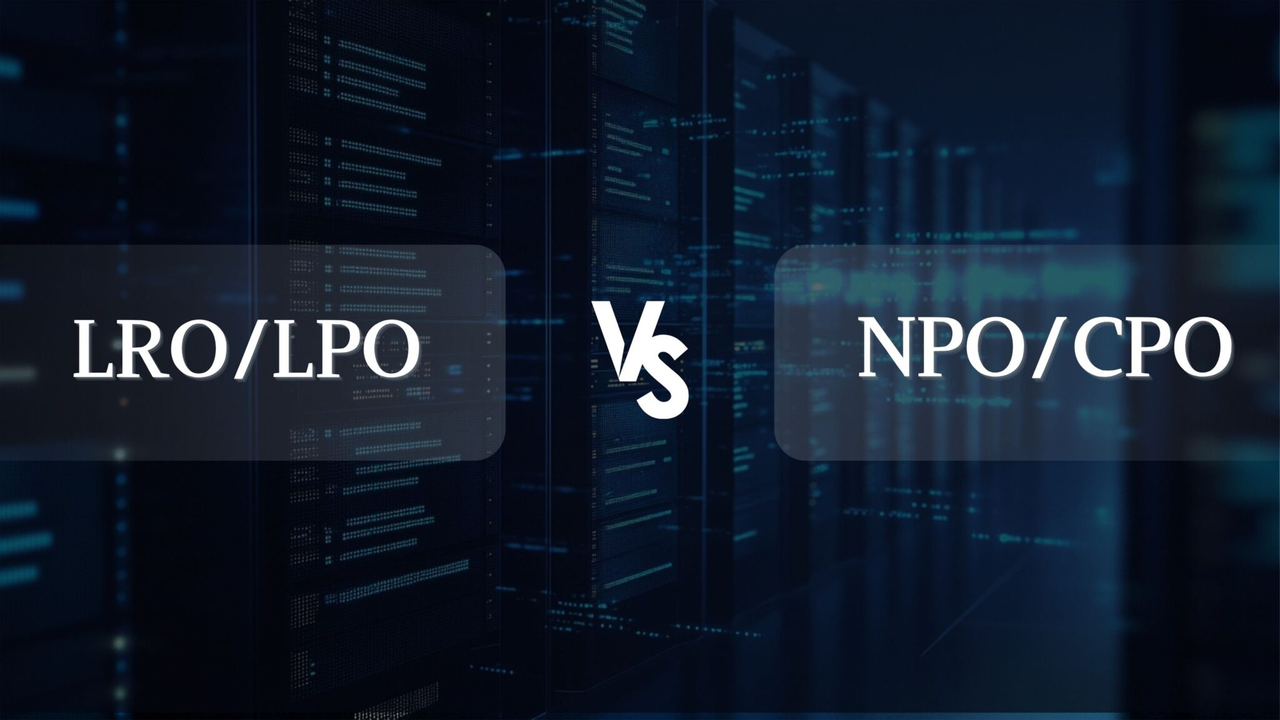
The explosive growth of AI and high-performance computing (HPC) has exposed the limitations of traditional optical interconnects in data centers. As data rates push towards 800G, 1.6T, and beyond, conventional pluggable transceivers, often relying on power-hungry Digital Signal Processors (DSPs), struggle with increasing power consumption, latency, and challenges in signal integrity over electrical traces. This has spurred the development of several new optical interconnect architectures—LPO, NPO, and CPO—each offering different trade-offs in performance, power, cost, and integration complexity, tailored for the unique demands of AI workloads.
Key Findings: A Comparative Analysis of Emerging Optical Interconnects
The landscape of optical interconnect technologies is diversifying to address the specific needs of AI data centers:
- Linear-drive Pluggable Optics (LPO):
– Mechanism: LPO modules significantly reduce or eliminate the DSP, shifting the complex signal equalization tasks to the host switch ASIC’s SerDes (Serializer/Deserializer). The optical transceivers operate in a ‘linear’ fashion, directly converting electrical signals to optical without significant internal processing.
– Advantages: Offers substantial reductions in power consumption (up to 50% compared to DSP-based modules) and latency, making it highly attractive for short-distance, high-quality links within a rack. Lower manufacturing costs are also a key benefit.
– Limitations: Performance is highly dependent on the capabilities of the host ASIC’s SerDes and requires stringent control over the electrical channel quality. - Near-Packaged Optics (NPO):
– Mechanism: NPO places the optical engine much closer to the switch ASIC on the same PCB, but typically in a separate package. This reduces the electrical trace length compared to pluggable optics, improving signal integrity before the optical conversion.
– Advantages: Provides a balance between the serviceability of pluggable optics and the efficiency gains of CPO. It improves power efficiency, thermal management, and system density by reducing electrical loss and complexity, without the extreme integration challenges of CPO.
– Limitations: Still involves some electrical traces, meaning it cannot achieve the ultimate efficiency and density of full CPO. It is considered an evolutionary step towards CPO. - Co-Packaged Optics (CPO):
– Mechanism: CPO integrates the optical devices and the switch ASIC directly within the same physical package. Electrical signals travel minimal distances (often millimeters) before being converted to light.
– Advantages: Delivers the highest power efficiency, superior signal integrity, lowest latency, and maximum system density by effectively eliminating lengthy electrical traces. It’s capable of reducing interconnect power consumption by 60-70%.
– Limitations: Represents the pinnacle of engineering complexity, posing significant challenges in manufacturing, testing, and thermal management. Full-scale deployment is anticipated post-2026, with some small batch shipments expected by late 2026 for specific scale-out scenarios.
Technical Significance & Outlook: Optimizing for AI’s Demands
The choice among LPO, NPO, and CPO hinges on balancing specific application requirements for distance, bandwidth, power budget, and system complexity. LPO is ideal for short-reach, power-sensitive intra-rack connections. NPO offers a pragmatic upgrade path for improved efficiency and density while retaining modularity. CPO is the long-term solution for ultimate performance and integration in hyperscale AI superclusters. The industry’s progression is expected to move sequentially from pluggable to LPO/NPO, and then towards CPO and eventually optical I/O. This multi-faceted approach ensures that optical interconnect technology continues to evolve, providing the necessary foundation for the sustained growth and increasing demands of the AI era, mitigating both the power and bandwidth walls.
Source: https://www.optcore.net/lpo-lro-cpo-npo-optics-difference-w6/





Comments