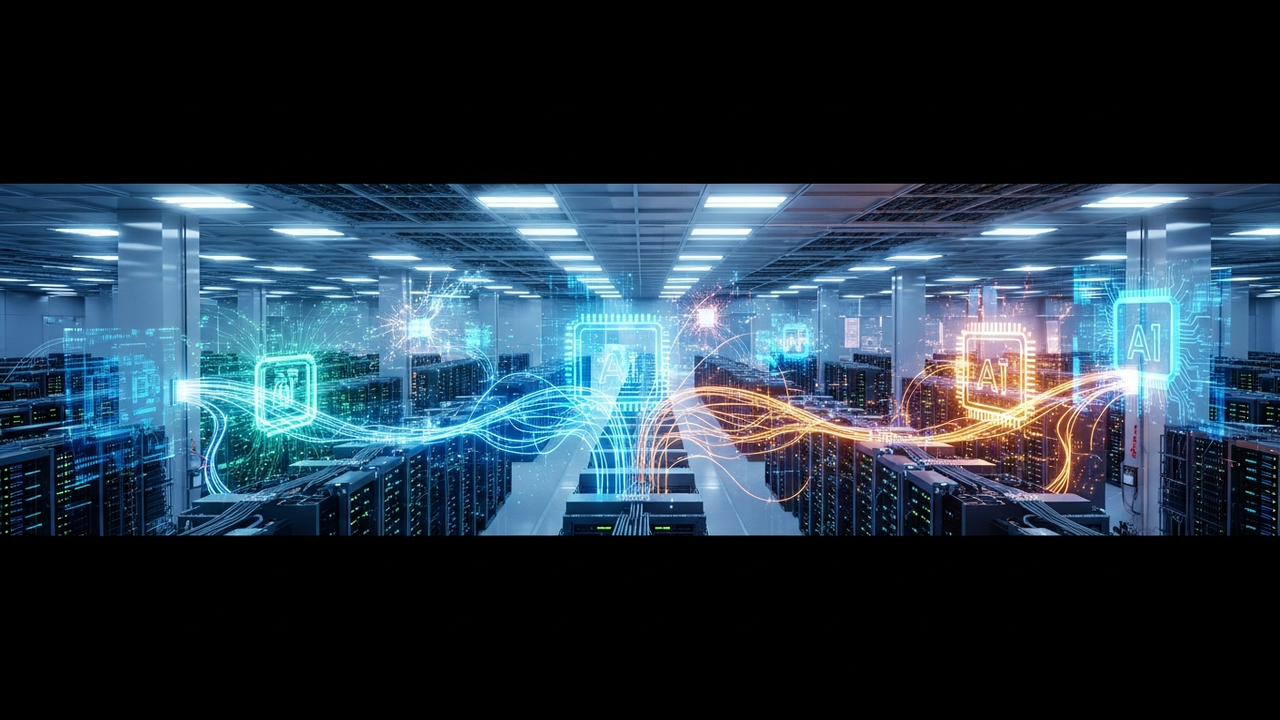
Background: The Critical Role of Interconnects in Scaling AI
The explosive growth of AI, particularly in applications requiring massive parallel processing with GPU-dense clusters, has made optical interconnects an indispensable component of modern data centers. The efficiency and speed of data transfer directly correlate with the performance and training efficiency of AI models. As electrical interconnects struggle to meet the escalating demands for bandwidth, low latency, and energy efficiency, the market for optical interconnect solutions specifically designed for AI data centers is experiencing significant expansion.
Key Findings: Industry Leaders Drive Optical Innovation for AI
The current surge in the AI data center optical interconnect market is characterized by substantial investments and technological advancements from leading industry players:
- NVIDIA, Intel, and Cisco’s Strategic Investments: These tech giants are aggressively expanding their development and deployment of advanced optical interconnect solutions. Their focus areas include:
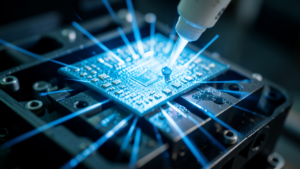
- Co-Packaged Optical (CPO) Interconnects: Integrating optical engines directly within the same package as the compute or switch ASICs to drastically reduce electrical trace lengths, thereby improving power efficiency and bandwidth density.
- Silicon Photonics-Based Solutions: Leveraging the scalability and cost-effectiveness of silicon manufacturing processes to produce high-performance optical components, enabling higher integration and mass production.
- High-Speed Optical Networking: Developing and deploying networks capable of supporting ultra-high data rates (e.g., 800G, 1.6T, and beyond) essential for inter-GPU communication and inter-rack connectivity in AI clusters.
- NTT’s IOWN Initiative: In Japan, NTT is at the forefront with its Innovative Optical and Wireless Network (IOWN) initiative. IOWN aims to realize an all-photonics network that promises ultra-low latency, ultra-high capacity, and ultra-low power consumption from end-to-end. For AI data center interconnects, IOWN’s all-optical approach is particularly significant, as it can enable unprecedented levels of real-time processing and accelerate the training of complex AI models by minimizing propagation delays and eliminating electrical-optical-electrical conversions.
Technical Significance & Outlook: A Foundation for Future AI
The robust growth in the AI data center optical interconnect market signifies a fundamental shift in infrastructure design, recognizing optics as a critical enabler for future AI capabilities. These advancements are technically significant because they:
- Unlock AI Performance: Ultra-high bandwidth and ultra-low latency optical links are essential to fully utilize the processing power of next-generation AI accelerators.
- Improve Energy Efficiency: Solutions like CPO and all-photonics networks dramatically reduce the power consumption associated with data movement, which is crucial for the sustainability of gigawatt-scale AI factories.
- Enhance Scalability: Integrated optical solutions provide the density and performance required to scale AI clusters to thousands or tens of thousands of XPUs.
The collaborative efforts of chip manufacturers and network providers, alongside visionary initiatives like IOWN, are collectively laying the groundwork for an AI ecosystem that is more powerful, efficient, and responsive. This sustained innovation in optical interconnect technology is not just supporting the current AI revolution but actively shaping its future trajectory.
Source: https://www.openpr.com/news/4520496/optical-interconnect-in-ai-data-centers-market-to-surge-as





Comments