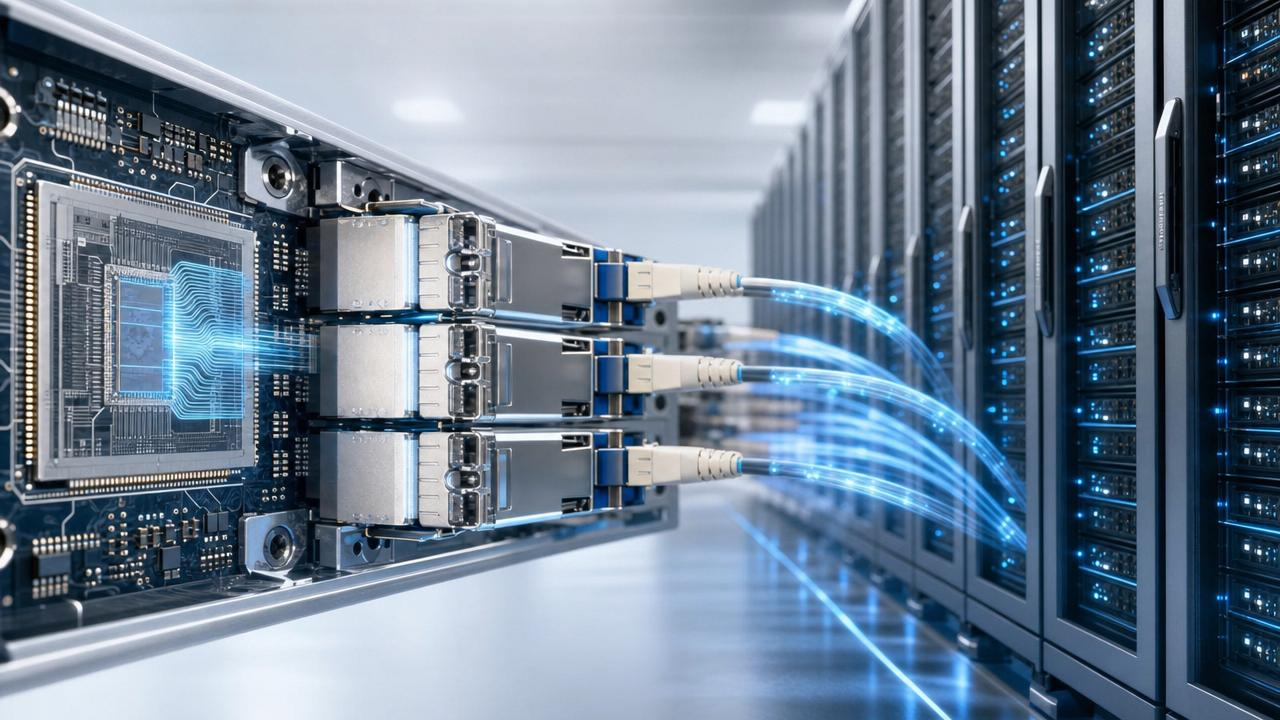
Background: The Urgent Need for Scalable Optical Interconnects
The exponential growth of data-intensive applications like AI, cloud computing, and 5G/6G is driving an unprecedented demand for high-speed, high-density, and energy-efficient data interconnects. Traditional electrical signaling is encountering fundamental physical limitations, pushing the industry towards optical solutions. Among these, silicon photonics stands out due to its compatibility with established CMOS manufacturing processes, promising cost-effective, high-volume production of integrated optical components.
Key Findings: Silicon Photonics’ Performance and Practical Considerations
Silicon photonics technology has matured significantly, demonstrating robust performance in real-world data links while outlining a clear trajectory for future advancements:
- Current Capabilities: 400G and 800G: Silicon photonics is already a proven technology for powering 400G and 800G data links, serving as a critical enabler for high-speed transceivers and modules deployed in modern data centers and telecommunications networks. This represents a substantial leap from previous generations of optical interconnects.
- Roadmap to 1.6T and Beyond: A clear and ambitious roadmap exists for silicon photonics to achieve 1.6T and even higher data rates. This continuous evolution is driven by ongoing advancements in silicon-based optical modulators, detectors, and waveguiding structures, promising even greater bandwidth density and lower power per bit.
- Enabling AI and Advanced Computing: For AI computing and other advanced semiconductor platforms, silicon photonics offers a practical and scalable path to superior interconnects. Its benefits extend across various domains:
- Data Centers: Providing faster and denser inter-rack and intra-rack connectivity for GPU clusters and AI accelerators.
- Telecom Infrastructure: Enhancing the capacity and reach of metropolitan and long-haul networks.
- High-Performance Industrial Systems: Enabling high-speed sensing and control systems with greater reliability.
However, the practical assessment of silicon photonics solutions goes beyond just raw speed. Several other critical criteria determine its real-world viability and adoption:
- Acceptable Power Consumption: High-speed optical modules must also be energy-efficient to manage the operational costs and environmental impact of large data centers.
- Thermal Performance: As integration density increases, effective thermal management becomes crucial to ensure long-term reliability.
- Interoperability: Seamless compatibility with existing and future networking standards and equipment from different vendors is essential for broad market acceptance.
- Manufacturability and Reliability: The ability to mass-produce high-quality, reliable components at scale is a foundational requirement for any widespread technology.
- Supply-Chain Maturity: A robust and stable supply chain is necessary to support high-volume deployments and ensure long-term availability.
Technical Significance & Outlook: Foundation for Future Digital Infrastructure
Silicon photonics is establishing itself as a foundational technology for the next generation of digital infrastructure. Its ability to deliver high bandwidth, efficiency, and cost-effectiveness makes it indispensable for coping with the data explosion driven by AI, cloud, and 5G/6G. Continued advancements in integration, power efficiency, and adaptability to diverse applications will be key. Silicon photonics is poised to play an increasingly vital role in transforming our digital world into one that is faster, more sustainable, and more capable of supporting the complex demands of future technological innovations.







Comments