Key Findings
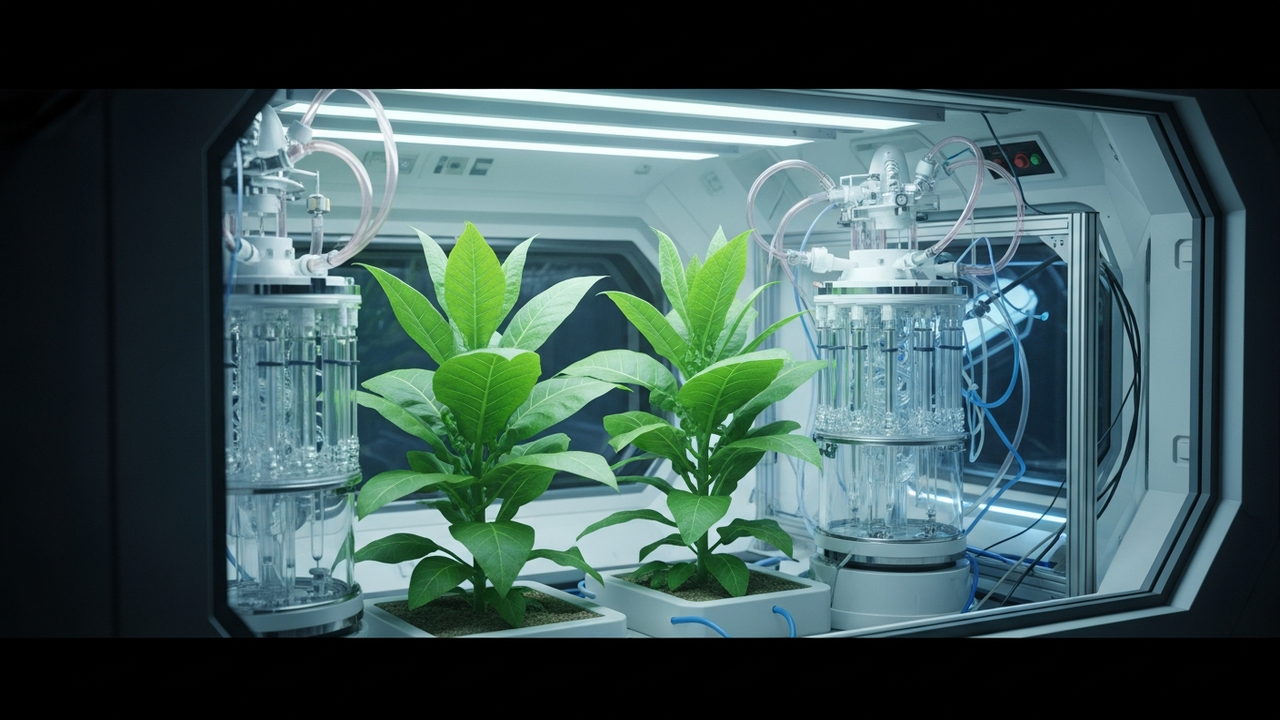
NASA’s latest research, reported by The Times of India on July 24, 2026, presents a potential revolution in space medicine production. The study demonstrates the feasibility of creating ‘living pharmaceutical factories’ in space, capable of producing therapeutic proteins on-demand by combining a relative of the tobacco plant with a harmless plant virus. This represents a groundbreaking technological breakthrough for long-duration deep-space missions, enabling astronauts to produce necessary medicines as needed, independent of Earth-based resupply.
Technical Details
This NASA research is based on the biotechnology principle known as ‘molecular farming.’ Specifically, a close relative of the tobacco plant (Nicotiana benthamiana) serves as a host, which is infected with a genetically modified, harmless plant virus (e.g., a Tobacco mosaic virus-based vector). This virus delivers genetic information for a specific therapeutic protein into the plant cells, prompting the plant to utilize its own biological machinery to mass-produce the desired protein. While the unique conditions of space, such as microgravity and radiation, could potentially affect plant growth and protein expression, NASA’s research has demonstrated the ability to efficiently produce high-quality therapeutic proteins under these challenges. The system is designed for relatively simple operation and low energy consumption, making it suitable for deployment on spacecraft or lunar bases.
Background & Context
In current space missions, pharmaceuticals are pre-loaded and transported from Earth. However, medicines have expiration dates, posing a risk of shortages during extended deep-space missions. Furthermore, if unexpected medical needs arise in an emergency, resupply from Earth is impractical. Therefore, establishing on-site pharmaceutical production capabilities has become an urgent challenge to ensure astronaut health and mission success. NASA’s current research offers an innovative biotechnological solution to this challenge, opening new possibilities for space medicine and life support systems.
Strategic Significance & Outlook
This on-demand pharmaceutical manufacturing technology will be a critical element for maintaining astronaut health and safety during future long-duration human missions to the Moon and Mars. By reducing reliance on Earth-based pharmaceutical supplies, it enhances mission self-sufficiency and significantly lowers transportation costs and risks. Moving forward, research will focus on clinical trials (to confirm safety and efficacy on Earth) and verifying long-term production stability in the space environment. Efforts will also be made to diversify the types of pharmaceuticals that can be produced. This breakthrough is expected to significantly impact the space biotechnology market, accelerating advancements in space life science research and space pharmacolog y, making it a notable area for investors.
Get our weekly technology intelligence — free
Receive an infographic that lets you judge at a glance whether each field’s analysis report is worth reading.
Subscribe Free — Weekly Tech Intelligence
By subscribing, you’ll receive Troy-Technical’s weekly technology intelligence newsletter.
- Your email and selected fields are used only to deliver the newsletter.
- We never share your information with third parties.
- You can unsubscribe anytime via the link in each email.
See our Privacy Policy for details.
Takes about a minute · Unsubscribe anytime




Comments