Background and Context
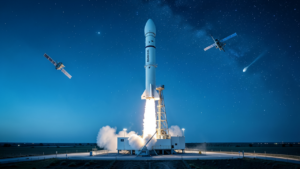
Thousands of artificial satellites underpin modern information infrastructure, yet many face operational lifespan limits or malfunctions, posing a growing risk of contributing to space debris. On-orbit servicing (OOS) technology is therefore crucial for addressing these challenges and maximizing the value and utility of critical space assets. While OOS technology development has historically been led by the U.S. and Europe, Professor Gao’s research highlights a significant shift, with the Asian region, particularly Hong Kong, now driving its own technological innovations in this burgeoning field. This underscores intensifying international competition in the space industry and Asia’s emergence as a pivotal player.
Key Findings
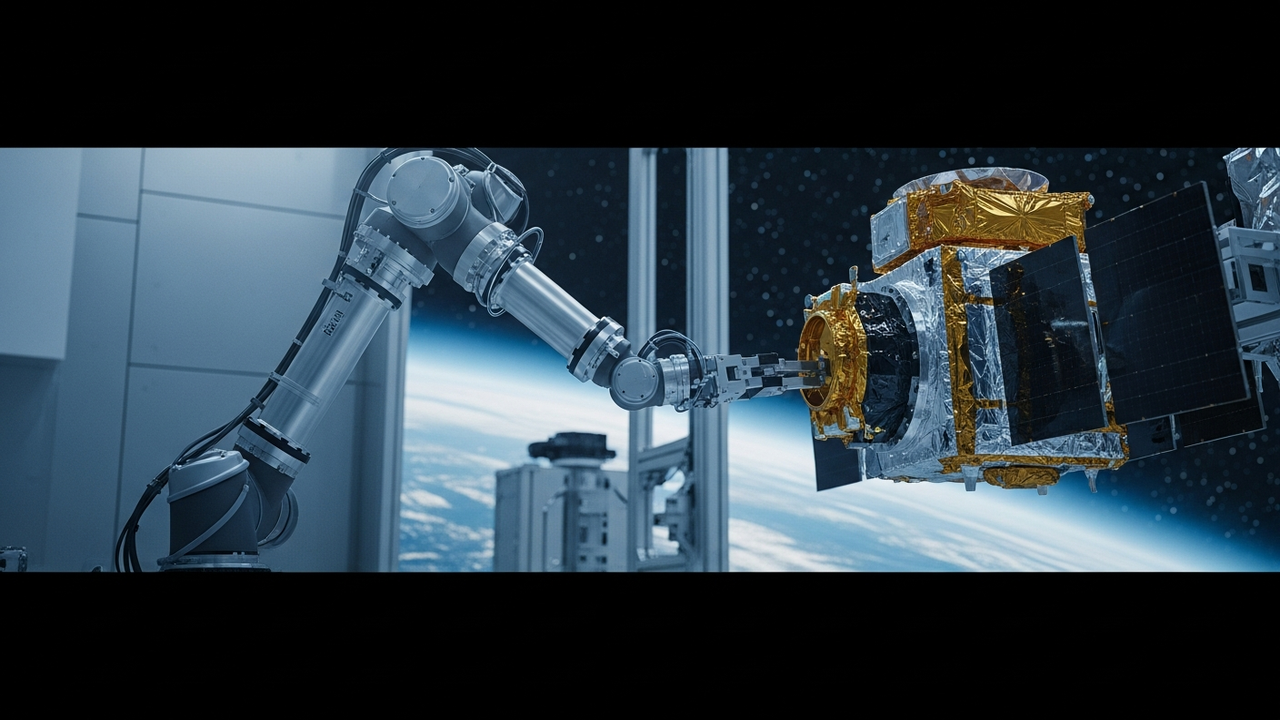
In an announcement on July 21, 2026, the Hong Kong University of Science and Technology (HKUST) underscored Professor Gao Yang’s pivotal role in advancing space exploration through the development of groundbreaking robotic arm technology designed for satellite servicing. Professor Gao is a key contributor to a Hong Kong-led spacecraft project targeting an on-orbit demonstration by 2029, a mission poised to dramatically enhance in-space service capabilities and contribute to space sustainability. This innovative technology is anticipated to be indispensable for diverse missions, including the repair of malfunctioning satellites, in-orbit refueling, system upgrades, and even the active removal of hazardous space debris.
Technical Details
The robotic arm technology developed by Professor Gao’s research team integrates advanced sensing capabilities, precise manipulation, and sophisticated autonomous control algorithms. Engineered to operate reliably under the extreme conditions of space, the robotic arm is designed for accurately capturing target satellites and executing delicate in-orbit tasks. Specifically, the system combines force-feedback sensors with an AI-driven vision system, enabling it to safely and efficiently approach and grapple non-cooperative satellites—those not originally designed with servicing interfaces. Furthermore, its design incorporates flexible joint mechanisms and lightweight materials, achieving both high kinematic performance and robust operation, thereby enabling complex on-orbit operations with significantly reduced risk.
Strategic Significance and Outlook
Professor Gao’s research, with its concrete roadmap targeting an on-orbit demonstration by 2029, positions this technology firmly on a path toward practical application. Successful deployment is expected to unlock new service models for satellite operators, contributing to significantly reduced operational costs and enhanced mission flexibility. Beyond commercial benefits, the technology will directly contribute to international efforts to mitigate the space debris problem, accelerating the realization of sustainable space utilization. Looking ahead, the underlying technology holds the potential to evolve into general-purpose robotic systems for construction and maintenance work, not only in Earth orbit but also on future lunar bases and Mars missions. For investors, this development signals significant opportunities in rapidly growing markets such as space robotics, in-orbit servicing (IOS), and broader space infrastructure.
Source: https://seng.hkust.edu.hk/news/20260721/prof-gao-yangs-high-flying-mission-advance-space-exploration
Get our weekly technology intelligence — free
Receive an infographic that lets you judge at a glance whether each field’s analysis report is worth reading.
Subscribe Free — Weekly Tech Intelligence
By subscribing, you’ll receive Troy-Technical’s weekly technology intelligence newsletter.
- Your email and selected fields are used only to deliver the newsletter.
- We never share your information with third parties.
- You can unsubscribe anytime via the link in each email.
See our Privacy Policy for details.
Takes about a minute · Unsubscribe anytime




Comments