Key Findings
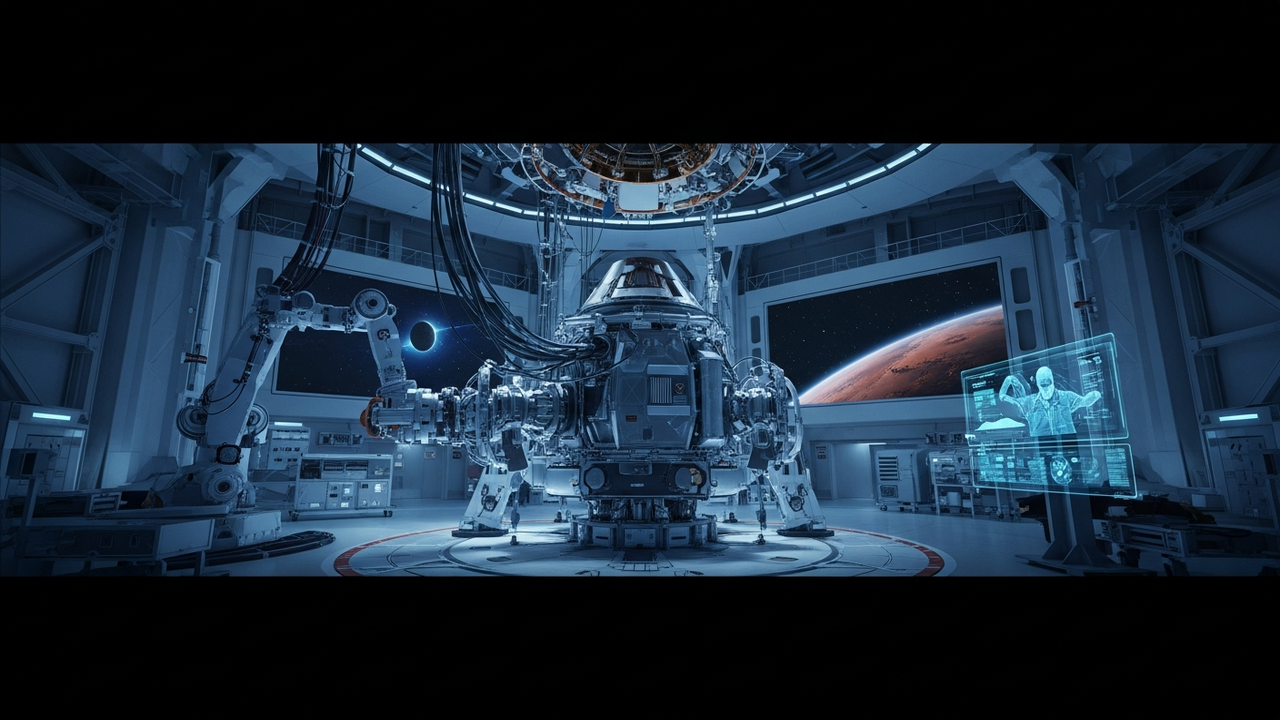
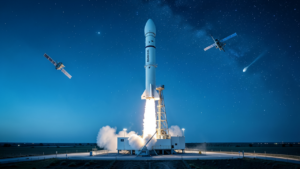
NASA has unveiled plans for a groundbreaking nuclear propulsion Mars mission, the ‘Space Reactor-1 (SR-1) Freedom,’ with an allocated budget exceeding $2 billion and targeting a launch in late 2028. This mission is poised to be a pivotal milestone in space exploration, representing the maiden flight of an interplanetary spacecraft powered by fission propulsion.
Mission Details and Technology
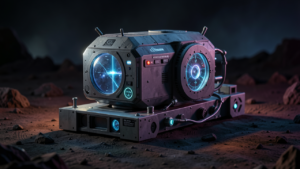
The SR-1 Freedom aims to leverage Nuclear Electric Propulsion (NEP) or Nuclear Thermal Propulsion (NTP) technology to achieve significantly shorter transit times to Mars compared to conventional chemical propulsion rockets. Nuclear propulsion dramatically enhances propellant efficiency, allowing for greater thrust generation over longer durations with the same amount of fuel, or the transport of larger payloads within the same mission timeline. This offers a dual benefit for crewed Mars missions: reducing astronaut exposure to space radiation and increasing the capacity for transporting vital supplies and equipment.
The SR-1 Freedom mission will also carry NASA’s next Mars helicopter mission, ‘SkyFall.’ SkyFall is tasked with flying within the Martian atmosphere to scout potential landing sites for future crewed Mars exploration missions, collecting detailed topographical data and scientific information. Thus, SR-1 Freedom will serve as a multifaceted mission, combining both technological demonstration and scientific exploration.
Background & Industry Context
A crewed mission to Mars represents humanity’s next grand objective in space exploration, yet its realization faces numerous challenges, including extended transit times, the need for massive cargo transport, and protection from cosmic radiation. With conventional chemical propulsion, a one-way trip to Mars typically takes about 7 to 9 months, which exacerbates health risks for astronauts and increases mission costs. Nuclear propulsion has long been studied as one of the most promising solutions to these challenges, but its complex technology and safety considerations have hindered its practical application in actual space missions. NASA’s SR-1 Freedom project signifies a breakthrough in this field, poised to significantly contribute to the operationalization of nuclear propulsion technology.
Strategic Significance & Outlook
The success of the SR-1 Freedom mission will dramatically shorten the timeline for human Mars exploration, making humanity’s deep space ventures a more tangible reality. Once nuclear propulsion technology is demonstrated, it will open new possibilities not only for Mars but also for missions to the outer solar system, more efficient space resource extraction, and even space tourism. This mission is expected to push the boundaries of space engineering and serve as a cornerstone for exponentially expanding humanity’s sphere of activity in space. In the context of global space exploration competition, nuclear propulsion is poised to become the next ‘game-changer’ technology.
Source: https://payloadspace.com/nasa-puts-2b-price-tag-on-nuclear-mars-mission/
Get our weekly technology intelligence — free
Receive an infographic that lets you judge at a glance whether each field’s analysis report is worth reading.
Subscribe Free — Weekly Tech Intelligence
By subscribing, you’ll receive Troy-Technical’s weekly technology intelligence newsletter.
- Your email and selected fields are used only to deliver the newsletter.
- We never share your information with third parties.
- You can unsubscribe anytime via the link in each email.
See our Privacy Policy for details.
Takes about a minute · Unsubscribe anytime



Comments