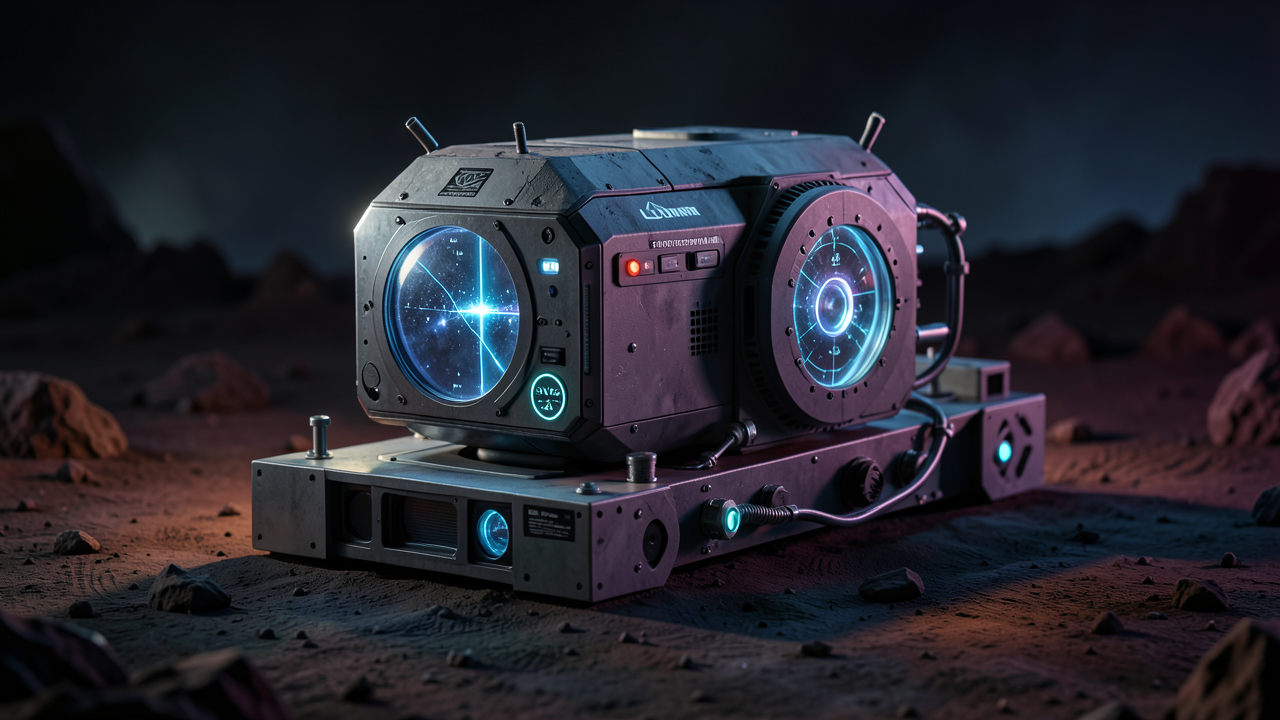
Key Findings: IBM and NASA Open-Source Multimodal AI ‘Lunar Foundation Model’ to Revolutionize Moon Mapping and Exploration
IBM and NASA have jointly announced the open-sourcing of the ‘NASA-IBM Lunar Foundation Model,’ an innovative multimodal AI model specifically designed for advanced Moon mapping. This groundbreaking model integrates decades of comprehensive data from both U.S. and Japanese lunar missions, providing an indispensable tool for astronauts to safely navigate perpetually shadowed craters, meticulously investigate the Moon’s volcanic history, and prospect for vital water ice resources. This initiative provides robust support for NASA’s long-term strategic vision of establishing a sustainable lunar base and preparing for future human missions to Mars, marking a significant leap in AI-driven space exploration.
Technical Details: Multimodal AI for Comprehensive Lunar Data Integration
The ‘NASA-IBM Lunar Foundation Model’ is a sophisticated multimodal AI capable of simultaneously processing and integrating diverse types of lunar data, including topographic maps, imagery, and spectral data. Its key strengths include:
- Data Integration: It consolidates vast datasets accumulated over decades by both U.S. and Japanese missions within a deep learning framework. This enables more robust and accurate analyses, even in environments with missing or noisy data.
- Task Performance: The model has demonstrated performance comparable to or exceeding traditional, specialized machine learning models for critical tasks such as crater mapping and prospecting for water ice in lunar polar regions.
- Inference Capabilities: It can perform highly accurate predictions and classifications on previously unseen lunar areas or new data based on its extensive training.
- Open-Sourcing: By making the model open-source, IBM and NASA aim to foster broad community access, encouraging improvements and applications that will accelerate progress in space science and exploration globally.
Background and Industry Context: AI’s Pivotal Role in the New Era of Lunar Exploration
As humanity prepares to return to the Moon through the Artemis program, detailed and precise lunar mapping is paramount for ensuring mission safety and efficiency. The lunar poles, in particular, hold strategic value due to the potential presence of water ice in permanently shadowed regions, making accurate understanding of their topography and composition critical for future lunar base sustainability and resource utilization. AI technology has become an indispensable tool for processing vast amounts of data at speeds and accuracies far beyond human capabilities, thereby supporting scientific discovery and operational planning.
Strategic Significance and Outlook: Streamlining Space Operations and Unlocking New Discoveries
The open-sourcing of the ‘NASA-IBM Lunar Foundation Model’ provides a global platform for researchers and developers to leverage this powerful tool, facilitating the creation of new algorithms and applications. This will enhance safety and exploration efficiency on the Moon, accelerating the resolution of long-standing lunar mysteries. Furthermore, the AI technologies developed for this model are directly applicable to future Mars missions and mapping other celestial bodies in the solar system, laying a foundational groundwork for expanding humanity’s scientific understanding and presence in deep space. This initiative represents a critical step in shaping the future of data-driven space exploration and promoting international collaboration in cutting-edge AI for scientific discovery.
Source: https://research.ibm.com/blog/nasa-ibm-lunar-foundation-model
Get our weekly technology intelligence — free
Receive an infographic that lets you judge at a glance whether each field’s analysis report is worth reading.
Subscribe Free — Weekly Tech Intelligence
By subscribing, you’ll receive Troy-Technical’s weekly technology intelligence newsletter.
- Your email and selected fields are used only to deliver the newsletter.
- We never share your information with third parties.
- You can unsubscribe anytime via the link in each email.
See our Privacy Policy for details.
Takes about a minute · Unsubscribe anytime







Comments