Key Findings
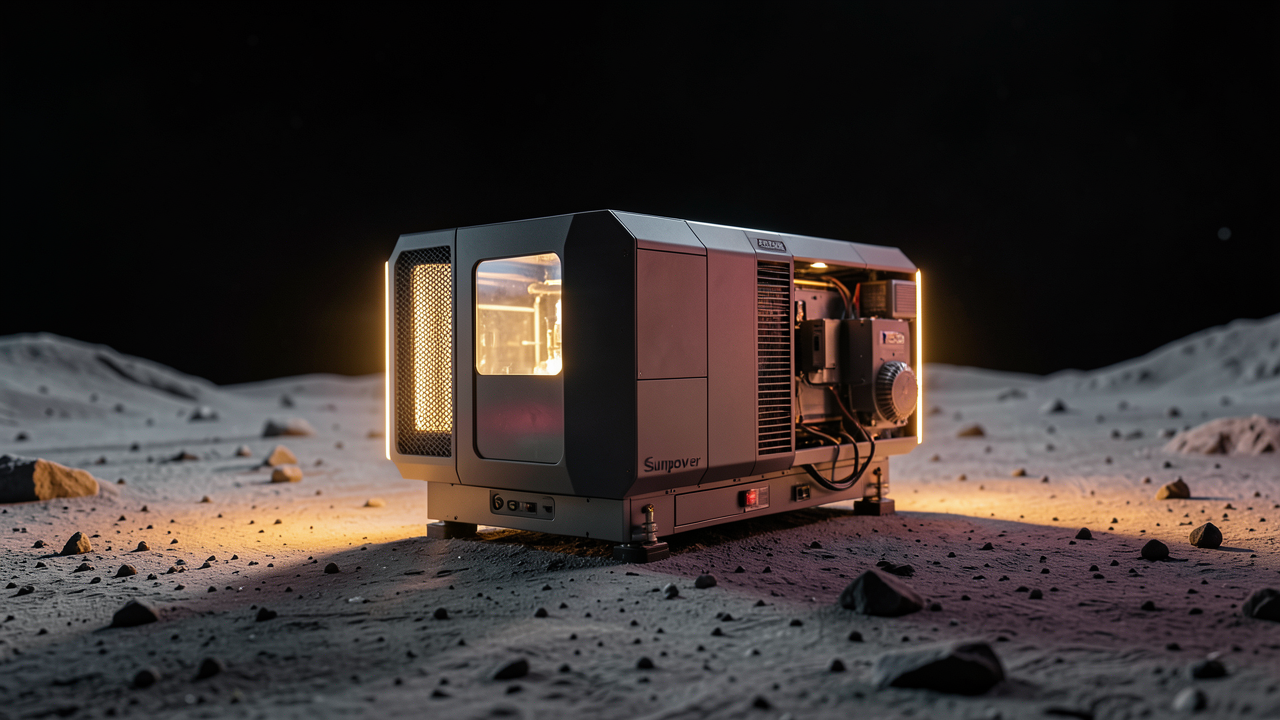
As NASA seeks proposals for key nuclear power technologies, including Stirling Radioisotope Generators (RSGs), for its long-term lunar base plans, Sunpower, a subsidiary of Ametek, has emerged as a strong contender. Sunpower has developed an RSG prototype that has demonstrated over 17 years of continuous functionality for NASA, positioning it as a pivotal solution for sustainable power on the Moon.
Technical / Clinical Details
Stirling Radioisotope Generators (RSGs) produce electrical power by converting the heat generated from the decay of radioisotopes, such as Plutonium-238, into mechanical energy via a Stirling engine, which then drives an alternator. The primary advantage of RSGs is their exceptional reliability and ability to provide continuous power, even in the permanently shadowed regions of the lunar poles or during extended lunar nights where solar power is unavailable. Sunpower’s prototype is noted for its higher energy conversion efficiency compared to the established Radioisotope Thermoelectric Generators (RTGs) used in past space missions, potentially delivering more power with less fuel. Its relatively compact size and ease of transport also present significant advantages for lunar deployment.
Background & Context
NASA’s Artemis program aims to return humans to the Moon and establish a sustainable lunar base. Operating a lunar base requires a reliable power supply for a wide range of activities, including communications, life support, scientific experiments, and resource utilization. The lunar poles, particularly their permanently shadowed regions, are of high interest due to the potential presence of water ice; however, these areas receive minimal sunlight, making nuclear power the only practical option for long-term operations. Through advanced nuclear power systems, NASA aims to enable autonomous lunar activities less dependent on resupply missions from Earth.
Strategic Significance & Outlook
Should Sunpower’s RSG technology be selected for NASA’s lunar contract, it would mark a critical milestone towards the realization of a sustained lunar base. RSGs will dramatically enhance the reliability and flexibility of power supply for long-duration missions and polar exploration, where solar power alone cannot suffice. This will expand astronauts’ operational range and enable more advanced scientific research and resource prospecting. Furthermore, the knowledge and technology gained on the Moon could be applied to power solutions for future crewed Mars missions, laying a fundamental groundwork for extending humanity’s reach further into space.
Source: https://www.fool.com/investing/2026/09/17/nasas-new-moon-base-contract-could-be-an-out-of/
Get our weekly technology intelligence — free
Receive an infographic that lets you judge at a glance whether each field’s analysis report is worth reading.
Subscribe Free — Weekly Tech Intelligence
By subscribing, you’ll receive Troy-Technical’s weekly technology intelligence newsletter.
- Your email and selected fields are used only to deliver the newsletter.
- We never share your information with third parties.
- You can unsubscribe anytime via the link in each email.
See our Privacy Policy for details.
Takes about a minute · Unsubscribe anytime





Comments