Key Findings
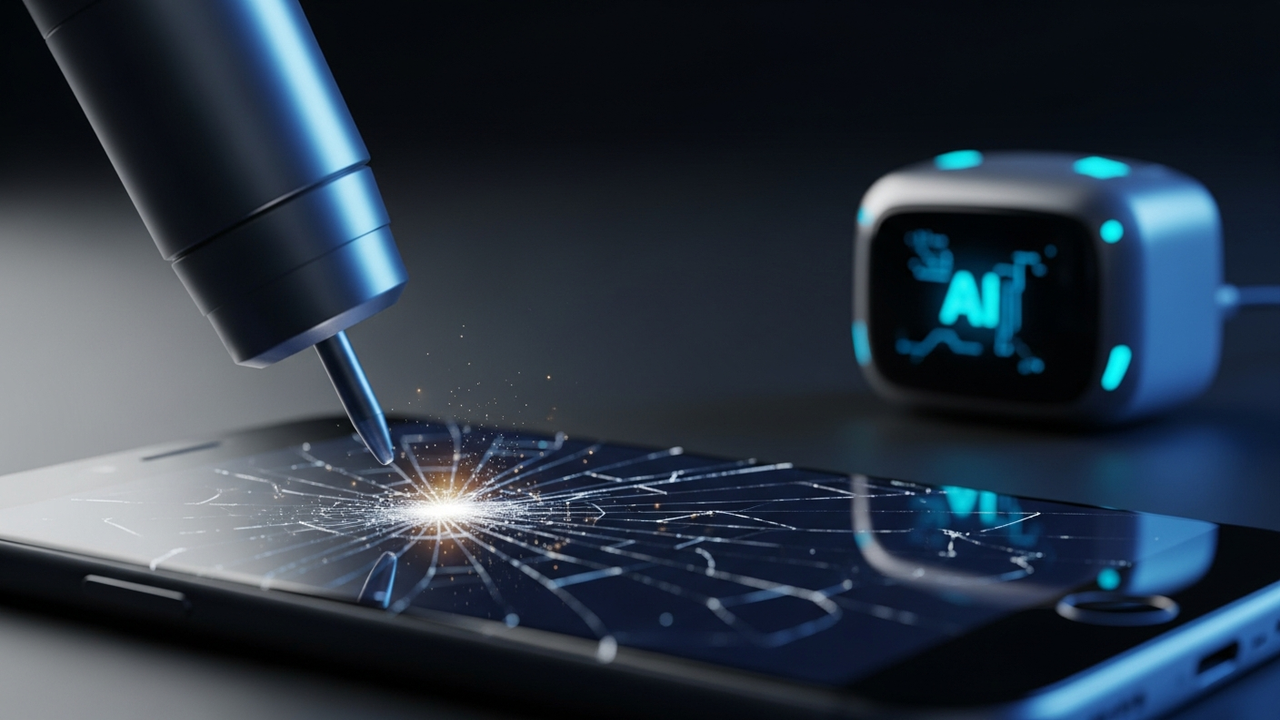
Recent advancements in self-healing materials demonstrate the ability to repair a cracked smartphone screen by 95% within just 20 minutes. The technology is also being applied to aircraft composites, where micro-cracks can be automatically remediated. Complementing this, an AI-based ‘smart healing’ system has been introduced to detect damage and manage the repair process, marking a significant breakthrough in materials science.
Technical / Clinical Details
The self-healing materials showcased in the video primarily utilize three mechanisms. First, encapsulated healing agents are released upon damage, polymerizing to fill cracks. Second, the material itself possesses reversible chemical bonds (e.g., supramolecular or dynamic covalent bonds) that reform through external stimuli like heat or light, enabling autonomous repair. Third, thermoplastic polymers and shape-memory polymers can close cracks by returning to their original shape upon heating. A particularly notable innovation is the screen technology developed for displays, where a specific polymer layer exhibits self-healing capabilities, naturally repairing 95% of minor damage within 20 minutes. This mimics how human skin heals, with the material actively responding to injury. Furthermore, the AI ‘smart healing’ system continuously monitors the material’s internal structure via a sensor network, detecting microscopic damage in real-time and triggering or optimizing the self-healing process. For aircraft composites, early repair of microscopic fatigue cracks dramatically enhances the overall structural safety and longevity of the components, aligning with increasingly stringent aerospace safety standards.
Background & Context
Material damage is a primary cause of reduced product lifespan, increased safety risks, and substantial repair or replacement costs. This issue is particularly critical for everyday products like smartphones, and expensive equipment such as automobiles, aircraft, and infrastructure. Traditional materials degrade in performance upon damage, eventually requiring replacement. However, self-healing materials are fundamentally changing this paradigm by enabling materials to detect and repair damage autonomously, without external intervention. This field of research and development is gaining global attention due to its contributions to sustainable societies, resource efficiency, and enhanced product reliability, representing a key shift from reactive maintenance to proactive material resilience.
Strategic Significance & Outlook
The combination of self-healing materials and the AI ‘smart healing’ system holds the potential to revolutionize a wide range of industrial sectors. Applications are limitless, including smartphone and tablet displays, automotive coatings and interiors, aircraft wings and fuselages, corrosion-prone pipelines, and even medical implants and soft robotics. Extending product lifespans leads to significant reductions in waste, resource consumption, and maintenance costs. In the future, ‘fully autonomous material systems’ capable of self-repair without human awareness are anticipated. This technology is a crucial key to building a safer, more sustainable, and economically efficient future, providing tangible benefits that span from consumer electronics to critical infrastructure and global environmental management.
Source: https://www.youtube.com/watch?v=KoKxqnyfopQ
Get our weekly technology intelligence — free
Receive an infographic that lets you judge at a glance whether each field’s analysis report is worth reading.
Subscribe Free — Weekly Tech Intelligence
By subscribing, you’ll receive Troy-Technical’s weekly technology intelligence newsletter.
- Your email and selected fields are used only to deliver the newsletter.
- We never share your information with third parties.
- You can unsubscribe anytime via the link in each email.
See our Privacy Policy for details.
Takes about a minute · Unsubscribe anytime






Comments