Key Findings
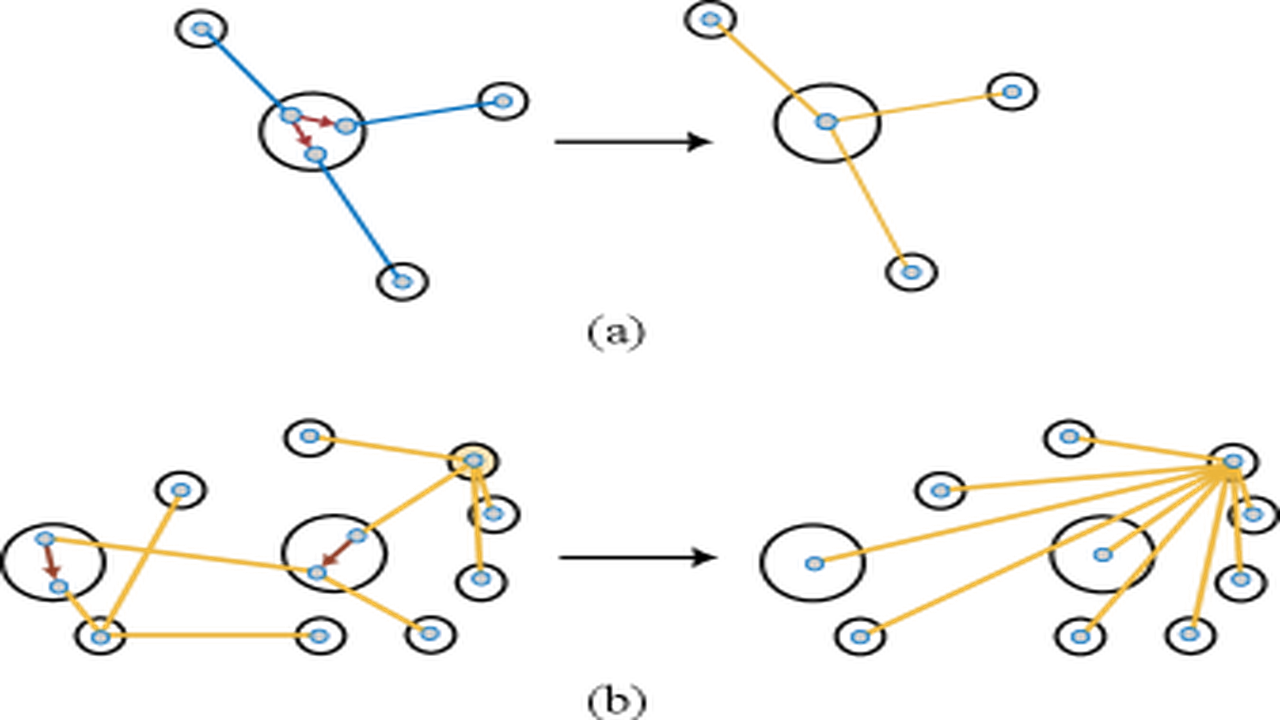
A new research paper published on arXiv introduces a groundbreaking protocol for generating multipartite entangled states, specifically Greenberger–Horne–Zeilinger (GHZ) states, within quantum networks. This protocol demonstrates superior efficiency in terms of both computational requirements and resource utilization, significantly reducing the number of consumed Bell pairs, local gate operations, and the efficiency of Bell-pair sources. This advancement addresses critical bottlenecks in multiparty quantum networking tasks, marking a powerful step towards the realization of a future quantum internet.
Technical Details
- Generation of Multipartite Entangled States: Multipartite entangled states, such as GHZ states, where multiple qubits are intrinsically linked, are indispensable resources for various quantum information processing tasks, including quantum key distribution, distributed quantum computing, and quantum sensor networks. Efficient and high-fidelity generation of these states has historically been a major challenge in quantum networking.
- Resource-Efficient Protocol: The proposed protocol is designed to generate multipartite entangled states using fewer Bell pairs (the fundamental unit of entanglement) compared to existing methods. This enhances overall network efficiency, reduces the consumption of precious quantum resources, and enables more complex quantum network communications.
- Improved Computational Efficiency: This protocol is specifically engineered to minimize the computational load on quantum network nodes, particularly the number of local gate operations. Enhanced computational efficiency is crucial for improving network speed and scalability, contributing to the feasibility of real-time quantum communication applications.
- Optimized Bell-Pair Source Utilization: The protocol also takes into account the efficient utilization of Bell-pair sources. This contributes to reducing the overall operational cost and complexity of quantum networks, aiding in the construction of more practical quantum internet infrastructures.
Background & Context
The ultimate vision of a quantum internet involves connecting multiple quantum computers and sensors via entanglement to enable distributed quantum computation and ultra-secure communication. However, generating and maintaining stable entanglement over long distances is extremely challenging due to losses and decoherence in current optical fiber networks. Resource-efficient protocols for multipartite entanglement generation, like the one presented in this research, are crucial for overcoming these technical hurdles and improving the scalability and robustness of quantum networks.
Strategic Significance & Outlook
This new protocol has the potential to significantly impact the development of the quantum internet. It is expected to accelerate the construction of larger and more complex quantum networks, enabling the development of more sophisticated applications in distributed quantum computing. Furthermore, it holds promise for more secure multiparty communication and the coordination of remote quantum sensor networks. This research represents a vital step in the evolution of quantum technology from single devices to networked systems, paving the way for future quantum breakthroughs.
Source: https://arxiv.org/html/2412.04252v4
Get our weekly technology intelligence — free
Receive an infographic that lets you judge at a glance whether each field’s analysis report is worth reading.
Subscribe Free — Weekly Tech Intelligence
By subscribing, you’ll receive Troy-Technical’s weekly technology intelligence newsletter.
- Your email and selected fields are used only to deliver the newsletter.
- We never share your information with third parties.
- You can unsubscribe anytime via the link in each email.
See our Privacy Policy for details.
Takes about a minute · Unsubscribe anytime







Comments