Key Findings
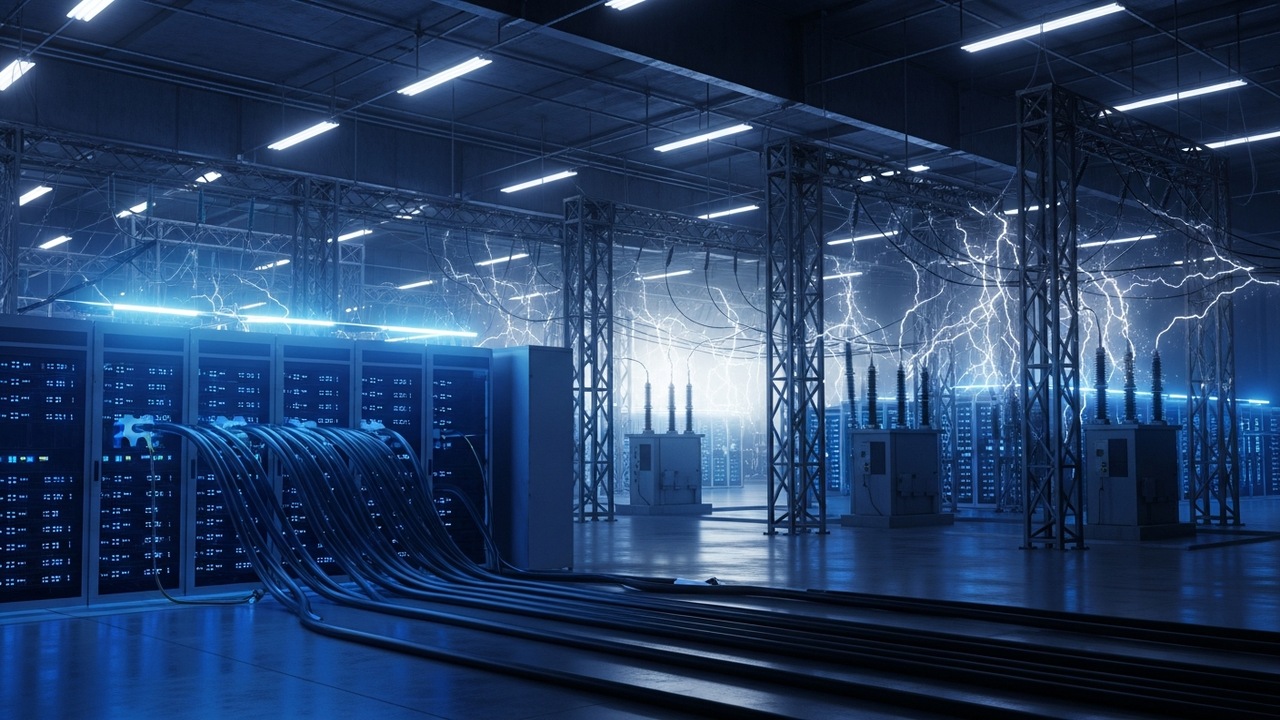
A draft of the U.S. Department of Energy’s (DOE) 2026 National Transmission Needs Study reveals that the explosive growth of AI data centers is fundamentally reshaping the U.S. energy transmission system, inaugurating a new era for grid planning and infrastructure development.
Technical and Clinical Details
Historically, transmission projects have been driven primarily by factors such as enhancing reliability, replacing aging infrastructure, and connecting new generation sources, particularly renewables. However, the rapidly escalating load demand, predominantly driven by AI data centers, has now become the primary impetus for grid expansion. Projections from Lawrence Berkeley National Laboratory suggest that data center electricity demand could surge by an astounding 13% to 27% annually through 2028, potentially accounting for 6.7% to 12% of total U.S. electricity consumption.
This unprecedented surge in demand presents a severe constraint on data center growth. Specifically, the supply chain for critical equipment like transformers and switchgear—essential for converting high-voltage grid power into usable electricity for data centers—has become a significant bottleneck. Analysis by Goldman Sachs Research predicts that only 60% of data center capacity scheduled for next year will be delivered on time, with this rate projected to drop to 50% over the subsequent two years. This physical infrastructure limitation underscores the current inability of existing power supply systems to keep pace with the exponential increase in computational demand driven by AI advancements.
Background and Industry Context
The evolution of AI technology, particularly the widespread adoption of large language models and generative AI, necessitates an unprecedented scale of computational power, which in turn accelerates data center expansion. However, data centers consume enormous amounts of electricity, transforming their site selection, power procurement, and grid impact from localized issues into matters deeply embedded in national energy strategy. Much of the U.S. transmission grid was designed during decades of stable electricity demand, making it profoundly challenged by such a rapid and substantial increase in load.
Strategic Significance and Outlook
The burgeoning power demand from AI data centers will necessitate massive investment and innovation in U.S. energy infrastructure. Government agencies, utility companies, and technology firms must collaborate to modernize the transmission grid, integrate renewable energy sources, and develop more energy-efficient data center technologies. Addressing supply chain bottlenecks for components like transformers is also an urgent priority. The response to this challenge will be a crucial determinant of U.S. AI competitiveness and sustainable growth. Failure to adapt could not only decelerate AI development but also lead to broader economic repercussions, including higher energy prices and supply instability.
Get our weekly technology intelligence — free
Receive an infographic that lets you judge at a glance whether each field’s analysis report is worth reading.
Subscribe Free — Weekly Tech Intelligence
By subscribing, you’ll receive Troy-Technical’s weekly technology intelligence newsletter.
- Your email and selected fields are used only to deliver the newsletter.
- We never share your information with third parties.
- You can unsubscribe anytime via the link in each email.
See our Privacy Policy for details.
Takes about a minute · Unsubscribe anytime