Key Findings
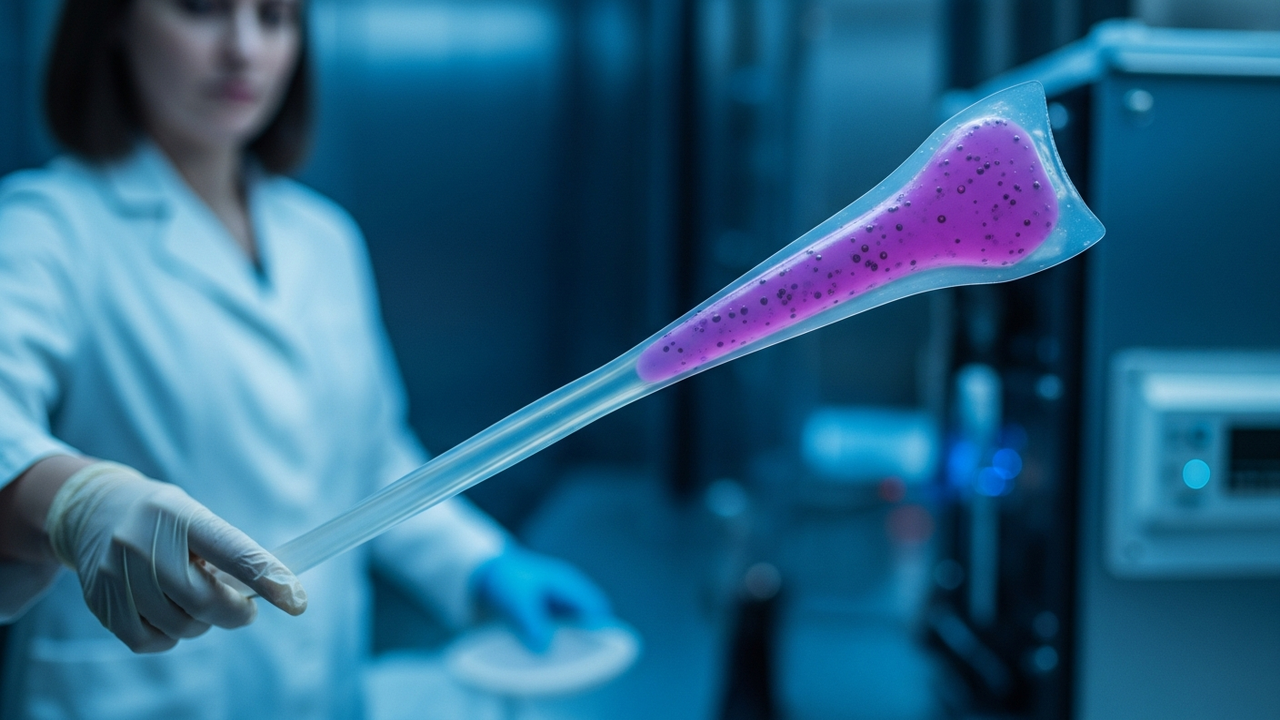
A research team at Drexel University has successfully developed soft, sticky, and stretchable hydrogel biosensors with freely tunable shapes and sizes. This groundbreaking technology was achieved by optimizing a unique mixture of polymers and additives based on a pH-driven chemical mechanism, providing the flexibility to be easily applied to any part of the human body. This advancement paves the way for next-generation wearable medical devices and advanced diagnostic tools.
Technical / Clinical Details
The developed hydrogel biosensor incorporates conductive nanomaterials (e.g., graphene or carbon nanotubes) dispersed within a polymer matrix to impart conductivity and sensing capabilities. The softness and stretchability of the hydrogel itself are optimized by carefully designing the crosslinking density between polymer chains and the ratio of hydrophilic and hydrophobic segments. Specifically, the ‘pH-driven chemical mechanism’ implies that the hydrogel’s structure changes in response to specific pH conditions, allowing for the tuning of its stickiness, mechanical properties, or sensor sensitivity. This enables the device to adhere closely to biological tissues like skin and function stably for extended periods.
This biosensor surpasses conventional sensors in several key aspects:
- Excellent Biocompatibility: Being soft and skin-friendly hydrogel-based, it ensures comfort during prolonged wear and minimizes skin irritation.
- High-Precision Data Acquisition: It conforms to body movements with minimal distortion and features low contact resistance between electrodes and skin, allowing for high-precision, low-noise acquisition of biological signals.
- Design Flexibility: Its tunable shape and size enable the design of sensors suitable for various body parts, such as wrists, chests, or joints.
- Multi-functionality: It holds potential as an integrated sensor capable of simultaneously monitoring biomolecules (e.g., glucose, lactate), ions (pH, electrolytes), and physiological parameters (e.g., heart rate, respiration rate, skin temperature, perspiration).
This technology opens avenues for diverse biomedical and non-biomedical applications, including remote patient monitoring, performance analysis in sports science, monitoring wound healing progress, and detecting harmful substances in the environment.
Background & Context
The wearable healthcare device market is rapidly expanding due to an aging society and increasing demand for personalized medicine. However, traditional wearable sensors often use rigid electronic components and adhesives, leading to discomfort during prolonged wear, skin irritation, or challenges in accurate data acquisition. Poor contact between the skin and sensor, in particular, has been a significant factor affecting signal quality. Drexel University’s research fundamentally addresses these challenges, providing a next-generation platform capable of delivering more reliable biological data while reducing patient burden. While research globally is advancing on integrating nanomaterials like graphene into hydrogels, the key to this breakthrough lies in combining both stickiness and tunable shape.
Strategic Significance & Outlook
Drexel University’s hydrogel biosensor technology is expected to revolutionize patient monitoring, preventive medicine, and drug discovery research as it progresses through clinical trials and product development. Particularly, the ability to acquire continuous biological data will enable more accurate early detection of diseases and real-time evaluation of treatment efficacy. In the future, this technology could further evolve to realize devices like ‘smart patches’ that integrate wireless communication, self-powering, and even actuation functions (e.g., drug release). This will accelerate the advancement of personalized medicine and is expected to significantly contribute to improving people’s health and quality of life. Establishing large-scale production techniques and obtaining regulatory approval as a medical device will be the next crucial steps for commercialization.
Source: https://drexel.edu/news/archive/2026/July/breathable-graphene-hydrogel-biosensors
Get our weekly technology intelligence — free
Receive an infographic that lets you judge at a glance whether each field’s analysis report is worth reading.
Subscribe Free — Weekly Tech Intelligence
By subscribing, you’ll receive Troy-Technical’s weekly technology intelligence newsletter.
- Your email and selected fields are used only to deliver the newsletter.
- We never share your information with third parties.
- You can unsubscribe anytime via the link in each email.
See our Privacy Policy for details.
Takes about a minute · Unsubscribe anytime