Key Findings
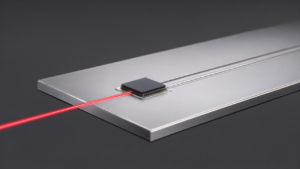
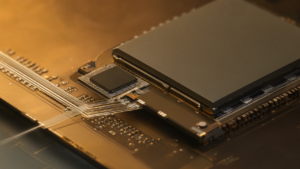
NTT has announced a groundbreaking breakthrough in opto-electronic convergence technology under its Innovative Optical and Wireless Network (IOWN) initiative. This technological innovation dramatically enhances the mutual conversion efficiency between optical and electrical signals, enabling significant power reductions and unprecedented ultra-high-speed communication in next-generation computing and networking systems. This development is crucial for resolving information processing bottlenecks in an era of explosive data growth.
Technical Details
The opto-electronic convergence breakthrough presented by NTT is particularly notable for its extremely high-density integration of optical and electrical circuits. Historically, the conversion between optical and electrical signals has been a major source of energy loss and a primary consumer of power in data centers and telecommunication networks. NTT researchers have successfully improved this conversion efficiency substantially and minimized associated delays by combining unique material science and device structure designs. While specific figures were not disclosed, the achievement suggests the realization of devices capable of equivalent or superior data transfer capabilities at a fraction of the power consumption of existing technologies. This technology is expected to be applied to co-packaged optics (CPO) that directly integrate optical interfaces into processors like CPUs and GPUs, as well as to improve transmission efficiency across wide-area optical networks.
Background & Context
The IOWN concept, advocated by NTT, envisions a future communication infrastructure centered on the All-Photonics Network (APN), aiming for enhanced power efficiency, increased capacity, and reduced latency. With the proliferation of technologies such as AI, IoT, and 5G/6G, data centers and network infrastructures worldwide process immense volumes of data, consuming colossal amounts of electricity. Advances in opto-electronic convergence technology are recognized as one of the most critical elements to overcome this power problem and the limitations of data processing capabilities. This achievement by NTT marks a significant step for Japan in demonstrating global leadership in information and communication technology development, with expectations for standardization and widespread adoption through international partnerships.
Strategic Significance & Outlook
NTT’s opto-electronic convergence breakthrough will bring revolutionary impacts, particularly in inter-server connections within data centers and real-time data processing in edge computing. The dramatic reduction in power consumption will not only significantly lower data center operating costs but also contribute to global warming countermeasures. Furthermore, ultra-high-speed, low-latency communication will form the foundation for future services such as autonomous driving, remote medicine, smart cities, and the metaverse. NTT plans to further advance demonstration experiments based on this technology, strengthening collaboration with industries both domestically and internationally towards the full-scale social implementation of the IOWN concept by 2030. This achievement holds the potential to drive a new paradigm shift in information and communication technology.
Source: https://www.techjapandaily.com/ntt-iown-optoelectronic-breakthrough-20260725
Get our weekly technology intelligence — free
Receive an infographic that lets you judge at a glance whether each field’s analysis report is worth reading.
Subscribe Free — Weekly Tech Intelligence
By subscribing, you’ll receive Troy-Technical’s weekly technology intelligence newsletter.
- Your email and selected fields are used only to deliver the newsletter.
- We never share your information with third parties.
- You can unsubscribe anytime via the link in each email.
See our Privacy Policy for details.
Takes about a minute · Unsubscribe anytime