Key Findings
Researchers have made a breakthrough by developing innovative nano-printed scaffolds that provide direct molecular access to quantum photonics. This novel technology, characterized by scaffolds with a high numerical aperture (NA), unlocks new frontiers for applications in both sensing and quantum information science.
Technical / Clinical Details
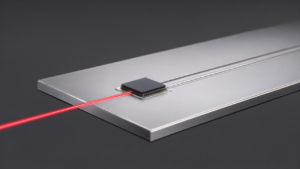
The developed nano-printed scaffolds leverage intricate structural designs to enable the precise placement of molecules within quantum photonic circuits, allowing for in-situ observation and manipulation of light-molecule interactions. The high NA of the scaffolds maximizes light confinement and collection efficiency, facilitating highly sensitive detection even for extremely weak optical signals. The research team successfully demonstrated this technology through optofluidic spectroscopy using a Rhodamine 6G solution. This demonstration proved the scaffolds’ capability to interact with molecules at an atomic level and analyze their spectral properties with high precision. This breakthrough is expected to lead to the development of novel quantum devices and significant advancements in biomolecular sensing.
Background & Context
Quantum photonics is gaining immense attention as a foundational technology for future innovations in quantum computing, quantum communication, and ultra-sensitive sensing. However, achieving efficient and controllable interactions between molecules and photons has been a long-standing challenge. Traditional methods for integrating molecules into photonic elements have faced limitations in terms of precision, efficiency, and scalability. The newly developed nano-printed scaffolds offer a groundbreaking solution to these challenges, dramatically improving the interface between molecules and photonic devices. This expansion of molecular applications in quantum systems is poised to have a wide-ranging impact, from fundamental research to applied science.
Strategic Significance & Outlook
This nano-printing technology holds the potential to fundamentally expand the capabilities of quantum photonic systems. For instance, enabling the generation, control, and detection of quantum states at a single-molecule level could lead to the development of more robust qubits and new types of quantum sensors. In the field of biomolecular sensing, it could pave the way for ultra-sensitive detection platforms for early disease diagnosis and drug screening. This breakthrough is expected to accelerate research at the intersection of materials science, photonics, and quantum physics, ultimately translating into innovative products and services for society.
Source: https://www.azonano.com/news.aspx?newsID=41781
Get our weekly technology intelligence — free
Receive an infographic that lets you judge at a glance whether each field’s analysis report is worth reading.
Subscribe Free — Weekly Tech Intelligence
By subscribing, you’ll receive Troy-Technical’s weekly technology intelligence newsletter.
- Your email and selected fields are used only to deliver the newsletter.
- We never share your information with third parties.
- You can unsubscribe anytime via the link in each email.
See our Privacy Policy for details.
Takes about a minute · Unsubscribe anytime