Key Findings
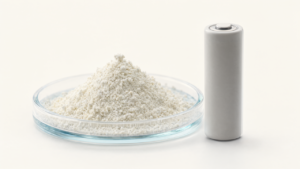
July 2026 marked a pivotal moment for the solid-state battery (SSB) industry in China, with the official implementation of the nation’s first national standard for automotive solid-state batteries, GB/T43568-2026. This standardization effort aims to provide clear guidelines for SSB design, performance, and safety, fostering the healthy development and quality improvement of the domestic industry. Concurrently, the material supply chain witnessed significant advancements, as multiple hundred-ton-level sulfide-based solid electrolyte production lines began trial operations in Q3, exemplified by EV manufacturers procuring electrolytes in one-ton quantities, signaling the onset of ‘ton-level transactions’ for these critical materials.
Technical / Clinical Details
Chinese battery developers are demonstrating tangible progress in SSB technology. SVOLT Energy has commenced mass production of its hybrid solid-liquid batteries in Q3, representing a pragmatic approach to bridging the gap between conventional lithium-ion and full solid-state solutions. Ampace announced achieving a total capacity of 2 GWh for both cells and packs, indicating substantial manufacturing capability. Furthermore, leading players like CATL and Farasis have reported significant breakthroughs in energy density, reaching 420 Wh/kg and an impressive 500 Wh/kg, respectively. These figures represent a substantial improvement over current lithium-ion technologies and pave the way for vehicle integration, which is projected for 2027. Such high energy densities are crucial for extending EV driving ranges and enhancing overall performance.
Background & Context
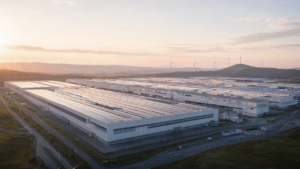
China has strategically invested in new energy vehicle (NEV) technologies, including SSBs, to establish global leadership in the automotive sector. The promulgation of a national standard underscores the government’s commitment to accelerating technological competitiveness and ensuring the robust growth of its domestic industry. Material suppliers are scaling up production capacities for sulfide-based solid electrolytes, anticipating increasing demand from EV manufacturers. This scale-up is essential for reducing the cost of SSBs and ensuring a stable supply, which are critical for widespread adoption. The mass production of hybrid solid-liquid batteries by companies like SVOLT also highlights a tactical approach to market entry, allowing for incremental advancements while full solid-state technology matures.
Strategic Significance & Outlook
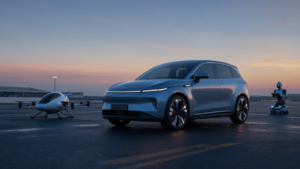
The new Chinese national standard for SSBs is expected to influence international standardization discussions and accelerate global development trends. The establishment of ton-level production capabilities for sulfide electrolytes and the successful integration of high-energy-density batteries into vehicles are poised to be game-changers for the EV market. This will enable significantly longer driving ranges, reduce range anxiety, and potentially lessen reliance on extensive charging infrastructure. The concrete vehicle integration plans for 2027 mark a crucial milestone, transforming SSBs from a ‘technology on a slide deck’ into a ‘tangible product’ in the market. As global competition intensifies, China’s advancements in SSB technology and standardization will be a key determinant of the future trajectory of the global battery industry and the broader EV landscape.
Get our weekly technology intelligence — free
Receive an infographic that lets you judge at a glance whether each field’s analysis report is worth reading.
Subscribe Free — Weekly Tech Intelligence
By subscribing, you’ll receive Troy-Technical’s weekly technology intelligence newsletter.
- Your email and selected fields are used only to deliver the newsletter.
- We never share your information with third parties.
- You can unsubscribe anytime via the link in each email.
See our Privacy Policy for details.
Takes about a minute · Unsubscribe anytime