Key Findings
The U.S. government is prioritizing the strengthening of its domestic battery supply chain as a cornerstone of national security, significantly expanding federal funding for domestic production, recycling, and advanced manufacturing technologies. A particular emphasis is placed on enhancing the resilience of the entire value chain, from critical mineral sourcing and processing to final battery manufacturing.
Technical / Clinical Details
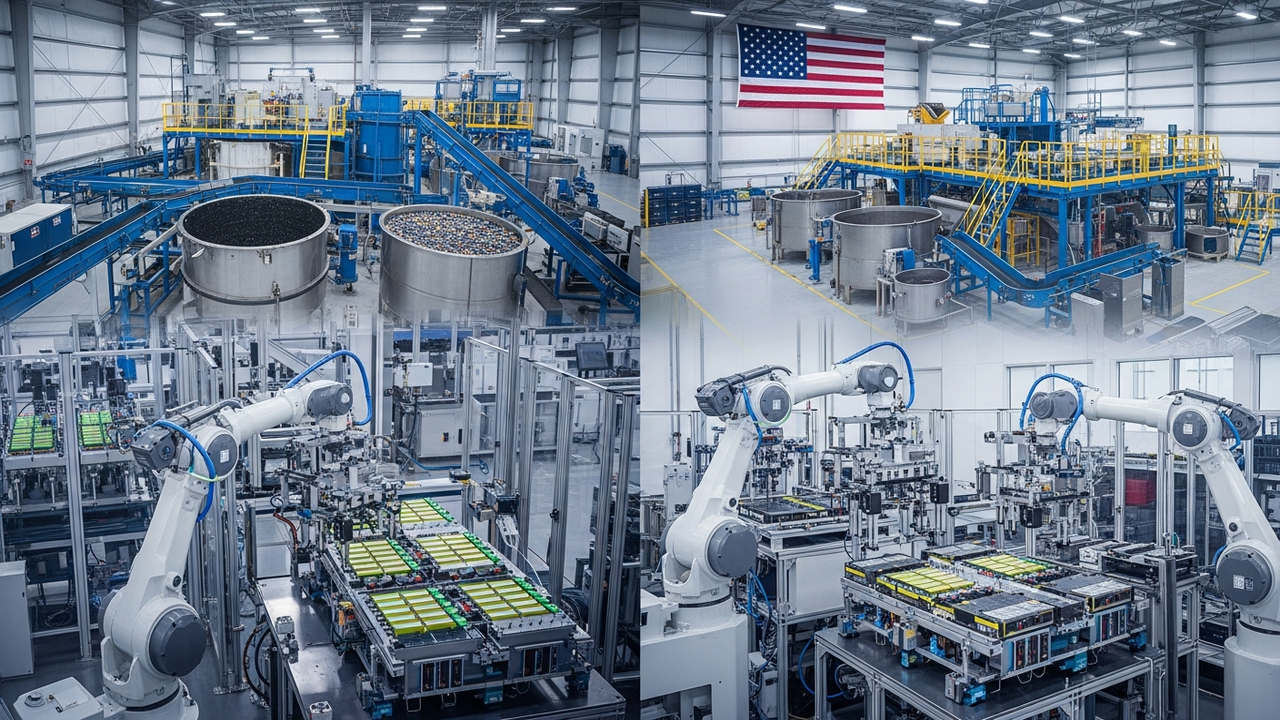
The U.S. Department of Energy (DOE) has announced a commitment of up to $500 million (approximately 73 billion JPY) to expand domestic battery material processing and manufacturing capabilities. This funding will primarily support securing domestic supplies of critical minerals such as lithium, nickel, cobalt, and graphite, establishing refining facilities, and investing in research and development to scale up production of next-generation battery technologies, including solid-state batteries. The objective is to reduce reliance on foreign sources, particularly China, and establish a sustainable and secure domestic battery ecosystem. Investments will also target advanced battery recycling technologies to foster a closed-loop supply chain.
Background & Context
Battery technology has become an indispensable component in nearly every aspect of modern society, from electric vehicles (EVs) and renewable energy storage to portable electronics and military equipment. Amid increasing global supply chain disruptions and geopolitical tensions, the stability and security of battery supply are pressing concerns for many nations. Siyu Huang, CEO of Factorial Energy, underscores this critical role, stating that “Batteries are at the very core of national power systems, underpinning military readiness, data infrastructure, grid stability, and industrial competitiveness.” This perspective highlights batteries not merely as energy storage devices but as crucial strategic national assets.
Strategic Significance & Outlook
This substantial investment by the U.S. government is expected to powerfully bolster the growth of the domestic battery industry and accelerate technological innovation. Solid-state batteries, like next-generation technologies, will enhance U.S. competitiveness, support the transition to a clean energy economy, and establish self-sufficiency in the defense sector. Strengthening the domestic supply chain will mitigate risks and lay the foundation for future energy security, positioning the U.S. to play a leading role in global battery technology and manufacturing.
Get our weekly technology intelligence — free
Receive an infographic that lets you judge at a glance whether each field’s analysis report is worth reading.
Subscribe Free — Weekly Tech Intelligence
By subscribing, you’ll receive Troy-Technical’s weekly technology intelligence newsletter.
- Your email and selected fields are used only to deliver the newsletter.
- We never share your information with third parties.
- You can unsubscribe anytime via the link in each email.
See our Privacy Policy for details.
Takes about a minute · Unsubscribe anytime