Key Findings
Jefferies analysts have indicated that Daiichi Sankyo’s early-stage antibody-drug conjugate (ADC) pipeline is falling behind its rivals. While their flagship ADCs, Enhertu and Datroway, are approaching peak revenue, intensifying competition in the broader ADC market poses potential challenges to the company’s future growth. Furthermore, Daiichi Sankyo incurred significant charges of $850 million from contract manufacturing organizations (CMOs) due to ADC demand not meeting minimum purchase requirements, prompting the company to abandon a planned facility expansion.
Technical / Clinical Details
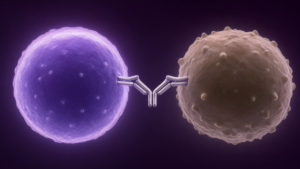
Daiichi Sankyo’s ADC technology, exemplified by Enhertu (trastuzumab deruxtecan) and Datroway, has achieved notable clinical success in specific cancer types, such as HER2-positive breast cancer and TROP2-positive triple-negative breast cancer, owing to their efficacy and safety profiles. These ADCs selectively deliver potent payloads, like topoisomerase I inhibitors, to cancer cells via an antibody, leading to targeted cell killing. While these drugs have secured significant market share, the continuous emergence of new ADC candidates with novel targets, more potent payloads, and superior linker technologies is intensifying market competition.
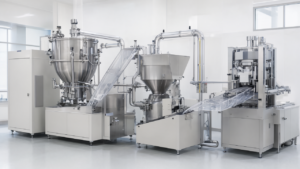
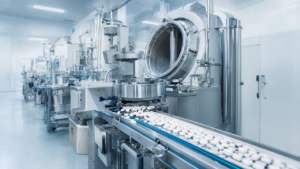
The $850 million charge suggests that large-scale CMO agreements were in place to secure production for high-demand products like Enhertu and Datroway. However, actual demand appears to have fallen short of the contracted minimum purchase requirements, resulting in penalties for unutilized manufacturing capacity. This situation underscores the complex challenge pharmaceutical companies face in balancing investments in new technologies with accurate demand forecasting.
Background & Context
The ADC market is one of the fastest-growing sectors in cancer treatment, attracting substantial investment from numerous pharmaceutical companies. Daiichi Sankyo established its pioneering position in this field with the success of Enhertu and Datroway. Yet, the ADC development race is fierce, with competitors continuously introducing products featuring new targets, more potent payloads, and advanced linker technologies. In this highly competitive landscape, companies must build robust early-stage pipelines and swiftly adjust their strategies to market dynamics to ensure sustained growth.
Strategic Significance & Outlook
For Daiichi Sankyo, developing new ADC candidates to drive future growth is an urgent priority as revenue from its existing blockbuster ADCs peaks. The analysts’ commentary suggests the company needs to focus on strengthening its early-stage pipeline and adopting more innovative ADC technologies. Furthermore, optimizing manufacturing capacity and enhancing demand forecasting accuracy will be critical management challenges to mitigate future financial risks. Adapting to the dynamic changes in the ADC market and generating new breakthroughs will be essential for Daiichi Sankyo to maintain long-term competitiveness.
Get our weekly technology intelligence — free
Receive an infographic that lets you judge at a glance whether each field’s analysis report is worth reading.
Subscribe Free — Weekly Tech Intelligence
By subscribing, you’ll receive Troy-Technical’s weekly technology intelligence newsletter.
- Your email and selected fields are used only to deliver the newsletter.
- We never share your information with third parties.
- You can unsubscribe anytime via the link in each email.
See our Privacy Policy for details.
Takes about a minute · Unsubscribe anytime