Key Findings
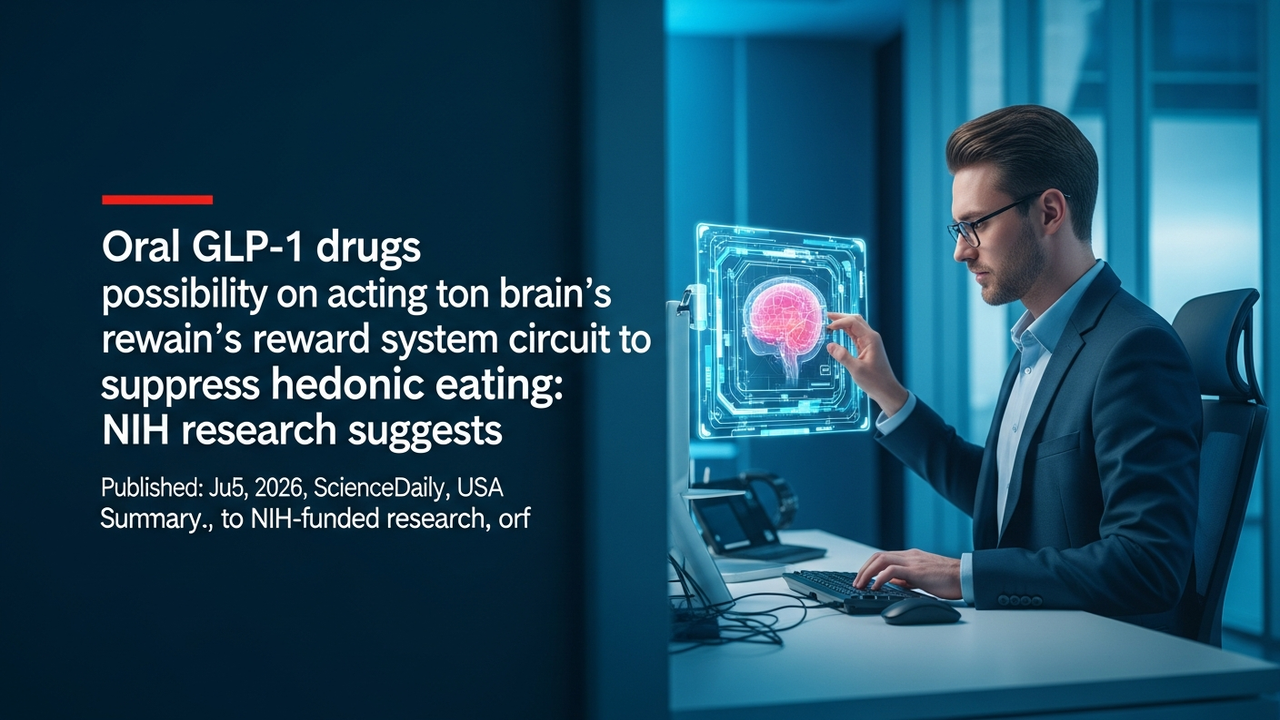
Research funded by the National Institutes of Health (NIH) indicates that novel oral small-molecule GLP-1 drugs, including orforglipron and danuglipron, may suppress hedonic feeding—eating for pleasure rather than physiological hunger—by influencing the brain’s reward circuitry. This study, conducted in mouse models, revealed that these agents activate the central amygdala, consequently reducing dopamine release in the nucleus accumbens, a key component of the brain’s reward system.
Technical / Clinical Details
GLP-1 (Glucagon-Like Peptide-1) receptor agonists are primarily known for their efficacy in glycemic control and weight reduction, exerting their effects by mimicking endogenous gut hormone signaling. Previous research mainly highlighted their appetite-suppressing actions in the hypothalamus. However, the current NIH study extends this understanding, suggesting that GLP-1 drugs may directly or indirectly impact broader brain regions, particularly those involved in the reward system.
In the mouse study, administration of orforglipron and danuglipron was observed to activate the central amygdala, a brain region implicated in fear, anxiety, and reward processing. This activation of the central amygdala resulted in reduced dopamine release in the nucleus accumbens, a central hub of the brain’s reward system crucial for pleasure and motivation. Decreased dopamine release is thought to lead to a reduction in food cravings and the perceived reward value of food, thereby contributing to the suppression of hedonic eating behavior. This finding suggests a more complex mechanism of action for GLP-1 drugs, influencing not just appetite but also the reward value of food itself.
Background & Context
Obesity is a multifactorial disease resulting from an imbalance between energy intake and expenditure, involving not only physiological but also psychological and reward-related factors. Hedonic eating, particularly strong cravings for palatable high-fat, high-sugar foods and stress-induced overeating, significantly contributes to the maintenance of obesity. While GLP-1 receptor agonists are transforming the obesity treatment landscape due to their potent weight loss effects, their full mechanisms of action have not been entirely elucidated. This research provides new strategic insights into obesity treatment by demonstrating that these drugs may influence behavioral changes through their effects on the brain’s reward system.
Strategic Significance & Outlook
This discovery suggests that oral GLP-1 drugs may possess a broader range of effects in obesity treatment beyond mere metabolic regulation. If the mechanism of action on the brain’s reward system is confirmed in humans, it could not only enhance the efficacy of obesity treatment but also potentially extend applications to neuropsychiatric disorders such as substance use disorder, characterized by cravings for certain substances. Future research will focus on the long-term evaluation of these oral GLP-1 drugs’ impact on the brain’s reward system and the validation of their clinical significance in humans. This study marks a crucial step in deepening our understanding of the complex neural basis of eating behavior and contributing to the development of more effective and personalized therapies.
Source: https://www.sciencedaily.com/releases/2026/07/260724061439.htm
Get our weekly technology intelligence — free
Receive an infographic that lets you judge at a glance whether each field’s analysis report is worth reading.
Subscribe Free — Weekly Tech Intelligence
By subscribing, you’ll receive Troy-Technical’s weekly technology intelligence newsletter.
- Your email and selected fields are used only to deliver the newsletter.
- We never share your information with third parties.
- You can unsubscribe anytime via the link in each email.
See our Privacy Policy for details.
Takes about a minute · Unsubscribe anytime