Key Findings
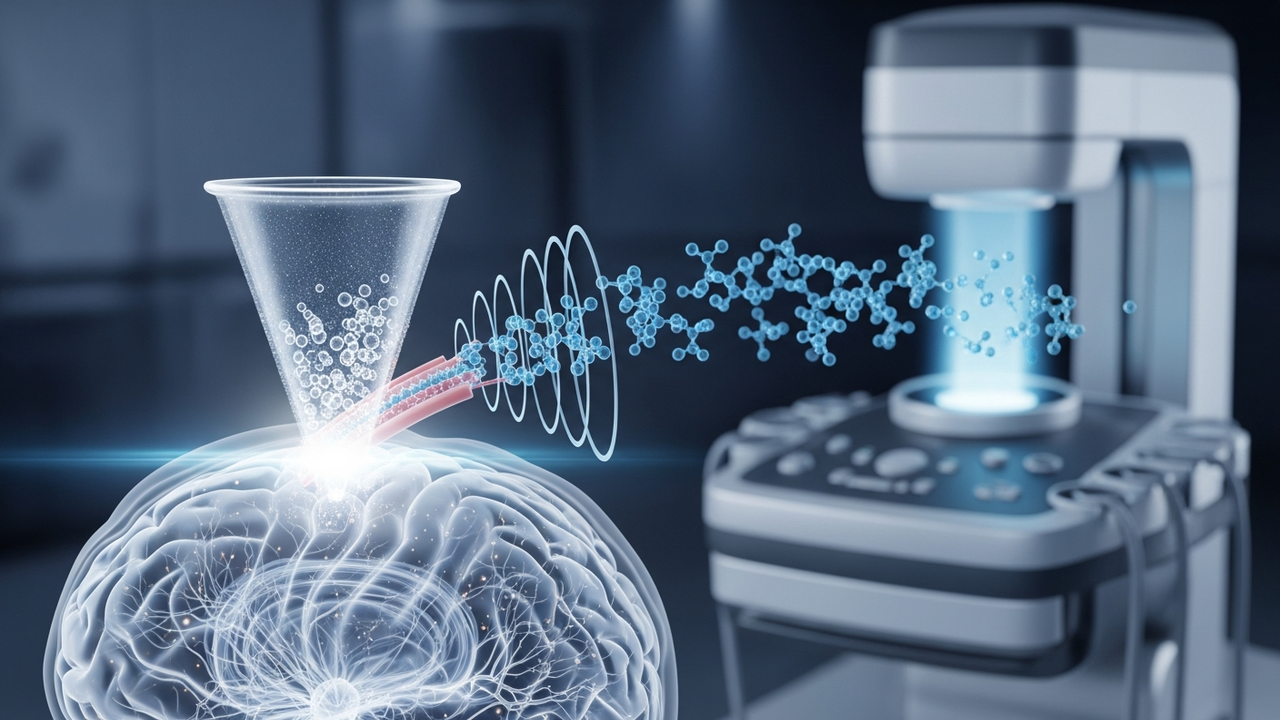
While the blood-brain barrier (BBB) plays a crucial role in protecting the brain from harmful substances circulating in the blood, it simultaneously acts as the primary impediment to delivering many therapeutic drugs to the brain. To overcome this challenge, researchers are investigating a groundbreaking method that utilizes focused ultrasound (FUS), specifically low-intensity focused ultrasound (LIFU) combined with intravenously administered microbubbles, to temporarily and reversibly open the BBB, thereby significantly enhancing drug delivery to targeted brain regions.
Technical/Clinical Details
The LIFU system can precisely focus ultrasonic energy onto specific areas of the brain. This ultrasonic energy interacts with gas-filled microbubbles, which are injected intravenously. The mechanical oscillation of these microbubbles, induced by the ultrasound, temporarily loosens the tight junctions between the endothelial cells that constitute the BBB. This transient opening of the BBB typically closes naturally within a few hours, allowing drug passage to the target site without causing permanent damage to brain function. This technology holds immense promise for maximizing the efficacy of existing and pipeline drugs for a range of neurological conditions, including brain tumors, Alzheimer’s disease, Parkinson’s disease, and stroke.
Background & Context
Drug development for central nervous system (CNS) disorders has perpetually been challenging due to the formidable presence of the BBB. Numerous promising therapeutic candidates have failed in development solely because of their inability to traverse this barrier. Current strategies to bypass the BBB include direct intracerebral injection, invasive opening techniques, or utilizing molecules engineered for BBB permeability. However, these methods often carry significant invasiveness or lack specificity. The combination of LIFU and microbubbles offers a non-invasive, spatially precise, and controllable approach, making it a compelling solution to these long-standing problems.
Strategic Significance & Outlook
This focused ultrasound-mediated BBB opening technology represents a paradigm shift in drug delivery for neurological disorders. Its potential to achieve both non-invasiveness and high target specificity marks a significant step towards clinical translation. Further establishment of its safety profile and validation of its efficacy across various drugs and disease indications are crucial next steps. Ultimately, this technology is expected to provide more effective treatment options for patients suffering from brain diseases, particularly enabling drug delivery to deep brain lesions that were previously inaccessible.
Get our weekly technology intelligence — free
Receive an infographic that lets you judge at a glance whether each field’s analysis report is worth reading.
Subscribe Free — Weekly Tech Intelligence
By subscribing, you’ll receive Troy-Technical’s weekly technology intelligence newsletter.
- Your email and selected fields are used only to deliver the newsletter.
- We never share your information with third parties.
- You can unsubscribe anytime via the link in each email.
See our Privacy Policy for details.
Takes about a minute · Unsubscribe anytime