Key Findings
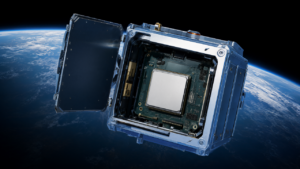
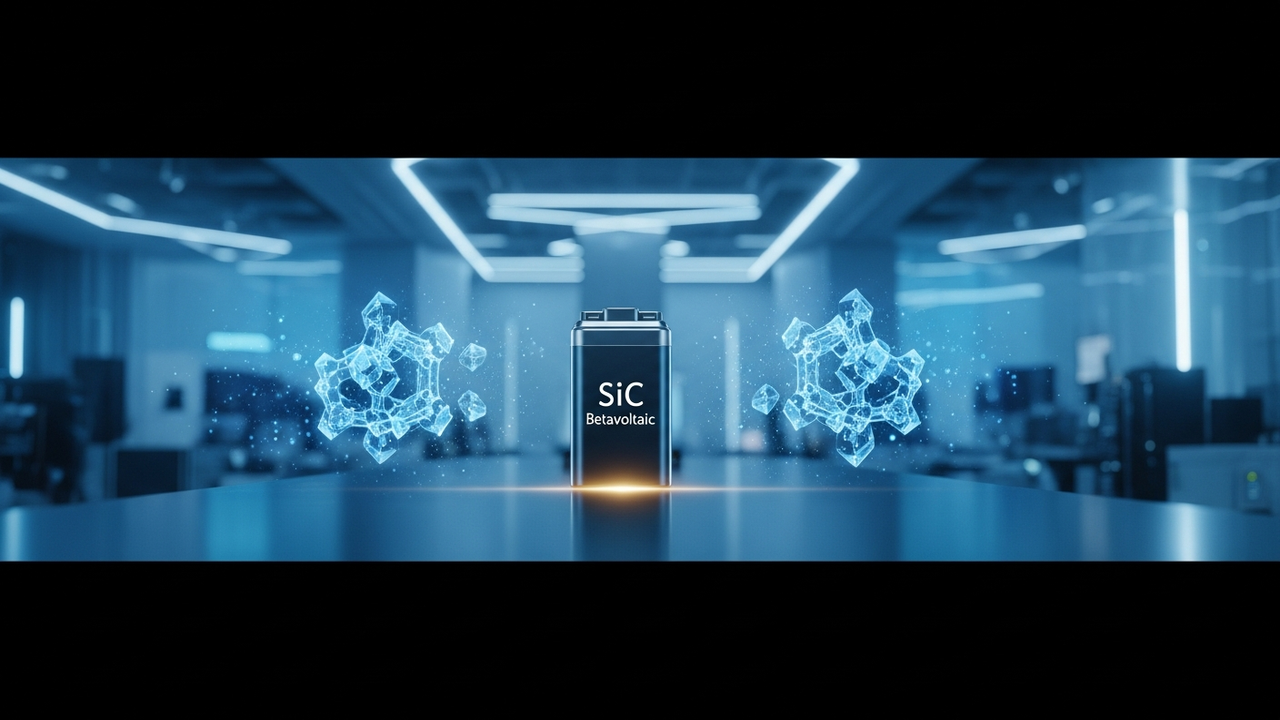
The Korean Electrotechnology Research Institute (KERI) has successfully demonstrated the nation’s first SiC-based betavoltaic battery, capable of providing stable power for over 50 years without the need for recharging or replacement. This groundbreaking technology offers an ultra-long-life power solution essential for space exploration and electronics operating in extreme environments.
Technical Details
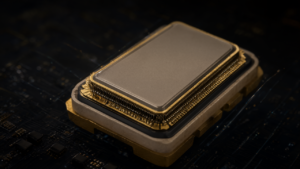
This betavoltaic battery is built upon silicon carbide (SiC), a next-generation material known for its superior thermal stability and radiation resistance compared to traditional silicon (Si) semiconductors. Betavoltaic batteries utilize the principle of directly converting beta particles (electrons) emitted by radioactive isotopes into electrical energy at a semiconductor junction. KERI’s research team meticulously optimized the p-i-n diode structure to maximize the radiation-to-electricity conversion efficiency, achieving approximately 20% conversion efficiency while minimizing energy loss through optimized interface design and high-quality SiC crystals. Furthermore, long-term exposure tests conducted under simulated space radiation conditions demonstrated durability exceeding 50 years of continuous operation. This makes the battery suitable for harsh temperature fluctuations, from -100°C to over 300°C, and high-radiation environments.
Background & Context
For space missions, particularly deep-space probes and lunar/Mars rovers, continuous power supply has been a major challenge due to vast distances from Earth, difficulty in solar power generation, and periods of darkness. Conventional batteries have limited lifespans and often degrade in performance under the radiation and extreme temperatures inherent to space environments. Betavoltaic batteries have been studied for years as a solution to these challenges, but practical application was hindered by barriers in conversion efficiency and longevity. KERI’s achievement overcomes these barriers, offering a new power option for the space industry.
Strategic Significance & Outlook
The SiC-based betavoltaic battery demonstrated by KERI is expected to play a crucial role as an ultra-long-life power source for communication devices, sensors, and robotic systems in future deep space missions. Beyond space, potential applications include monitoring systems for nuclear power plants, medical implants, and remote IoT devices—any environment where battery replacement is difficult or extremely high reliability is demanded. KERI plans to further miniaturize and increase the output of this technology, accelerating its commercialization through strategic partnerships. In the long term, this technology has the potential to expand the frontiers of space and offer new perspectives on global power solutions.
Source: https://www.eurekalert.org/news-releases/1137731
Get our weekly technology intelligence — free
Receive an infographic that lets you judge at a glance whether each field’s analysis report is worth reading.
Subscribe Free — Weekly Tech Intelligence
By subscribing, you’ll receive Troy-Technical’s weekly technology intelligence newsletter.
- Your email and selected fields are used only to deliver the newsletter.
- We never share your information with third parties.
- You can unsubscribe anytime via the link in each email.
See our Privacy Policy for details.
Takes about a minute · Unsubscribe anytime