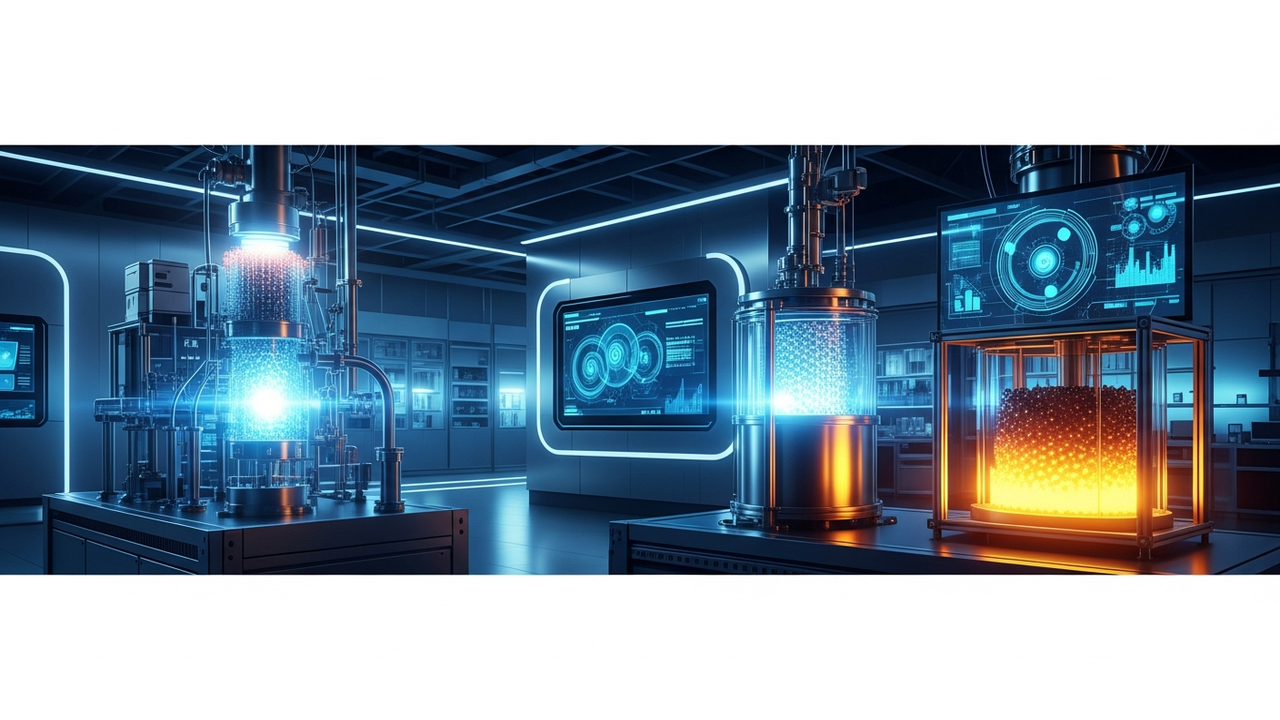
Background: The Imperative for Clean Energy Storage and PCM Challenges
As global energy demand rises and the imperative to reduce environmental impact intensifies, stable supply from clean energy sources and efficient energy storage are of paramount importance. Concentrated solar power (CSP) and the recovery/utilization of industrial waste heat are promising approaches to address these challenges, but they require high-performance materials capable of efficiently storing and releasing thermal energy. Phase Change Materials (PCMs) have garnered attention for their high latent heat storage capacity, yet conventional PCMs have faced challenges such as low thermal conductivity, limited specific heat capacity, and high costs.
ARCI’s Innovation in Spinel Nano Composite PCM
To overcome these challenges, a team of researchers at India’s International Advanced Research Centre for Powder Metallurgy & New Materials (ARCI) has successfully developed a high-performance spinel nano composite Phase Change Material (PCM) with a cost-effective and scalable manufacturing process. The details of this groundbreaking material have been published in the journal Materials Today Chemistry. Key features include:
- Significant Increase in Specific Heat Capacity: The developed spinel nano composite PCM exhibits a remarkable 45% increase in specific heat capacity compared to conventional PCMs. A higher specific heat capacity means more thermal energy can be stored per unit mass, directly leading to miniaturization and efficiency improvements in thermal storage systems.
- Cost-Effectiveness and Ease of Manufacturing: The ARCI research team has established a process for cost-effectively manufacturing this high-performance material on a large scale. This is a crucial factor for translating laboratory-level achievements into actual industrial applications.
- Optimization for Thermal Battery Applications: This PCM is specifically designed for thermal batteries, enabling stabilization of electricity production in solar thermal power plants and efficient recovery and reuse of large amounts of industrial waste heat generated from sources like steel mills, cement factories, and chemical plants, converting it into electricity or heat sources.
Spinel-structured nanocomposites are believed to contribute to PCM performance enhancement due to their thermal stability and excellent thermophysical properties under specific conditions.
Technical Significance and Future Outlook
The high specific heat capacity spinel nano composite PCM developed by ARCI represents a significant breakthrough in the field of clean energy storage technology. Its technical significance and future outlook are as follows:
- Substantial Improvement in Energy Efficiency: For CSP plants, utilizing heat collected during the day at night enables stable, 24-hour electricity supply. In industrial waste heat recovery, the introduction of more efficient storage systems will contribute to reducing companies’ energy costs and greenhouse gas emissions.
- Compaction of Thermal Storage Systems: The improved specific heat capacity allows for smaller overall system sizes for the same storage capacity, facilitating deployment in locations with space constraints.
- Accelerating Sustainable Energy Transition: Technologies that overcome the intermittency challenge of renewable energy are indispensable for increasing the share of renewables in the energy mix. This PCM technology strongly supports that transition.
- Industrial Collaboration and Commercialization: Given the established cost-effective manufacturing process, deeper collaboration with industry and early commercialization and widespread adoption are anticipated. India has high energy demand and active innovation in the renewable energy sector, positioning this technology for potential domestic implementation and international expansion.
This research outcome opens new horizons in thermal energy storage, marking a crucial step towards a more sustainable and efficient energy system.
Source: #








Comments