Key Findings
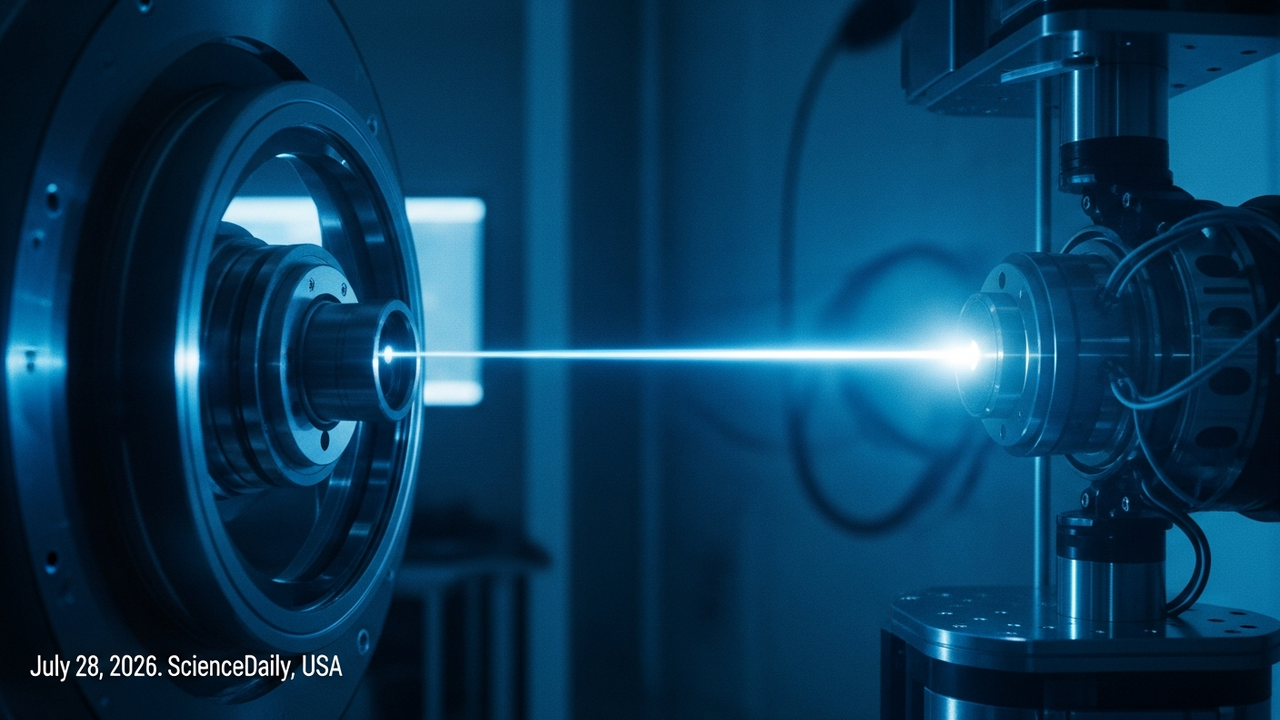
Researchers have developed an innovative “twisted laser beam” technology capable of specifically identifying molecular chirality, or left- and right-handed asymmetry. This novel method leverages laser light that interacts differently with enantiomers, allowing for the unprecedentedly fast and sensitive determination of molecular stereochemistry from the characteristics of fragments produced during decomposition. This advancement is expected to dramatically enhance the precision and efficiency of molecular analysis across numerous scientific and technological domains.
Technical / Clinical Details
- Principle of Twisted Laser Beams: The developed laser beam utilizes optical angular momentum (OAM) to create light with a helical wavefront. This specialized light interacts specifically with the chiral structures of target molecules, allowing the patterns of absorption, scattering, and decomposition to reflect the molecule’s chirality.
- Fragment-Based Identification: When molecules are decomposed by the twisted laser beam, the resulting fragments possess specific energy and momentum distributions corresponding to the original molecule’s chirality. Detecting and analyzing these fragments rapidly and with high sensitivity enables quick identification of the parent molecule’s stereochemistry. This technique offers a more direct and simpler analytical pathway compared to traditional methods that often require complex spectroscopy or chromatography.
- High Sensitivity and Speed: Compared to conventional chiral analysis methods, this technique significantly reduces analysis time and improves detection sensitivity for trace samples. This capability allows for more efficient detection and quantification of specific chiral molecules within complex mixtures.
Background & Context
Molecular chirality is a critical property deeply involved in the efficacy and side effects of pharmaceuticals, the scent of fragrances, the toxicity of pesticides, and the function of biomolecules. For instance, in drug development, often only one specific chiral isomer of an active pharmaceutical ingredient is effective, while the wrong enantiomer may be ineffective or cause harmful side effects. Therefore, there is a strong demand for technologies that can accurately identify chiral molecules across various fields, including drug development, quality control, food science, and environmental analysis. Current chiral analytical methods are often costly, time-consuming, and require larger sample volumes.
Strategic Significance & Outlook
This molecular identification technology using twisted laser beams is anticipated to have broad applications, including high-throughput screening in drug discovery, detection of biomarkers in precision medicine, new materials quality control, and even astrobiological research into the origins of life. Notably, its speed and high sensitivity make it particularly suitable for rapid point-of-care diagnostics and real-time process monitoring. This technology promises to expand the frontiers of chiral science and contribute to solving various societal challenges.
Source: #
Get our weekly technology intelligence — free
Receive an infographic that lets you judge at a glance whether each field’s analysis report is worth reading.
Subscribe Free — Weekly Tech Intelligence
By subscribing, you’ll receive Troy-Technical’s weekly technology intelligence newsletter.
- Your email and selected fields are used only to deliver the newsletter.
- We never share your information with third parties.
- You can unsubscribe anytime via the link in each email.
See our Privacy Policy for details.
Takes about a minute · Unsubscribe anytime