Key Findings: Shape Memory Alloys (SMAs) Gain Widespread Attention for Actuator Applications Across Diverse Fields
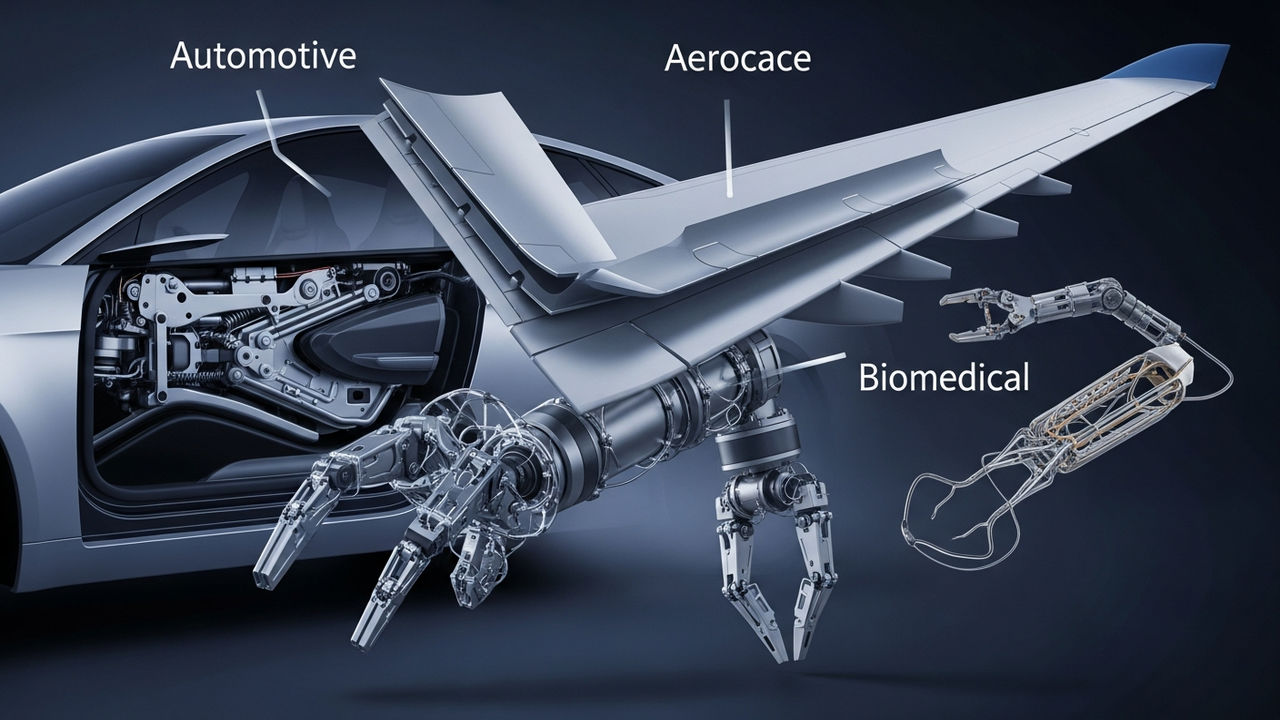
A recently published comprehensive review paper on Shape Memory Alloys (SMAs) highlights that their unique and superior properties are attracting significant attention for actuator applications across a wide range of fields, including automotive, aerospace, robotics, and biomedicine. This review encompasses both fundamental research and commercial applications of SMAs, clearly demonstrating their indispensable role in next-generation smart systems and devices.
Technical and Application Details
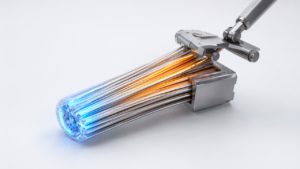
- Shape Memory Effect and Superelasticity: The primary characteristics of SMAs are the ‘shape memory effect,’ where they return to a pre-defined shape upon specific temperature changes, and ‘superelasticity,’ where they revert to their original shape after undergoing large deformations when stress is removed. These properties are based on a change in crystal structure known as martensitic phase transformation. This enables SMAs to serve as compact actuators, replacing complex mechanical components.
- Automotive Applications: SMAs are being applied in automated opening/closing mechanisms, sensors, and engine thermal management systems aimed at improving fuel efficiency in automobiles. Their use is advancing in components requiring precision and reliability, such as automatic transmission clutch systems and active suspension systems.
- Aerospace Applications: As lightweight, high-power actuators, SMAs are utilized in aircraft flap control, morphing wings, and deployable structures for spacecraft (e.g., antennas, solar panels). This allows for reduced system complexity and weight while improving reliability.
- Robotics Applications: SMAs are employed as actuators to achieve flexible and precise movements in soft robotics, microrobots, and prosthetic limbs. Their compactness and flexibility offer advantages over conventional motor-driven systems.
- Biomedical Applications: They are applied in medical implants (e.g., stents, orthodontic wires), surgical instruments, and drug delivery systems that function within the body. Biocompatible nickel-titanium alloys (NiTi, Nitinol) are particularly widely used in this field.
Background and Industry Context
Since the discovery of their properties in the 1960s, shape memory alloys have been the subject of intensive research in materials science and engineering. Their unique characteristics enable the design of compact, lightweight, flexible, and silent actuators—capabilities difficult to achieve with traditional motor, hydraulic, or pneumatic systems. In recent years, advancements in material composition optimization, processing techniques, and simulation technologies have significantly improved SMA reliability and performance, accelerating their commercial adoption.
Future Outlook and Strategic Significance
This review reconfirms the immense application potential of SMAs and outlines future directions for research and development. Especially as the integration of smart materials and IoT progresses, SMAs are expected to become core components of next-generation devices with self-sensing and self-regulating functions. Through further materials scientific exploration and engineering design optimization, SMAs are anticipated to be integrated into a wider range of products and systems, bringing transformative changes to our lives and industries. This will accelerate the realization of energy-efficient systems, safer medical devices, and more intelligent robots.
Get our weekly technology intelligence — free
Receive an infographic that lets you judge at a glance whether each field’s analysis report is worth reading.
Subscribe Free — Weekly Tech Intelligence
By subscribing, you’ll receive Troy-Technical’s weekly technology intelligence newsletter.
- Your email and selected fields are used only to deliver the newsletter.
- We never share your information with third parties.
- You can unsubscribe anytime via the link in each email.
See our Privacy Policy for details.
Takes about a minute · Unsubscribe anytime