Key Findings
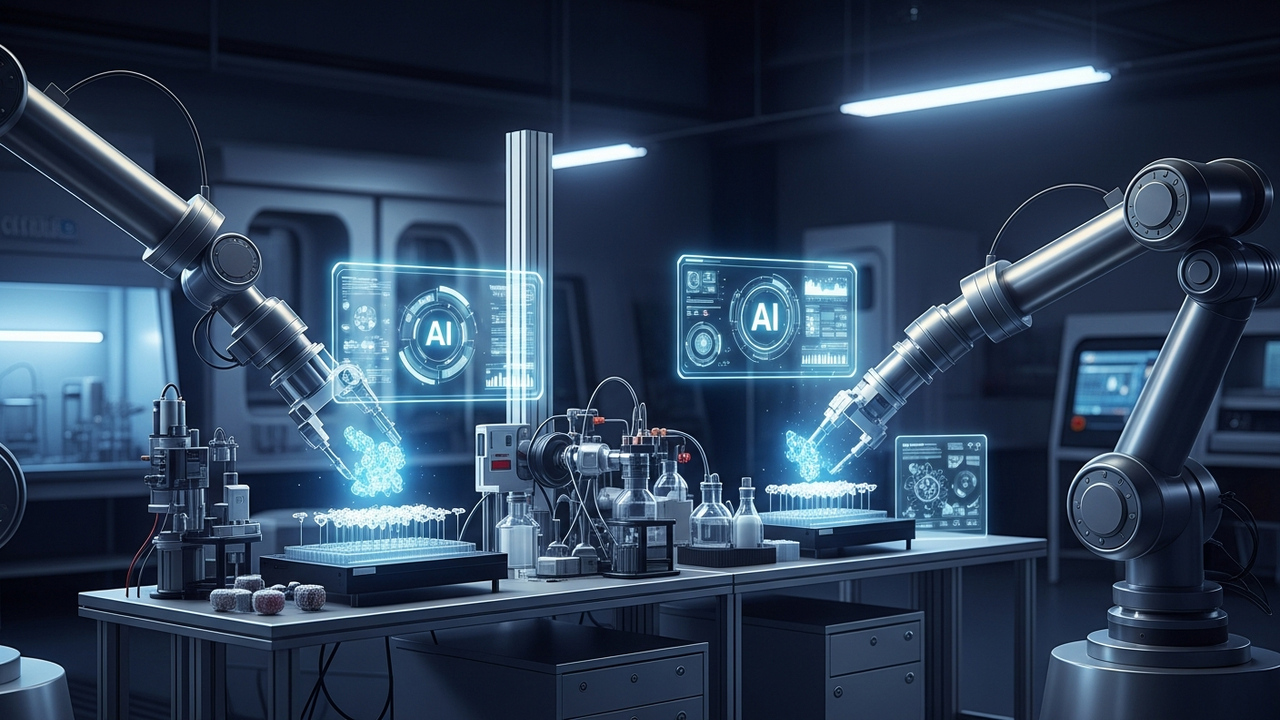
Argonne National Laboratory is developing a groundbreaking autonomous laboratory platform, the ‘Orchestrated Platform for Autonomous Laboratories (OPAL),’ which integrates AI-driven protein design with humanoid robotics. This ‘design-build-test-learn’ engine aims to dramatically accelerate scientific discovery in biotechnology applications, overcoming the time and resource constraints inherent in traditional experimental processes. OPAL’s overarching goal is to establish an end-to-end autonomous system that makes high-quality protein development more reliable and routine, thereby strengthening the resilience of US supply chains.
Technical / Clinical Details
OPAL is a multifaceted platform that combines cutting-edge technologies from AI, robotics, and computational science. At its core, AI algorithms design protein sequences with targeted properties. These designs are then automatically constructed and synthesized by humanoid robots, followed by evaluation in high-throughput, high-precision testing modules. The resulting experimental data is fed back into the AI models, completing a continuous cycle of learning and improvement. This automated ‘design-build-test-learn’ loop allows researchers to accomplish in days what would traditionally take weeks or months. For instance, when designing a protein with specific enzymatic activity, OPAL generates initial design candidates, robots synthesize and test them, and the AI refines subsequent designs based on these outcomes. This iterative process enables efficient exploration of vast design spaces, rapidly identifying optimal solutions.
Background & Context
Modern biotechnology relies heavily on the design and production of proteins across diverse fields, including pharmaceuticals, energy, agriculture, and materials science. However, conventional protein engineering has traditionally been a slow, labor-intensive, and trial-and-error dependent process, limiting the pace of discovery. This limitation became particularly evident during emergencies like pandemics, where rapid development of vaccines and therapeutics is crucial. The US government has prioritized strengthening biomanufacturing capabilities and domestic supply chains as a matter of national security, making projects like OPAL, supported by the DOE, indispensable for achieving these goals. Autonomous protein design and manufacturing hold the potential to revolutionize drug discovery, renewable energy sources, and the creation of advanced biomaterials, accelerating innovation while simultaneously reducing costs.
Strategic Significance & Outlook
The success of the OPAL platform is expected to have ripple effects beyond biomanufacturing, impacting broader scientific research. In the future, autonomous design and manufacturing approaches could extend to other biological systems beyond proteins, including nucleic acids, cells, and microorganisms. This would empower researchers to understand and manipulate more complex biological processes, accelerating the discovery of new bioproducts and therapies. Platforms like OPAL have the potential to fundamentally transform the nature of the laboratory, allowing scientists to focus on higher-level creative thinking, thereby ushering in a new era of scientific breakthroughs. From a supply chain perspective, OPAL is anticipated to play a critical role in ensuring the stable domestic supply of high-quality bioproducts, mitigating risks associated with external supply disruptions.
Source: https://www.anl.gov/cels/orchestrated-platform-for-autonomous-laboratories
Get our weekly technology intelligence — free
Receive an infographic that lets you judge at a glance whether each field’s analysis report is worth reading.
Subscribe Free — Weekly Tech Intelligence
By subscribing, you’ll receive Troy-Technical’s weekly technology intelligence newsletter.
- Your email and selected fields are used only to deliver the newsletter.
- We never share your information with third parties.
- You can unsubscribe anytime via the link in each email.
See our Privacy Policy for details.
Takes about a minute · Unsubscribe anytime