Key Findings
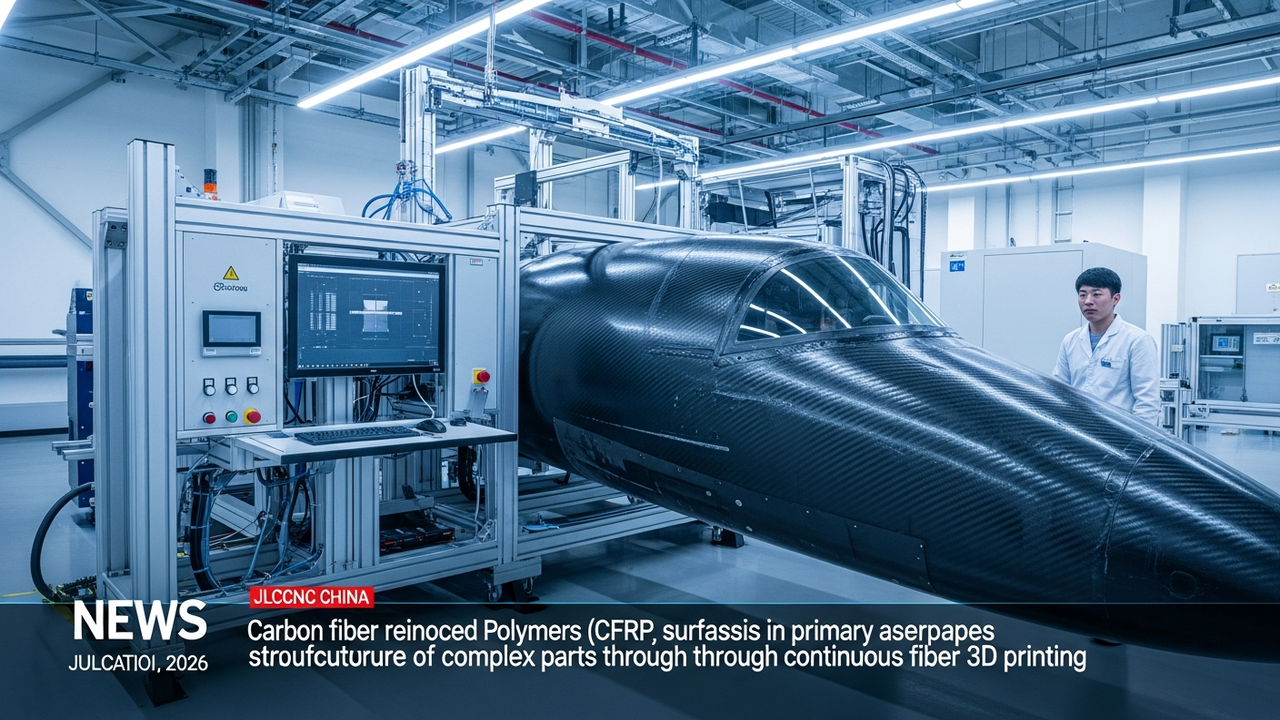
Carbon Fiber Reinforced Polymer (CFRP) has established itself as a high-performance structural composite, surpassing traditional metals in strength and stiffness, particularly for primary structures in aerospace and high-end sporting equipment. This technological advancement, coupled with the rise of continuous fiber 3D printing, now enables the fabrication of highly complex composite parts, dramatically increasing design freedom and performance capabilities.
Technical / Clinical Details
Composite materials are engineered by combining distinct materials to achieve superior properties unattainable by individual components. Polymer Matrix Composites (PMCs) are the most common, consisting of a polymer matrix (such as epoxy, polyester, vinyl ester thermosets, or PEEK, PA, PPS thermoplastics) reinforced with high-strength fibers like carbon, glass, or aramid. CFRP, by integrating high-modulus carbon fibers into a polymer matrix, offers significantly higher specific strength and stiffness compared to aluminum and steel. Continuous fiber 3D printing is a revolutionary additive manufacturing technique that precisely deposits continuous reinforcing fibers along optimized load paths. This method enables the creation of complex internal geometries and anisotropic structures with superior strength and precision, challenging limitations of conventional manufacturing.
Background & Context
The aerospace industry’s paramount goal is to reduce aircraft weight for improved fuel efficiency and lower emissions. CFRP has been widely adopted in modern aircraft like the Boeing 787 and Airbus A350, constituting approximately 50% of the airframe’s total weight. This integration contributes to up to a 20% improvement in fuel efficiency and significant reductions in operational costs. In sports equipment, CFRP’s lightweight and performance-enhancing properties are utilized in tennis rackets, bicycle frames, and golf shafts.
Strategic Significance & Outlook
The evolution of additive manufacturing, specifically continuous fiber 3D printing, is set to revolutionize composite design and production, enabling on-demand manufacturing of highly customized, high-performance components. This will accelerate the adoption of composites not only in aerospace but also in automotive, robotics, and medical device sectors. Furthermore, advancements in recycling technologies for thermoplastic composites are anticipated, ensuring that the pursuit of both sustainability and high performance remains a central focus for future research and development.
Source: https://jlccnc.com/blog/what-is-composite-material
Get our weekly technology intelligence — free
Receive an infographic that lets you judge at a glance whether each field’s analysis report is worth reading.
Subscribe Free — Weekly Tech Intelligence
By subscribing, you’ll receive Troy-Technical’s weekly technology intelligence newsletter.
- Your email and selected fields are used only to deliver the newsletter.
- We never share your information with third parties.
- You can unsubscribe anytime via the link in each email.
See our Privacy Policy for details.
Takes about a minute · Unsubscribe anytime