Key Findings
In response to the rapid advancement and widespread adoption of AI technologies, the data center industry is embarking on an unprecedented scale of infrastructure expansion. Notably, in Kentucky, Brookfield and NextEra Energy have jointly announced plans to transform a significant portion of the former Paducah Gaseous Diffusion Plant into an AI data center campus with an enormous power capacity of 1.2 gigawatts (GW). Concurrently, Meta is not only expanding its existing Hyperion campus in Northeast Louisiana into a colossal 5GW AI supercluster but has also revealed intentions to construct a new 1GW AI campus in Alberta, Canada. These announcements highlight that the provision of power and computational capacity for AI workloads has become one of the global economy’s top priorities.
Technical / Clinical Details
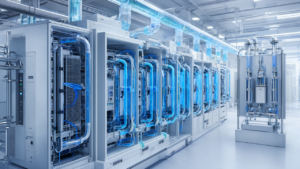
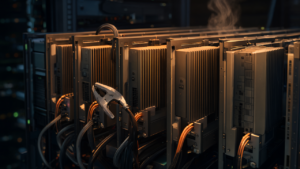
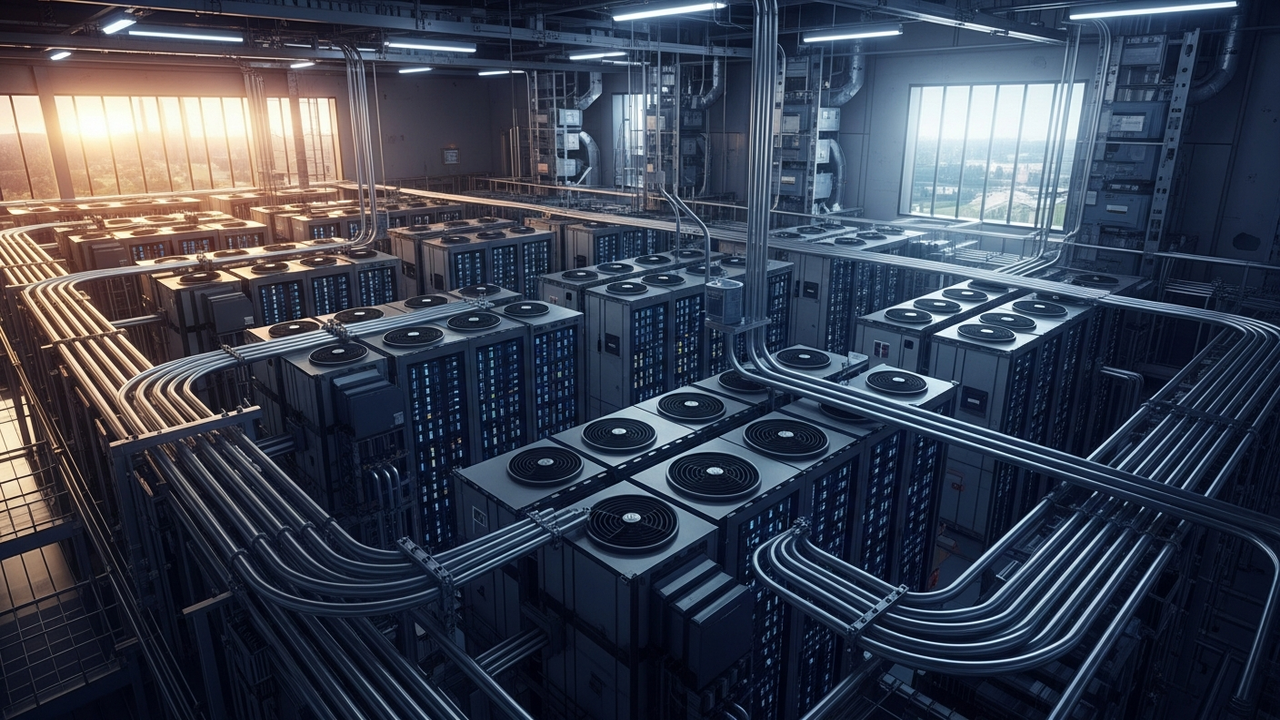
These mega-data center initiatives are designed to meet the specialized needs of high-performance computing (HPC) infrastructure for AI. Power capacities such as 1.2GW and 5GW are necessary to operate tens to hundreds of thousands of high-performance AI accelerators, including GPUs and LPUs. Facilities of this magnitude require advanced liquid cooling systems and sophisticated technologies for efficiently dissipating the immense heat generated by AI operations. Furthermore, to ensure uninterrupted power supply, it is common practice to integrate on-site power generation facilities (e.g., natural gas power plants) and large-scale battery storage systems. Meta’s use of the term ‘AI supercluster’ suggests these are not just conventional data centers but rather highly optimized, integrated computing hubs specifically tailored for advanced AI model training and inference, serving as foundational infrastructure for future AI research and development.
Background & Context
The advent of AI, particularly Generative AI, has fundamentally altered the demands placed on data centers, both qualitatively and quantitatively. Unlike traditional cloud computing, AI training necessitates vast amounts of power, advanced cooling capabilities, and high-speed network bandwidth. Companies are rapidly building large-scale AI infrastructure or partnering with specialized providers to gain a competitive edge in AI model development. The U.S. government, as part of its national AI strategy, emphasizes securing domestic computing resources, making the repurposing of former industrial sites a crucial avenue. Meta’s investment in Canada indicates the intensifying North American-wide competition in AI infrastructure.
Strategic Significance & Outlook
These large-scale data center projects are critical factors that will determine the pace of AI technology development and adoption. Power supply, cooling technologies, and accelerated construction timelines will be key challenges in future data center development. The realization of these facilities will enable the creation of more complex and advanced AI models, accelerating innovation across diverse fields such as autonomous driving, drug discovery, climate change modeling, and scientific research. These investments are also expected to have a significant impact on regional economic growth, particularly in the construction, energy, and IT infrastructure sectors. In the future, these data centers will serve as central hubs of the AI ecosystem, playing a vital role in global technological competition.
Get our weekly technology intelligence — free
Receive an infographic that lets you judge at a glance whether each field’s analysis report is worth reading.
Subscribe Free — Weekly Tech Intelligence
By subscribing, you’ll receive Troy-Technical’s weekly technology intelligence newsletter.
- Your email and selected fields are used only to deliver the newsletter.
- We never share your information with third parties.
- You can unsubscribe anytime via the link in each email.
See our Privacy Policy for details.
Takes about a minute · Unsubscribe anytime