Key Findings
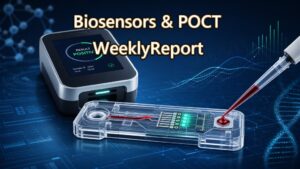
Electrochemical and electrical biosensors are making groundbreaking advancements in the detection of Alzheimer’s Disease (AD) blood protein biomarkers, specifically Aβ42 (Amyloid-beta 42) and Tau-441. A peptide-based electrochemical biosensor utilizing a palladium nanoparticle (PdNP)-modified electrode has, in particular, demonstrated the capability to measure Aβ42 at an ultra-low detection limit of 0.038 pg/mL. This sensor exhibited excellent consistency and high selectivity in both buffer and serum samples, yielding results comparable to conventional Enzyme-Linked Immunosorbent Assay (ELISA), suggesting its potential as a promising non-invasive tool for early AD diagnosis and disease monitoring.
Technical and Clinical Details
This review highlights diverse electrochemical and electrical biosensor approaches for AD biomarker detection. These include immunosensors (leveraging antibody-antigen interactions), molecularly imprinted polymers (MIPs), nucleic acid-based amplification strategies (e.g., HCR, RCA), and the incorporation of various nanomaterials (PdNPs, noble metal nanoparticles, semiconductor nanomaterials, carbon nanotubes, graphene oxide, metal-organic frameworks (MOFs)). The specific technology of the PdNP-modified electrode biosensor involves immobilizing a specific peptide aptamer for Aβ42 onto the electrode surface and measuring changes in the electrochemical signal upon binding with Aβ42. This approach achieves a wide linear detection range for Aβ42 (0.1 pg/mL to 1 μg/mL), high reproducibility, and long-term storage stability. Aptamer-functionalized carbon nanotube FET biosensors also exhibit high sensitivity and specificity for AD-related biomarker detection, enabling label-free, real-time measurements. These technologies provide rapid and sensitive analysis without complex pre-treatment, making them promising for point-of-care (POC) diagnostics in clinical settings.
Background and Industry Context
Alzheimer’s Disease is a rapidly increasing neurodegenerative disorder worldwide, and its early diagnosis is critical for slowing disease progression and enhancing the effectiveness of therapeutic interventions. However, current AD diagnosis often relies on expensive, invasive cerebrospinal fluid tests and PET scans, with limited accessibility. The detection of blood-based biomarkers offers significant promise as a non-invasive and scalable method for early diagnosis. Electrochemical and electrical biosensors, due to their miniaturization, low cost, high sensitivity, and ease of operation, provide an ideal platform for POC diagnostics. Advances in this research area have the potential to make early AD diagnosis accessible to more people and accelerate the development of new treatments.
Strategic Significance and Outlook
Electrochemical and electrical biosensors are expected to evolve into multiplexed detection platforms capable of simultaneously detecting multiple blood biomarkers for AD. This will further enhance diagnostic accuracy and enable personalized risk assessments. Integration with AI and machine learning could also lead to the development of smart diagnostic systems that analyze sensor data to predict disease progression or monitor treatment efficacy. For commercialization, standardization of devices, scalability of manufacturing processes, long-term validation of biocompatibility, and establishment of efficacy through large-scale clinical trials are indispensable. Overcoming these challenges will position these biosensors as revolutionary tools in AD diagnosis and management, significantly contributing to a dramatic improvement in patients’ quality of life.
Source: https://www.mdpi.com/2079-6374/16/8/426
Get our weekly technology intelligence — free
Receive an infographic that lets you judge at a glance whether each field’s analysis report is worth reading.
Subscribe Free — Weekly Tech Intelligence
By subscribing, you’ll receive Troy-Technical’s weekly technology intelligence newsletter.
- Your email and selected fields are used only to deliver the newsletter.
- We never share your information with third parties.
- You can unsubscribe anytime via the link in each email.
See our Privacy Policy for details.
Takes about a minute · Unsubscribe anytime