Key Findings
The Second Affiliated Hospital of Xi’an Jiaotong University in China announced the launch of a clinical study on August 1, 2026, for a wearable sweat sensor designed for continuous, non-invasive lactate monitoring in critically ill patients. This research seeks to validate the strong correlation between sweat and blood lactate levels, with the ultimate goal of enabling real-time diagnostics and early detection of disease progression in acute conditions such as sepsis.
Technical & Clinical Details
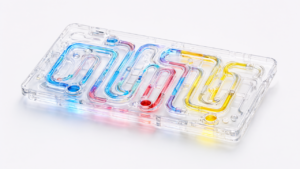
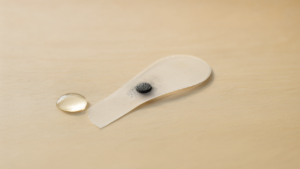
The developed wearable sensor boasts the capability to measure high concentrations of sweat lactate, up to 100 mmol/L. It features a high sensitivity of 89 nA/(cm²·mM) and a rapid response time of just 150 seconds. The device integrates temperature and pH sensors for enhanced accuracy and automated calibration. The system comprises a microfluidic sweat collection device, a hydrogel patch for electrically induced non-exercise perspiration, and a flexible integrated circuit with an intelligent display system.
Current clinical practice relies on intermittent blood draws for lactate measurement, which is invasive, time-consuming, and can delay critical interventions in rapidly evolving patient conditions. This wearable sensor, by providing continuous data directly from the skin, allows healthcare providers to monitor patient status in real-time. This has the potential to optimize the timing of therapeutic interventions and improve survival rates in life-threatening conditions like sepsis.
Background & Context
Lactate is a crucial biomarker indicating tissue hypoxia and metabolic dysfunction, essential for managing patients with sepsis, heart failure, and shock. However, existing invasive blood tests present challenges such as patient discomfort, infection risks from frequent sampling, and significant time delays in obtaining results. Wearable sensors are rapidly evolving as a non-invasive, continuous monitoring solution to overcome these limitations.
Strategic Significance & Outlook
If successful, this clinical study could position the wearable sweat lactate sensor as a standard monitoring tool in emergency departments and intensive care units (ICUs). Future developments are expected to integrate the simultaneous measurement of other metabolites and drug concentrations, evolving into a more comprehensive patient management system. This advancement promises to improve prognoses for critically ill patients and open new avenues for digital healthcare applications, including chronic disease home monitoring and sports medicine.
Source: https://www.patlynk.com/trial/NCT07716371
Get our weekly technology intelligence — free
Receive an infographic that lets you judge at a glance whether each field’s analysis report is worth reading.
Subscribe Free — Weekly Tech Intelligence
By subscribing, you’ll receive Troy-Technical’s weekly technology intelligence newsletter.
- Your email and selected fields are used only to deliver the newsletter.
- We never share your information with third parties.
- You can unsubscribe anytime via the link in each email.
See our Privacy Policy for details.
Takes about a minute · Unsubscribe anytime