Background
Inverted perovskite solar cells (PSCs) hold immense promise for applications such as tandem solar cells and building-integrated photovoltaics (BIPV), owing to their high efficiency and excellent transparency. However, achieving long-term reliability is paramount for their commercialization, with interfacial stability and defect control remaining significant challenges. A fundamental understanding of perovskite surfaces at the atomic level, and how they impact interfacial interactions, is crucial for fundamentally improving device stability. This research exemplifies cutting-edge work in this field, leveraging insights from surface chemistry to enhance the performance and durability of PSCs.
Key Findings
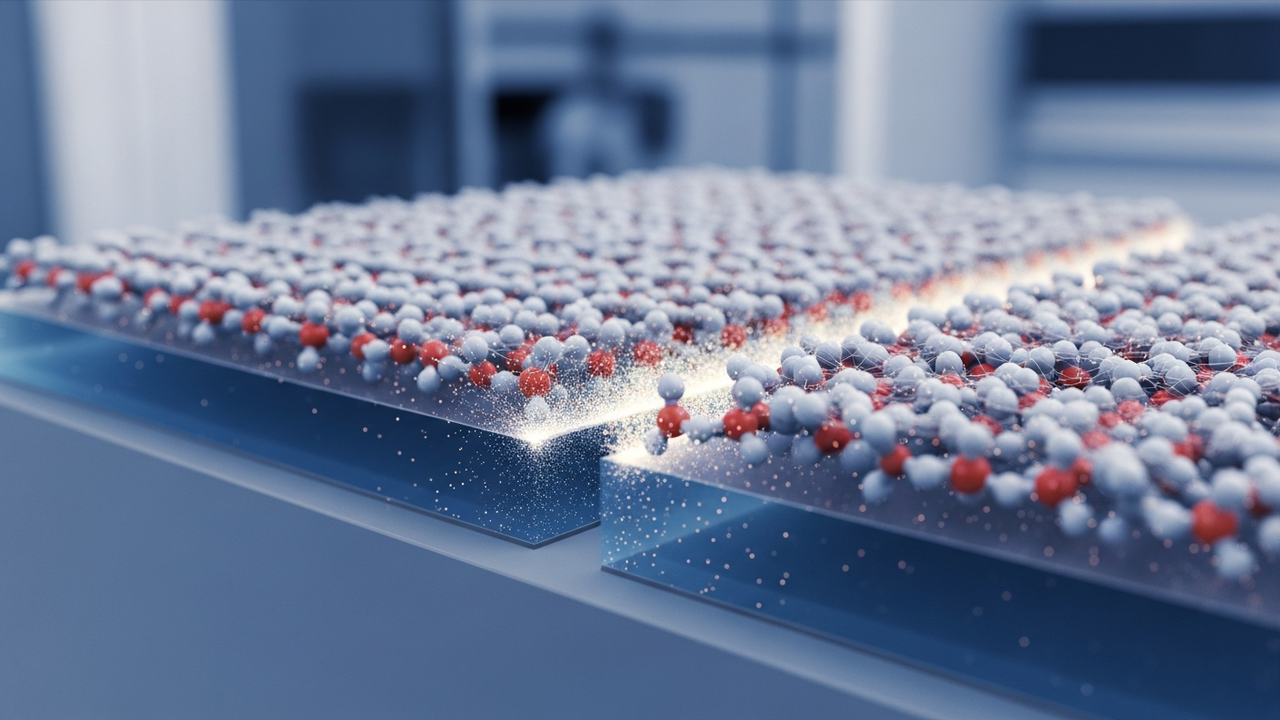
In a significant contribution to enhancing the efficiency and stability of perovskite solar cells, detailed research has revealed that the perovskite surface termination structure intricately influences interfacial energetics and material phase stability through molecular interactions. A contrasting outcome was observed: while piperazine interaction enhances structural stability (acting as a defect passivation agent) on PbX2-terminated perovskite surfaces, it may, conversely, accelerate material degradation on AX-terminated surfaces. This pivotal discovery underscores the critical importance of precise interfacial control of surface termination in the design of inverted perovskite solar cells (PSCs).
Technical Details
A primary cause of performance degradation in perovskite solar cells stems from defects present at the interface between the perovskite layer and the charge transport layer. These defects promote the recombination of light-generated charge carriers and compromise device stability. This study elucidated, at an atomic level, that the interaction with specific molecules (e.g., piperazine) differs significantly based on whether the perovskite crystal surface is PbX2-terminated (by lead and halide ions) or AX-terminated (by organic cation and halide ions). On PbX2-terminated surfaces, piperazine was shown to effectively passivate defects and improve both thermal and chemical stability. However, on AX-terminated surfaces, interaction with piperazine is suggested to destabilize the perovskite crystal structure, potentially accelerating degradation. This complex surface chemistry underscores that optimizing interfacial layer material selection and processing conditions necessitates targeting and controlling specific surface terminations.
Strategic Significance & Outlook
The insights gained from this research on perovskite surface termination provide indispensable guidelines for designing highly efficient and stable inverted perovskite solar cells. Moving forward, this will accelerate the molecular design of interfacial layers tailored for specific surface terminations, alongside the development of advanced manufacturing techniques to precisely control surface termination during production. Such advancements will significantly enhance device reproducibility and long-term reliability, opening pathways for practical implementation even under harsher environmental conditions. This achievement is anticipated to be a crucial step for perovskite solar cells to solidify their position as a leading next-generation solar cell technology.
Source: https://pubs.acs.org/doi/10.1021/acsami.6c05001
Get our weekly technology intelligence — free
Receive an infographic that lets you judge at a glance whether each field’s analysis report is worth reading.
Subscribe Free — Weekly Tech Intelligence
By subscribing, you’ll receive Troy-Technical’s weekly technology intelligence newsletter.
- Your email and selected fields are used only to deliver the newsletter.
- We never share your information with third parties.
- You can unsubscribe anytime via the link in each email.
See our Privacy Policy for details.
Takes about a minute · Unsubscribe anytime