Key Findings
A recent review paper provides an overview of the rapid progress in perovskite solar cells (PSCs), emphasizing their achievement of a certified world-record power conversion efficiency of approximately 27% and their potential for low manufacturing costs. The core of this paper lies in detailing the critical role of inorganic hole transport materials (HTMs) in n-i-p type PSCs. Inorganic HTMs are shown to be indispensable for enhancing solar cell performance, suppressing undesirable ion migration, and bolstering long-term operational stability, thereby underscoring the importance of material science approaches for PSC commercialization.
Technical and Material Details
In n-i-p perovskite solar cells, a hole transport layer (HTL) is essential for efficiently extracting holes generated by light and simultaneously preventing electron recombination. While conventional organic HTMs have shown high performance, their high cost, low stability, and complex synthesis routes have been barriers to commercialization. In contrast, inorganic HTMs offer advantages such as high conductivity, excellent thermal and chemical stability, and relatively low manufacturing costs. The review highlights key inorganic HTMs like nickel oxide (NiOx), copper thiocyanate (CuSCN), and carbon-based materials, discussing how their respective material properties contribute to PSC performance, particularly in improving open-circuit voltage (Voc) and optimizing fill factor (FF). It also delves into the mechanisms by which inorganic HTMs improve charge transport at the interface with the perovskite layer and provide defect passivation effects, thereby suppressing ion migration and enhancing device stability.
Background and Industry Context
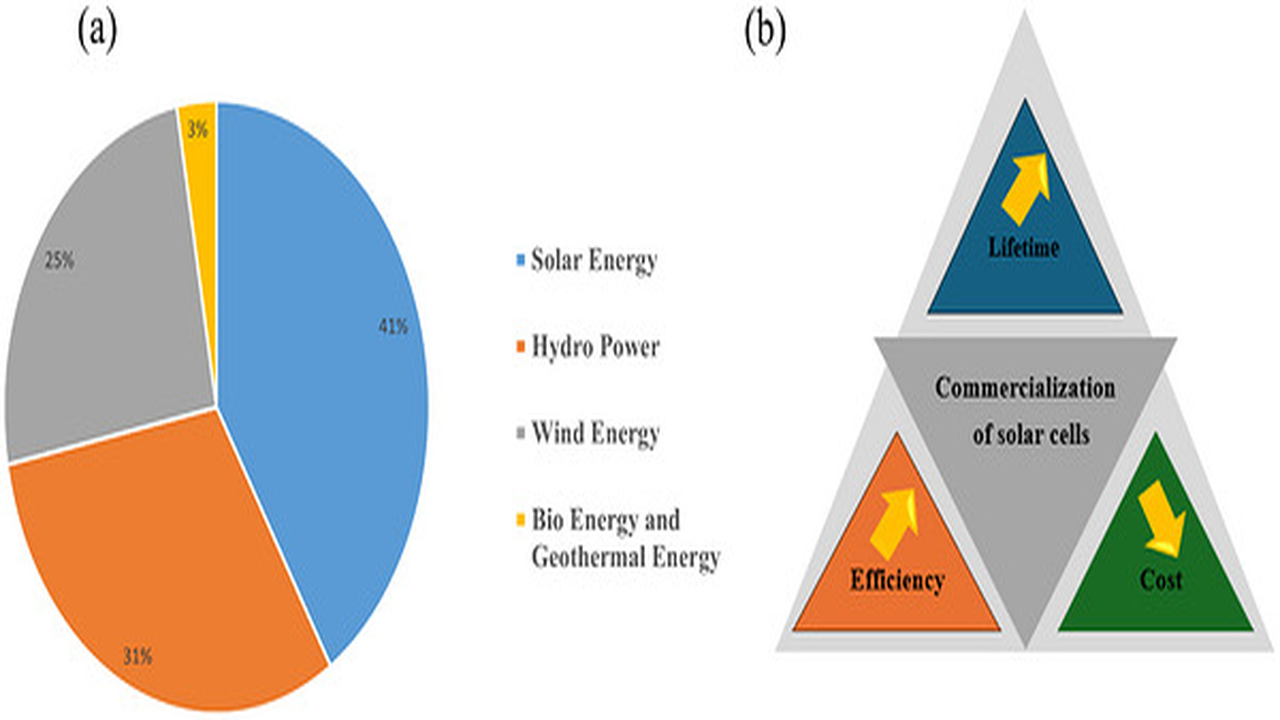
Perovskite solar cells are seen as a promising next-generation technology to replace silicon solar cells due to their rapid efficiency improvements at the laboratory level. However, for commercialization, maintaining efficiency and establishing long-term reliability are paramount. The choice and optimization of hole transport materials significantly impact the overall stability and efficiency of the device. The use of inorganic HTMs is recognized as a promising solution to this challenge, enabling the development of more robust and cost-effective PSCs. Progress in this research area will be one of the decisive factors for the market introduction of perovskite technology.
Strategic Significance and Outlook
Further research and optimization of inorganic hole transport materials are indispensable elements in the commercialization roadmap for perovskite solar cells. This review paper provides guidance for identifying promising inorganic HTMs and improving their synthesis and application techniques. It is expected that the development of large-area, highly stable PSC modules using these materials will accelerate, ultimately leading to higher performance and a lower Levelized Cost of Energy (LCOE) compared to traditional solar cells. This could allow perovskite solar cells to be more widely adopted in the renewable energy market and significantly contribute to the global energy transition.
Source: https://pmc.ncbi.nlm.nih.gov/articles/PMC13360878/
Get our weekly technology intelligence — free
Receive an infographic that lets you judge at a glance whether each field’s analysis report is worth reading.
Subscribe Free — Weekly Tech Intelligence
By subscribing, you’ll receive Troy-Technical’s weekly technology intelligence newsletter.
- Your email and selected fields are used only to deliver the newsletter.
- We never share your information with third parties.
- You can unsubscribe anytime via the link in each email.
See our Privacy Policy for details.
Takes about a minute · Unsubscribe anytime