Key Findings
Researchers at UVA Health have made a significant discovery: gliomas, a particularly aggressive type of brain tumor, demonstrate a higher susceptibility to targeted drug delivery using focused ultrasound compared to healthy brain tissue. This finding has profound implications for treating these notoriously difficult cancers. Coupled with this, the study has pinpointed an optimal ‘Goldilocks’ size range for drug molecules, suggesting a pathway to substantially improve the efficacy of therapeutics delivered across the blood-brain barrier (BBB) to tumors.
Technical / Clinical Details
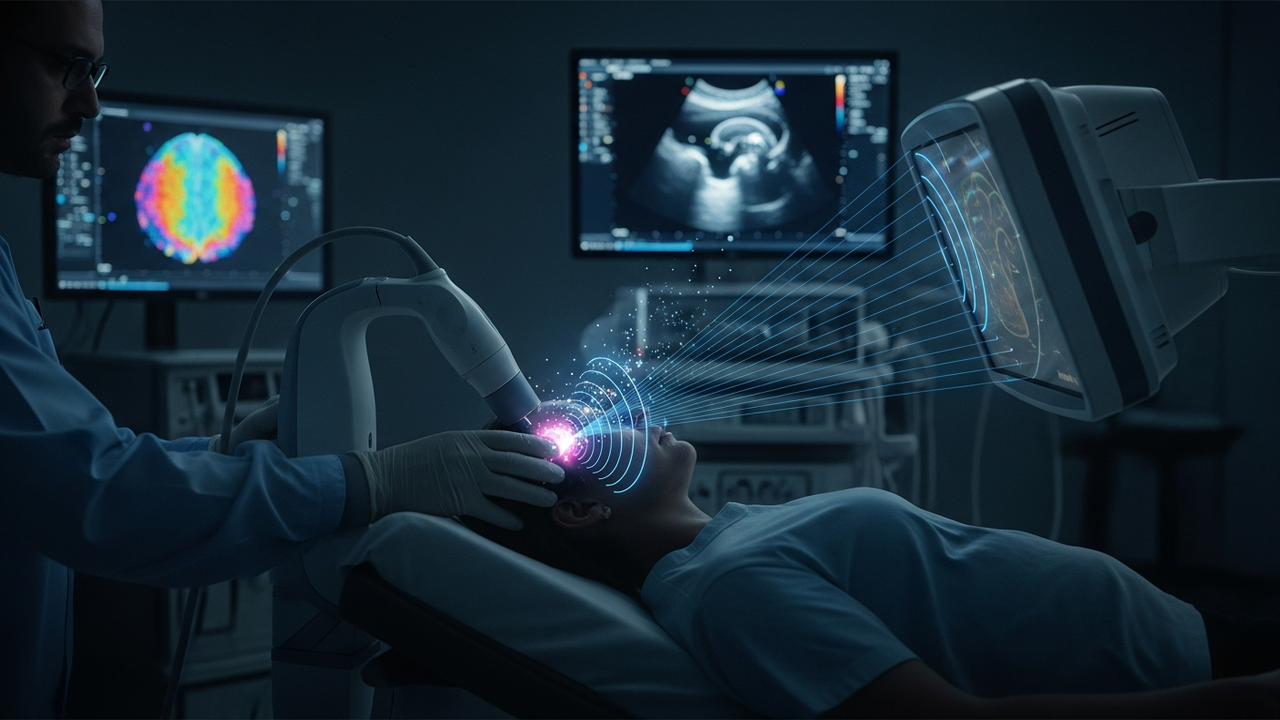
The focused ultrasound technique involves injecting tiny microbubbles into the bloodstream, which are then activated by precisely targeted sound waves. This activation temporarily and reversibly opens the tight junctions of the BBB, creating a transient window for therapeutic agents to enter the brain. The UVA Health research specifically highlighted that glioma tissue, likely due to its inherent vascular abnormalities and altered microenvironment, responds more favorably to this ultrasound-induced BBB opening than surrounding normal brain tissue. This ‘selective permeability’ is crucial for maximizing drug concentration within the tumor while minimizing exposure to healthy brain regions, thereby reducing potential side effects. Furthermore, the study meticulously characterized the relationship between drug molecule size and delivery efficiency, identifying a specific range that maximizes BBB penetration and tumor accumulation. This precise sizing data offers actionable insights for the rational design of next-generation glioblastoma drugs.
Background & Context
The blood-brain barrier remains a formidable challenge in neuro-oncology, blocking virtually all conventional chemotherapy drugs from effectively reaching brain tumors like glioblastoma. This biological barrier is a primary reason for the poor prognosis associated with these cancers. Current treatment modalities, including surgery, radiation, and systemic chemotherapy, often achieve limited success due to the inability to deliver sufficient drug concentrations to the tumor site. Focused ultrasound has emerged as a promising non-invasive technology for BBB disruption, with ongoing clinical trials for various neurological conditions, including Alzheimer’s disease. The UVA Health study represents a critical advancement in applying this technology specifically to brain cancer, offering a pathway to overcome the drug delivery bottleneck and improve therapeutic outcomes.
Strategic Significance & Outlook
This research marks a pivotal step forward in glioblastoma therapy, offering a strategy to enhance both the efficacy and safety of drug delivery. The identification of an optimal drug size range, combined with the tumor-selective nature of ultrasound-mediated BBB opening, will inform the development of highly targeted and potent new therapies. The findings are expected to accelerate preclinical and clinical development of focused ultrasound as a drug delivery platform for brain tumors. Beyond glioblastoma, this approach could potentially be adapted for other brain cancers and neurological disorders where BBB penetration is a critical challenge. For pharmaceutical companies and medical device manufacturers, this opens significant opportunities for novel drug-device combination products, promising a future with more effective and personalized brain cancer treatments globally.
Get our weekly technology intelligence — free
Receive an infographic that lets you judge at a glance whether each field’s analysis report is worth reading.
Subscribe Free — Weekly Tech Intelligence
By subscribing, you’ll receive Troy-Technical’s weekly technology intelligence newsletter.
- Your email and selected fields are used only to deliver the newsletter.
- We never share your information with third parties.
- You can unsubscribe anytime via the link in each email.
See our Privacy Policy for details.
Takes about a minute · Unsubscribe anytime