Key Findings
Pathos AI has licensed JSKN016, a groundbreaking first-in-class TROP2/HER3 bispecific antibody-drug conjugate (bsADC), from China’s Alphamab Oncology in a deal valued at up to $2.25 billion, including a $125 million upfront payment and up to $2.1 billion in development and commercial milestones. This substantial agreement underscores Pathos AI’s strategic commitment to bolster its pipeline with innovative therapies for intractable cancers, particularly triple-negative breast cancer (TNBC). Simultaneously, Pathos AI announced a separate collaboration with AstraZeneca for the early clinical development of AZD4241, a preclinical PROTAC.
Technical / Clinical Details
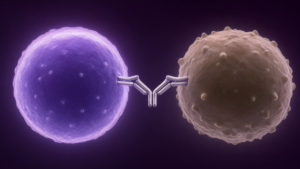
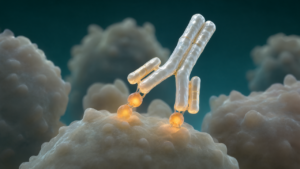
JSKN016 is a unique bsADC designed to simultaneously target two prevalent cancer-associated antigens: TROP2 and HER3. TROP2 is highly expressed in many solid tumors, including TNBC, and is involved in cell proliferation, survival, and metastasis. HER3, a member of the EGFR family, contributes to tumor growth and drug resistance through PI3K/AKT pathway activation. By engaging both targets, JSKN016 aims to achieve broader tumor cell targeting and potentially synergistic anti-tumor effects. The ADC delivers a potent topoisomerase I inhibitor payload intracellularly, disrupting DNA replication and inducing apoptosis in cancer cells. JSKN016 is currently in Phase III development for triple-negative breast cancer in China, with subcutaneous formulations also undergoing Phase Ib trials in China and Phase I trials in Australia, highlighting efforts to improve patient convenience. The collaboration with AstraZeneca focuses on AZD4241, a preclinical PROTAC (proteolysis-targeting chimera), which represents a novel modality for targeted protein degradation.
Background & Context
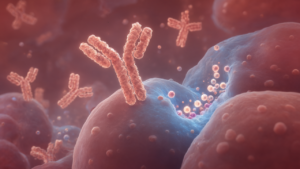
Antibody-drug conjugates (ADCs) have emerged as a significant class of next-generation cancer therapeutics, offering targeted delivery of cytotoxic agents to cancer cells, thereby enhancing efficacy while minimizing systemic side effects. Bispecific ADCs represent an evolution in this field, promising even greater specificity and potency than monospecific ADCs by engaging multiple antigens on tumor cells. This strategy is particularly critical for addressing the heterogeneous nature of cancer and overcoming resistance mechanisms. Triple-negative breast cancer remains an aggressive and challenging subtype with limited treatment options and a poor prognosis, creating a high unmet medical need. AI-powered drug discovery companies like Pathos AI leverage extensive biological data and computational capabilities to rapidly identify and advance promising pipeline assets in such critical areas.
Strategic Significance & Outlook
The licensing of JSKN016 highlights the burgeoning potential of bispecific ADC platforms and the increasing role of AI in strategic drug development decisions. Successful completion of the Phase III trial in China would position JSKN016 as a vital new treatment option for TNBC patients. The development of subcutaneous formulations also addresses patient convenience and potential adherence. Moreover, Pathos AI’s PROTAC development partnership with AstraZeneca signifies the broadening application of AI across diverse therapeutic modalities. These advancements are crucial for shaping the future of cancer care, accelerating the development of more effective and personalized treatments for complex malignancies, driven by AI-led innovation.
Get our weekly technology intelligence — free
Receive an infographic that lets you judge at a glance whether each field’s analysis report is worth reading.
Subscribe Free — Weekly Tech Intelligence
By subscribing, you’ll receive Troy-Technical’s weekly technology intelligence newsletter.
- Your email and selected fields are used only to deliver the newsletter.
- We never share your information with third parties.
- You can unsubscribe anytime via the link in each email.
See our Privacy Policy for details.
Takes about a minute · Unsubscribe anytime