Key Findings
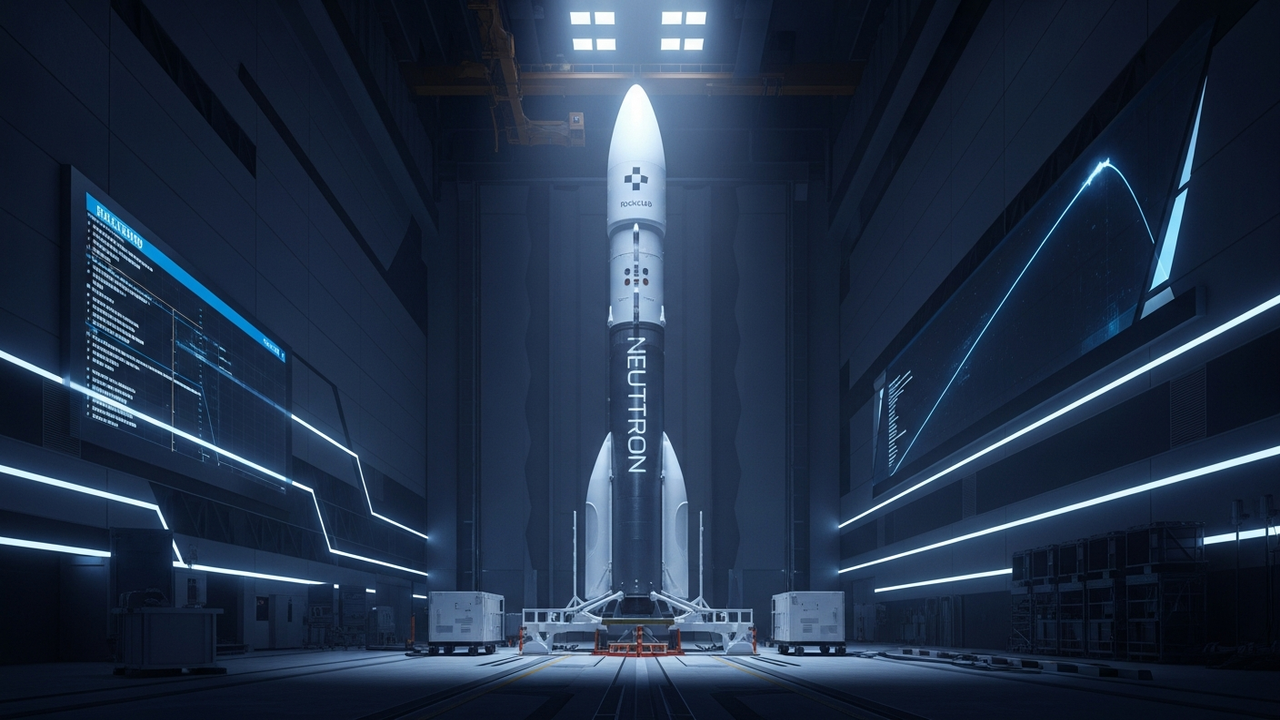
Rocket Lab is solidifying its business foundation, boasting over 50 successful launches of its Electron small launch vehicle and a robust backlog exceeding $1.1 billion (approximately ¥160 billion JPY). The company is now aggressively targeting the maiden flight of its reusable medium-lift rocket, “Neutron,” within 2026. This move is expected to mark a full-scale entry into the market segment currently served by SpaceX’s Falcon 9, positioning Neutron as a key driver for significant revenue growth.
Technical Details
Electron, Rocket Lab’s workhorse rocket, has already established high reliability and operational frequency in the small satellite launch market. Neutron, on the other hand, features a reusable first stage and an innovative fairing design that efficiently accommodates and deploys satellite payloads. This medium-lift rocket is projected to have the capability to deliver up to 13,000 kg to low Earth orbit, aiming to provide competitive costs and flexibility, particularly for large-scale satellite constellation deployments. The first-stage landing and recovery technology is a crucial component for cost reduction and increased launch cadence.
Background & Context
The global space industry is experiencing a surge in demand for satellite constellations, driven by small- to medium-lift rockets, with applications expanding across Earth observation, communications, and navigation. In this market, SpaceX’s Falcon 9 currently holds a dominant share. However, Neutron’s introduction promises to offer customers a new alternative, stimulating greater competition. Beyond launch services, Rocket Lab also operates a space systems business, including satellite component manufacturing, striving to establish market dominance through a vertically integrated business model.
Strategic Significance & Outlook
The maiden flight of Neutron in 2026 and its subsequent commercial operations will represent a pivotal turning point in Rocket Lab’s growth strategy. Should Neutron achieve success in the medium-lift market, the company will be capable of addressing a broader range of customer needs, from small to medium satellites, potentially leading to a substantial expansion of its market share. This, in turn, is expected to further enhance its revenue and market valuation, solidifying its position as a major global space company. Investors are keenly watching Neutron’s development progress and commercialization success.
Get our weekly technology intelligence — free
Receive an infographic that lets you judge at a glance whether each field’s analysis report is worth reading.
Subscribe Free — Weekly Tech Intelligence
By subscribing, you’ll receive Troy-Technical’s weekly technology intelligence newsletter.
- Your email and selected fields are used only to deliver the newsletter.
- We never share your information with third parties.
- You can unsubscribe anytime via the link in each email.
See our Privacy Policy for details.
Takes about a minute · Unsubscribe anytime