Key Findings
Recent research and corporate demonstrations indicate that crystal growth in microgravity environments can yield “ultra-pure” crystals with more uniform size and structure than what is achievable on Earth, thereby showing significant potential for dramatically enhancing semiconductor device performance. Notably, UK-based space manufacturing startup Space Forge has reported achieving crucial milestones towards realizing in-orbit semiconductor material manufacturing based on this scientific principle, paving the way for commercialization in this sector.
Technical Details
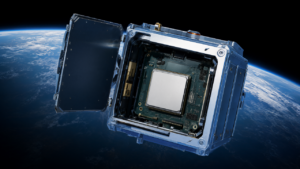
In terrestrial crystal growth processes, gravity-induced convection and impurity sedimentation are primary factors leading to crystal defects and non-uniform structures. However, in a microgravity environment, these effects are eliminated, allowing for more controlled self-assembly processes of materials and the formation of ideal crystal lattice structures. This could significantly improve semiconductor electron mobility, reduce defect density, and extend device lifespan and reliability. Space Forge, utilizing its proprietary in-orbit manufacturing platform, has successfully conducted crystal growth experiments for next-generation semiconductor materials like Gallium Arsenide (GaAs) and Silicon Carbide (SiC), achieving high-purity and high-quality crystal production.
Background & Context
The global semiconductor industry is confronting the limits of Moore’s Law and seeking new approaches to performance enhancement. Crystal growth in microgravity environments is emerging as one of the innovative solutions to this challenge. Demand for ultra-high-performance semiconductors manufactured in space is expected to grow, especially for applications requiring extreme reliability, such as in the space and defense sectors, high-performance computing, and quantum technologies. Space Forge’s achievements clearly demonstrate that in-space manufacturing has moved beyond conceptual validation to practical industrial application.
Strategic Significance & Outlook
The milestones achieved by Space Forge indicate that on-orbit manufacturing of semiconductor materials is not only technologically feasible but also commercially viable. Moving forward, the company will focus on scaling up its manufacturing capabilities and establishing efficient return-to-Earth systems for its products. The market introduction of ultra-high-performance semiconductors manufactured in space has the potential to revolutionize the entire electronics industry and accelerate the development of next-generation technologies. Researchers, engineers, and investors are placing high hopes on the future of these “space-made semiconductors.”
Source: https://bebeez.eu/2026/08/06/can-you-really-make-semiconductors-in-space/
Get our weekly technology intelligence — free
Receive an infographic that lets you judge at a glance whether each field’s analysis report is worth reading.
Subscribe Free — Weekly Tech Intelligence
By subscribing, you’ll receive Troy-Technical’s weekly technology intelligence newsletter.
- Your email and selected fields are used only to deliver the newsletter.
- We never share your information with third parties.
- You can unsubscribe anytime via the link in each email.
See our Privacy Policy for details.
Takes about a minute · Unsubscribe anytime