Key Findings
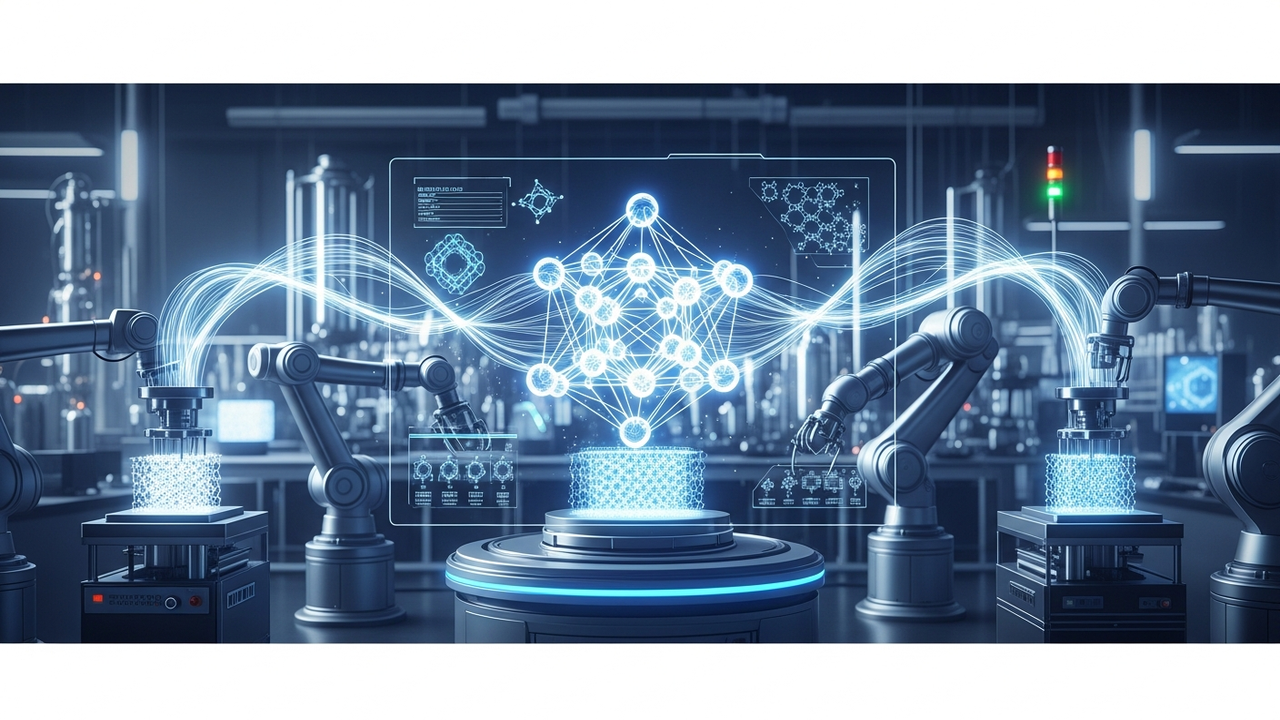
A new integrated approach leveraging artificial intelligence is poised to accelerate the entire materials discovery process. This method synergizes computational material design, data infrastructure development, synthesis planning, and autonomous experimentation to dramatically reduce the time traditionally required for materials development. A core component of this innovation is the application of generative AI models for ‘inverse materials design,’ where material compositions are derived from desired functional properties.
Technical / Clinical Details
This integrated AI methodology aims for a holistic management of the complex materials discovery workflow, rather than isolated, task-specific applications of AI. Specifically, AI generates high-potential material candidates, assesses their synthetic feasibility, and then autonomous experimental systems synthesize and characterize these materials. The experimental results are subsequently fed back into the AI models, creating a continuous learning loop. This enables researchers to efficiently identify optimal materials from a vast array of possibilities. Furthermore, overcoming limitations of existing material databases and adhering to FAIR principles (Findable, Accessible, Interoperable, Reusable) for data management and sharing are deemed critical for enhancing AI model performance and reproducibility.
Background & Context
The development of novel functional materials is essential for advancements across numerous industries, including clean energy, healthcare, and electronics. However, traditional materials science research has historically relied on time-consuming and costly trial-and-error processes, hindering the pace of innovation. The introduction of AI offers a solution to this bottleneck, paving the way for faster and more efficient breakthroughs. For research institutions equipped with high-throughput experimental facilities and computational resources, this integrated AI approach represents a significant strategic advantage in establishing competitive leadership.
Strategic Significance & Outlook
The establishment of such an integrated AI materials discovery system is expected to shorten the time-to-market for new materials from decades to mere months. In the future, the vision of ‘autonomous laboratories,’ where AI independently designs, synthesizes, and optimizes material properties without human intervention, is within reach. This paradigm shift promises to usher in an entirely new era of materials science, encompassing basic research through to applied development, and delivering unprecedented societal and industrial benefits.
Get our weekly technology intelligence — free
Receive an infographic that lets you judge at a glance whether each field’s analysis report is worth reading.
Subscribe Free — Weekly Tech Intelligence
By subscribing, you’ll receive Troy-Technical’s weekly technology intelligence newsletter.
- Your email and selected fields are used only to deliver the newsletter.
- We never share your information with third parties.
- You can unsubscribe anytime via the link in each email.
See our Privacy Policy for details.
Takes about a minute · Unsubscribe anytime