Key Findings
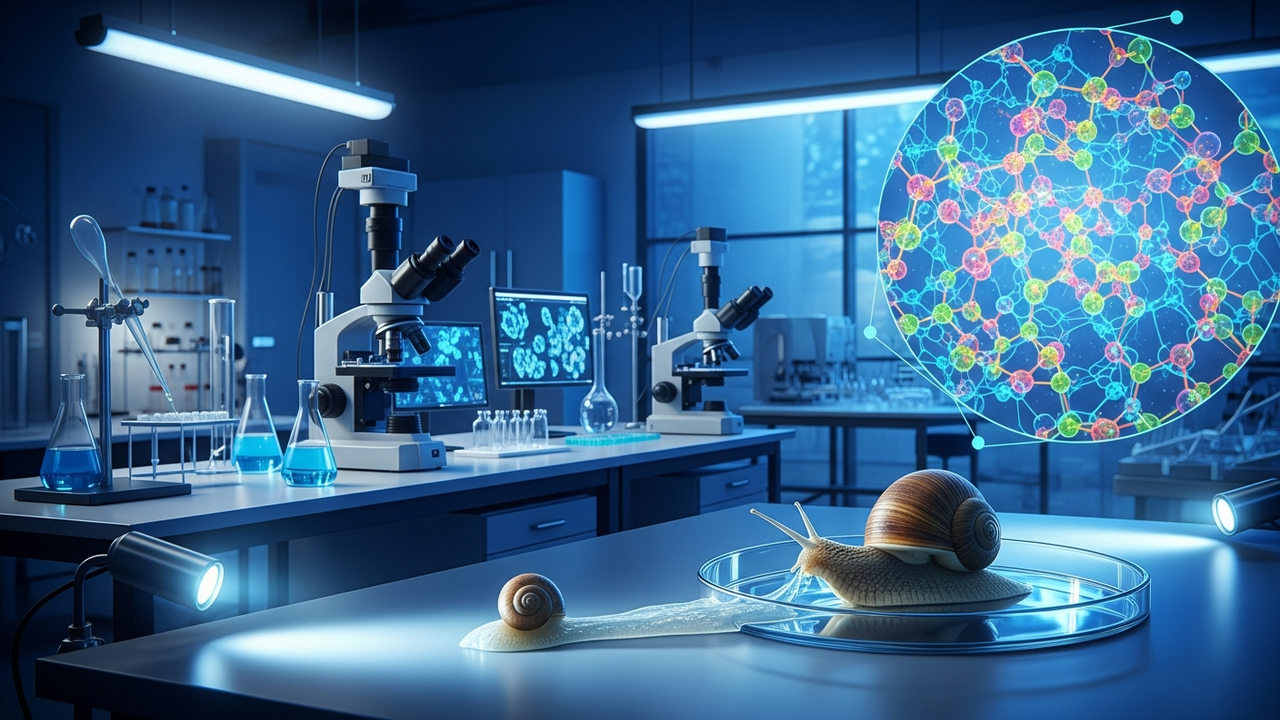
A team of researchers at the Max Planck Institute of Colloids and Interfaces has thoroughly elucidated the remarkable multifunctional properties of garden snail slime. This mucus is an incredibly intriguing biomaterial, capable of dynamically transforming between liquid, solid, sticky, or slippery states, depending on its functional requirements. This study, published in the journal ‘Science,’ is the first to detail the biochemical ‘recipes’ that snails use to precisely tailor these diverse mucal properties, offering significant inspiration for the development of next-generation biomimetic materials.
Technical / Clinical Details
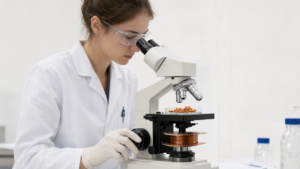
The research team utilized a suite of advanced analytical techniques, including mass spectrometry, nuclear magnetic resonance (NMR), rheological measurements, and atomic force microscopy (AFM), to analyze the snail slime. The findings revealed that the slime is a complex mixture of water, proteins, polysaccharides, and various ions. Crucially, the study demonstrated that the properties of the mucus are determined by the ratio of these components and the types of intermolecular interactions formed between proteins and polysaccharides. For example, when sensing danger and needing to anchor itself, specific proteins form cross-linked structures, causing the mucus to transform into a more solid-like state to enhance adhesion. Conversely, during locomotion, a different combination of proteins and polysaccharides keeps the mucus in a more slippery, liquid state, reducing friction. The research identified specific biochemical markers and their correlation with physical properties, illustrating how skillfully snails switch these ‘recipes’ in response to environmental changes and behavior. This deeper understanding provides novel design principles for ‘smart biomaterials’ that dynamically change properties in response to external stimuli.
Background & Context
Biomimetics, an interdisciplinary field, draws inspiration from the excellent functions found in nature to develop new materials and technologies. Snail slime, with its versatility and environmental adaptability, has long captivated the attention of scientists. Traditional synthetic adhesives and coating materials often contain toxic chemicals, function only under specific environmental conditions, or are difficult to recycle. Deciphering the properties of snail slime offers a new approach to overcome these challenges and develop sustainable, eco-friendly materials. Applications are particularly anticipated in specialized environments, such as adhesives that function underwater or coatings that control friction on specific surfaces.
Strategic Significance & Outlook
The elucidation of snail slime’s biochemical recipes holds the potential to innovate numerous industrial sectors. Specifically, in the medical field, it could accelerate the development of highly biocompatible surgical adhesives, advanced drug delivery systems, and medical patches that function effectively in moist environments. In industrial applications, it may inspire new designs for reversible adhesives, surface coatings with controlled friction properties, and even self-healing materials. Furthermore, this research is expected to promote the development of completely biodegradable and low-environmental-impact ‘green materials,’ contributing to the solution of plastic pollution. In the future, humans might be able to autonomously synthesize smart materials that change function in response to external stimuli, based on the principles learned from snail slime, ushering in a new era of sustainable materials innovation.
Source: https://www.mpikg.mpg.de/6933235/news_publication_26903425_transferred?c=6443396
Get our weekly technology intelligence — free
Receive an infographic that lets you judge at a glance whether each field’s analysis report is worth reading.
Subscribe Free — Weekly Tech Intelligence
By subscribing, you’ll receive Troy-Technical’s weekly technology intelligence newsletter.
- Your email and selected fields are used only to deliver the newsletter.
- We never share your information with third parties.
- You can unsubscribe anytime via the link in each email.
See our Privacy Policy for details.
Takes about a minute · Unsubscribe anytime