Background
Small electronic devices, including wearables, IoT gadgets, and environmental sensors, face significant challenges due to their heavy reliance on batteries, which present issues concerning recharging cycles, lifespan, and environmental impact. Thermoelectric generation, the process of converting waste heat energy from the environment or the human body directly into electricity, has long been a key area of focus for sustainable power solutions. The advent of bismuth-telluride-perovskite represents a substantial stride towards the practical application of thermoelectric materials, particularly for body-worn devices and continuously monitoring sensor systems, promising a transformative shift in their power paradigms.
Key Findings
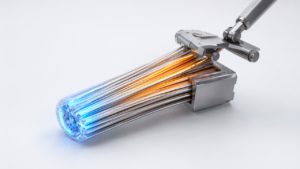
Engineers in Switzerland have unveiled an innovative solid-state thermoelectric material, designated ‘bismuth-telluride-perovskite,’ capable of efficiently generating electricity from even minimal temperature differences. This novel material effectively harnesses low-grade heat, such as body warmth, by uniquely maintaining high electrical conductivity while simultaneously suppressing thermal conduction. This dual capability represents a critical advancement, paving the way for a new generation of truly battery-free electronic devices.
Technical Details
The developed bismuth-telluride-perovskite material possesses a unique crystalline structure and optimized composition specifically engineered for efficient thermoelectric conversion. The performance of thermoelectric materials is quantified by the ‘figure of merit ZT,’ which integrates the Seebeck coefficient, electrical conductivity, and thermal conductivity. This novel material remarkably achieves both high electrical conductivity (facilitating easy charge carrier flow) and low thermal conductivity (resisting heat transfer), a combination that has historically proven challenging to achieve simultaneously. By maintaining a significant temperature gradient across the material, it maximizes the direct conversion of thermal energy into electrical energy, thereby overcoming a major hurdle for practical thermoelectric applications.
Strategic Significance and Outlook
This solid-state thermoelectric material is anticipated to have widespread applications across numerous fields. These include battery-free wearables for healthcare (e.g., continuous heart rate monitors, activity trackers), smart textiles (e.g., self-powered athletic wear), industrial self-powered sensors (e.g., machinery temperature and vibration monitors), and even stealth technologies in military applications (e.g., thermal signature reduction). Its intrinsic ability to continuously supply power from the temperature differential between the human body and the ambient environment could enable truly ‘always-on’ devices, eliminating the need for periodic charging or battery replacement. Future research and development efforts will focus on enhancing material stability, reducing manufacturing costs, and achieving even higher conversion efficiencies. This foundational technology holds significant potential to contribute to a sustainable society and enable advanced digital lifestyles.
Source: #
Get our weekly technology intelligence — free
Receive an infographic that lets you judge at a glance whether each field’s analysis report is worth reading.
Subscribe Free — Weekly Tech Intelligence
By subscribing, you’ll receive Troy-Technical’s weekly technology intelligence newsletter.
- Your email and selected fields are used only to deliver the newsletter.
- We never share your information with third parties.
- You can unsubscribe anytime via the link in each email.
See our Privacy Policy for details.
Takes about a minute · Unsubscribe anytime