Key Findings
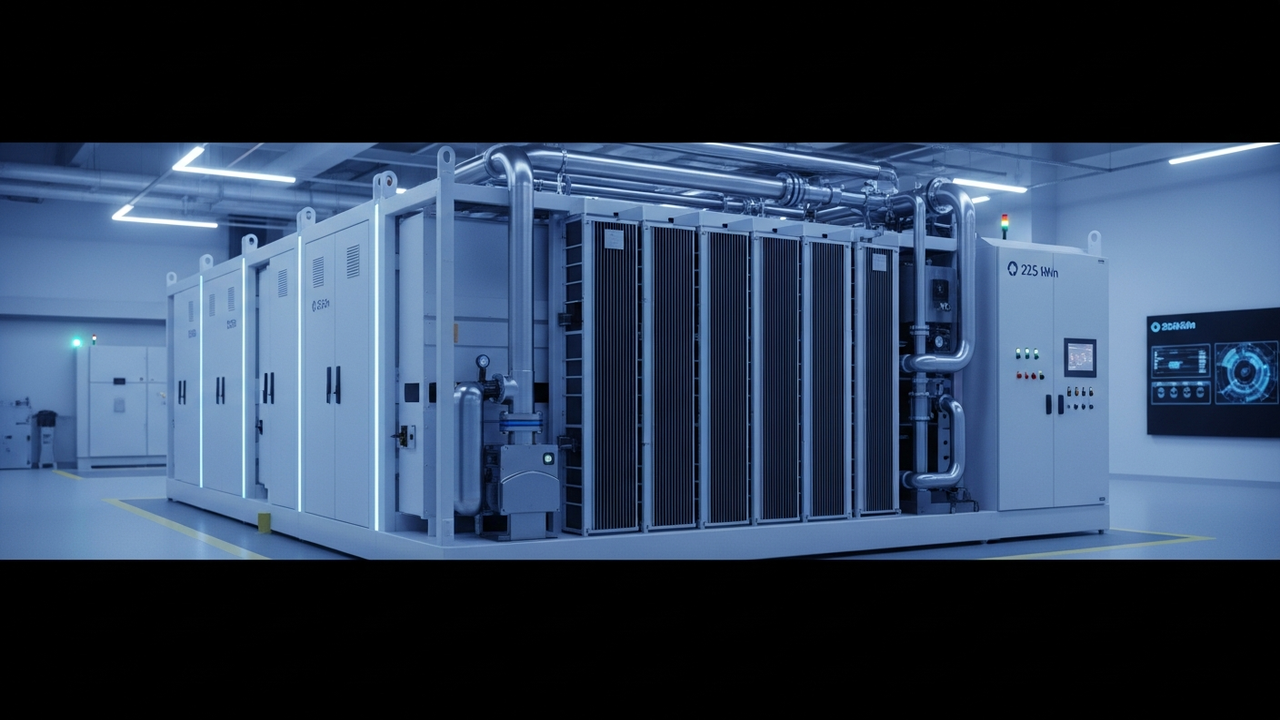
Bonnen Battery has launched a 225 kWh liquid-cooled sodium-ion battery energy storage system (BESS) designed for commercial and industrial (C&I) applications. This all-in-one outdoor cabinet system significantly reduces dependency on critical minerals like lithium, nickel, and cobalt, thereby mitigating supply chain risks and costs. A standout feature is its exceptional low-temperature performance, maintaining over 85% capacity even at -40°C, a notable improvement over conventional lithium iron phosphate (LFP) batteries.
Technical Details
The 225 kWh BESS integrates a liquid cooling system for effective thermal management, ensuring stable operation across a wide range of ambient temperatures. Leveraging abundant and inexpensive sodium, the battery cells achieve a 20-30% reduction in raw material costs compared to LFP cells. Optimized electrolyte and cell structures contribute to an excellent safety profile and robust long-term operation, making it a reliable energy storage solution even under challenging environmental conditions. This makes it particularly suitable for stationary storage where cost-effectiveness and durability are prioritized over ultra-high energy density.
Background & Context
The energy storage market is expanding rapidly, driven by the increasing integration of renewable energy sources and the demand for grid stabilization. However, the volatility of raw material prices and supply insecurities associated with lithium-ion batteries pose challenges to sustainable growth. Sodium-ion batteries have emerged as a promising alternative, attracting significant attention, especially in the C&I sector, for their balanced approach to cost efficiency and environmental sustainability. Bonnen Battery’s system directly addresses these market needs, offering a flexible and robust option for diverse energy storage requirements.
Strategic Significance & Outlook
Bonnen Battery’s 225 kWh sodium-ion BESS is expected to accelerate the adoption of sodium-ion batteries in the C&I sector. Its superior low-temperature performance and cost advantages will provide a competitive edge, particularly in colder climates and price-sensitive markets. In the future, this technology could be scaled up for larger grid storage applications and deployed across specific industrial sectors. This advancement contributes to the diversification and resilience of the global energy storage infrastructure, further facilitating the transition to renewable energy sources.
Get our weekly technology intelligence — free
Receive an infographic that lets you judge at a glance whether each field’s analysis report is worth reading.
Subscribe Free — Weekly Tech Intelligence
By subscribing, you’ll receive Troy-Technical’s weekly technology intelligence newsletter.
- Your email and selected fields are used only to deliver the newsletter.
- We never share your information with third parties.
- You can unsubscribe anytime via the link in each email.
See our Privacy Policy for details.
Takes about a minute · Unsubscribe anytime