Key Findings
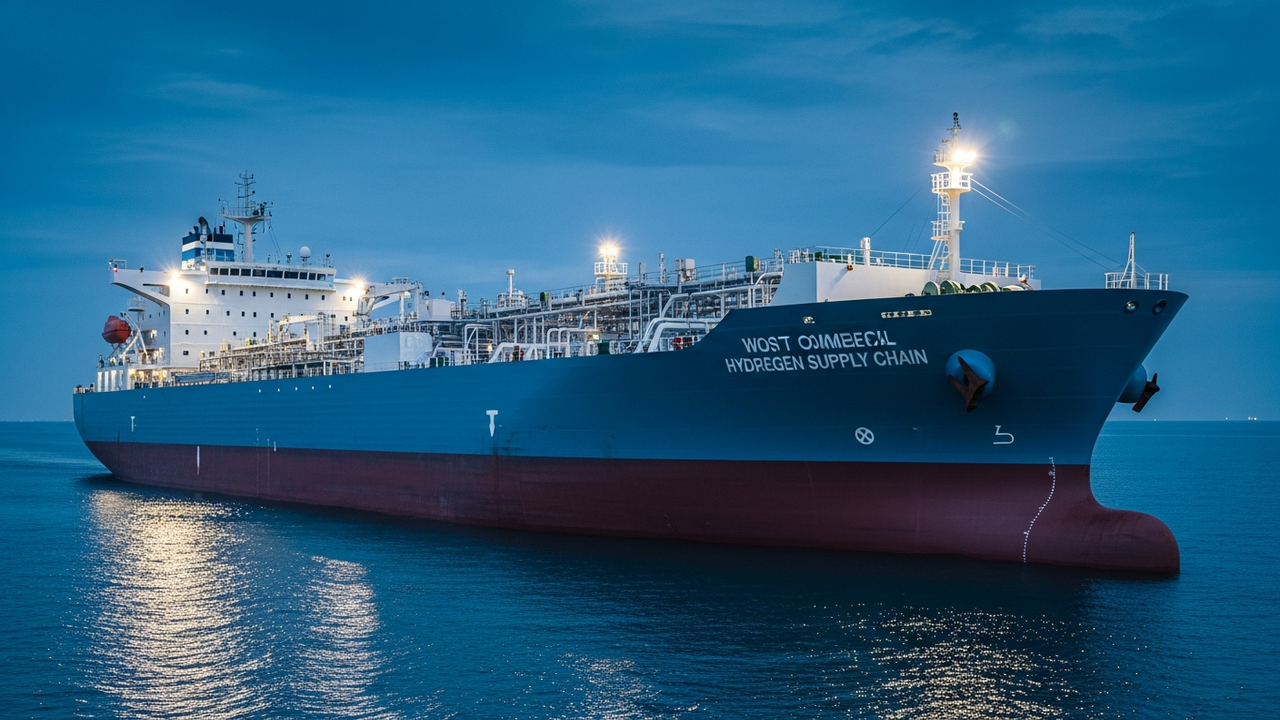
Japan has embarked on the ambitious development of the world’s first integrated commercial liquid hydrogen supply chain, backed by a substantial national investment program totaling $2.7 billion. Central to this pioneering initiative is the construction of the world’s largest liquid hydrogen carrier by Kawasaki Heavy Industries and the establishment of a liquid hydrogen import terminal with a 50,000m³ storage tank by Japan Hydrogen Energy in Kawasaki.
Technical and Infrastructure Details
- Liquid Hydrogen Carrier: The vessel being built by Kawasaki Heavy Industries will be the largest of its kind globally, enabling the mass transport of liquid hydrogen. Storing and transporting liquid hydrogen at extremely low temperatures (-253°C) necessitates advanced insulation technologies and materials. This carrier is designed to enhance efficiency and safety for long-distance, high-volume transportation.
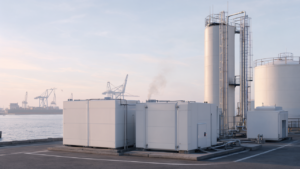
- Import Terminal and Storage Facilities: The import terminal developed by Japan Hydrogen Energy in Kawasaki will feature a massive 50,000m³ liquid hydrogen storage tank. This crucial infrastructure will ensure stable supply capacity and enable responsiveness to demand fluctuations.
- Integrated Supply Chain: This program encompasses the entire liquid hydrogen process, from production sites to consumption points. Specifically, it involves integrated investments in specialized carriers, import terminals, large-scale storage facilities, and pipeline networks connecting the supply chain. This comprehensive approach aims to establish an efficient and reliable liquid hydrogen supply system.
Background and Industry Context
Hydrogen, as a clean energy carrier that emits no carbon dioxide during combustion, is considered indispensable for achieving global decarbonization targets. Liquid hydrogen, in particular, is key to building international supply chains due to its high volumetric energy density and suitability for long-distance, high-volume transport. The Japanese government has positioned its hydrogen strategy as one of its top national priorities to bolster energy security and achieve its 2050 carbon neutrality goal. This $2.7 billion investment marks a decisive step in realizing this strategy and assuming a leading role in the international hydrogen economy.
Future Outlook
The establishment of this commercial liquid hydrogen supply chain is expected to have a profound impact not only on Japan but also on the global energy industry. With stable liquid hydrogen import and supply capabilities, hydrogen utilization in Japanese industries is set to gain momentum, accelerating decarbonization in sectors such as steel, chemicals, and power generation. Furthermore, this supply chain model could serve as a benchmark for other countries to follow, contributing to the development of international hydrogen trade. In the long term, continued innovation in liquefaction and transportation technologies, along with cost reductions, will be key to further propelling the widespread adoption of the hydrogen economy.
Get our weekly technology intelligence — free
Receive an infographic that lets you judge at a glance whether each field’s analysis report is worth reading.
Subscribe Free — Weekly Tech Intelligence
By subscribing, you’ll receive Troy-Technical’s weekly technology intelligence newsletter.
- Your email and selected fields are used only to deliver the newsletter.
- We never share your information with third parties.
- You can unsubscribe anytime via the link in each email.
See our Privacy Policy for details.
Takes about a minute · Unsubscribe anytime