Background
In recent years, geopolitical tensions, fluctuating trade policies, and unforeseen events such as the COVID-19 pandemic have profoundly impacted global supply chains. As a result, pharmaceutical companies have been compelled to re-evaluate their procurement strategies and build more robust and predictable manufacturing ecosystems. Governments worldwide are also promoting policies to strengthen domestic manufacturing capabilities and diversify supply chains.
Key Findings
Geopolitical factors are significantly influencing procurement strategies in global biopharmaceutical manufacturing, accelerating the shift towards “qualified capacity” and regionally decentralized manufacturing sites. This movement aims to enhance supply chain resilience and mitigate future disruption risks, with companies like Cellares responding through an Integrated Development and Manufacturing Organization (IDMO) smart factory model.
This evolving landscape is characterized by several critical trends:
- Focus on Qualified Capacity: Biopharmaceutical manufacturing demands highly specialized expertise and stringent regulatory compliance. Consequently, there is growing demand for CDMOs (Contract Development and Manufacturing Organizations) that possess proven technical capabilities and track records, rather than merely low-cost locations. This reflects an industry trend prioritizing quality, compliance, and supply reliability above all else.
- Regional Decentralization and Supply Chain Redundancy: Experiences from international instability and pandemics have highlighted the inherent risks of concentrating manufacturing in a single location. Therefore, companies are actively distributing manufacturing sites across multiple regions and establishing supply chain redundancy to mitigate geopolitical and other disruptions, ensuring stable supply.
- Strategic Industry Responses:
- AGC Biologics and Pyramid Pharma Services Partnership: AGC Biologics has partnered with Pyramid Pharma Services in the U.S. to offer integrated manufacturing services, spanning drug substance (DS) production to sterile fill/finish. This comprehensive, integrated approach streamlines supplier management and enhances overall efficiency.
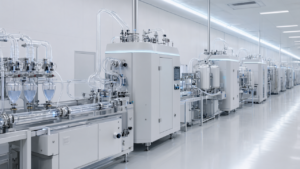
- Cellares’ IDMO Smart Factory Model: Cellares is implementing a strategy to establish IDMO (Integrated Development and Manufacturing Organization) smart factories with localized production capabilities in various regions. This model not only facilitates rapid responses to specific regional needs but also significantly enhances the flexibility and resilience of the entire global manufacturing network. These smart factories leverage advanced automation, data analytics, and AI to maximize manufacturing efficiency, quality control, and predictability.
- Emphasis on Proximity: Locating manufacturing sites closer to key markets and end-customers yields multiple benefits, including reduced logistics costs, shorter lead times, and quicker problem resolution. This proximity is particularly crucial for highly time-sensitive products, such as cell and gene therapies, where rapid delivery can be critical to patient outcomes.
Looking ahead, the restructuring of biomanufacturing driven by geopolitical factors is expected to remain an ongoing and accelerating trend. Demand for technologically “qualified” CDMOs will likely further increase, and regionally decentralized manufacturing networks could become the new industry standard. Advanced IDMO models leveraging automation and AI, exemplified by Cellares’, are poised to become major drivers of this new manufacturing paradigm, making the global supply of biopharmaceuticals safer, more efficient, and more reliable. This strategic shift is ultimately expected to improve patient access to vital medicines and contribute to a more stable global pharmaceutical supply chain.
Get our weekly technology intelligence — free
Receive an infographic that lets you judge at a glance whether each field’s analysis report is worth reading.
Subscribe Free — Weekly Tech Intelligence
By subscribing, you’ll receive Troy-Technical’s weekly technology intelligence newsletter.
- Your email and selected fields are used only to deliver the newsletter.
- We never share your information with third parties.
- You can unsubscribe anytime via the link in each email.
See our Privacy Policy for details.
Takes about a minute · Unsubscribe anytime