Background
The manufacturing of virus-like particles (VLPs) is paramount for ensuring a consistent supply of vaccines, mitigating manufacturing costs, and enhancing the safety and efficacy of gene therapy vectors. Conventional VLP manufacturing processes have historically grappled with inherent complexities, suboptimal yields, and formidable scale-up challenges. Consequently, the development of advanced cell lines, such as HEK 293-F, alongside optimized culture methodologies, is indispensable for surmounting these hurdles and substantially boosting biopharmaceutical production efficiency.
Key Findings
Experimental findings unequivocally demonstrate that transient transfection, employing the HEK 293-F cell line, offers a highly efficient pathway for the large-scale production of human papillomavirus (HPV) type 16 L1/L2 chimeric virus-like particles (VLPs). Specifically, by leveraging HEK 293-F cells—which are uniquely optimized for suspension culture within bioreactor systems—researchers achieved efficient, high-throughput manufacturing of recombinant HPV capsid proteins. This innovation marks a pivotal step forward in both vaccine development and the manufacturing of advanced gene therapy vectors.
Technical Deep Dive
- Importance of HPV VLPs: HPV VLPs serve as the crucial active pharmaceutical ingredient (API) in vaccines targeting human papillomavirus, the primary causative agent of cervical cancer. Enhancing their manufacturing efficiency is therefore paramount for global public health initiatives. Beyond vaccination, VLPs are also garnering significant interest as inherently safe and versatile gene delivery systems.
- Advantages of the HEK 293-F Cell Line: In contrast to the widely used HEK 293-T cells, the HEK 293-F cell line presents several distinct advantages for bioproduction:
- Adaptation to Suspension Culture: HEK 293-F cells are engineered for robust proliferation in suspension, circumventing the surface area limitations inherent in traditional adherent cultures. This makes them exceptionally well-suited for large-scale bioreactor operations, facilitating high cell densities and maximizing production throughput.
- High Transfection Efficiency: The cell line exhibits superior DNA introduction efficiency in transient transfection protocols, enabling rapid and high-yield production of target recombinant proteins.
- Recombinant Protein Production Capacity: HEK 293-F cells possess the intrinsic capability to efficiently synthesize complex recombinant proteins, such as the HPV capsid proteins L1/L2, ensuring correct folding and assembly crucial for VLP formation.
- Transient Co-transfection Methodology: The production of HPV VLPs leveraged a transient co-transfection approach, which involves the simultaneous introduction of multiple plasmid DNAs encoding the L1 and L2 chimeric proteins directly into HEK 293-F cells. This method offers significant time advantages over establishing stable cell lines and is particularly effective for concurrent expression of multiple genes.
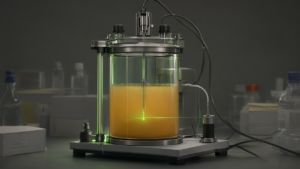
- Large-Scale Production in Bioreactors: The cultivation of suspension-adapted HEK 293-F cells within precisely controlled bioreactor environments, such as stirred-tank bioreactors, enables stringent regulation of critical culture parameters (e.g., pH, dissolved oxygen, temperature). This precise control is instrumental in achieving consistently high VLP yields at industrial scale.
Future Implications
The large-scale, high-efficiency HPV VLP production technology, as demonstrated in this study using HEK 293-F cells, holds substantial promise for broader application in the manufacturing of other VLP-based vaccines and gene therapy vectors. Continued optimization and subsequent commercial-scale deployment of this advanced methodology will not only foster the availability of safer and more affordable vaccines but also accelerate the widespread adoption of gene therapy. Critically, this innovation is poised to significantly enhance the accessibility of HPV vaccines, particularly within low- and middle-income countries.
Source: https://www.mdpi.com/1422-0067/27/15/6968
Get our weekly technology intelligence — free
Receive an infographic that lets you judge at a glance whether each field’s analysis report is worth reading.
Subscribe Free — Weekly Tech Intelligence
By subscribing, you’ll receive Troy-Technical’s weekly technology intelligence newsletter.
- Your email and selected fields are used only to deliver the newsletter.
- We never share your information with third parties.
- You can unsubscribe anytime via the link in each email.
See our Privacy Policy for details.
Takes about a minute · Unsubscribe anytime