Key Findings
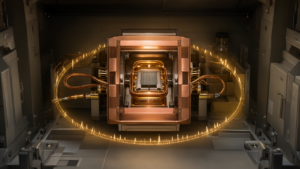
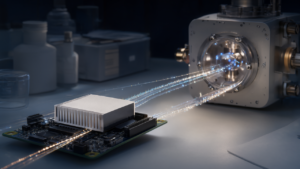
Hitachi, Ltd. has announced its intention to fully leverage Intel’s cutting-edge 18A process technology for the full-scale development of mass production for silicon quantum computers, following its selection for a NEDO subsidy program. This project represents a groundbreaking step in manufacturing towards the future realization of large-scale quantum computers.
Technical / Clinical Details
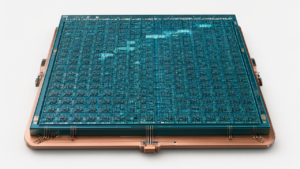
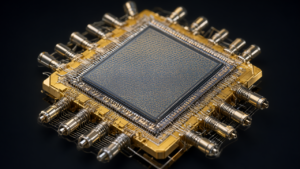
The project’s objective is to establish fundamental technologies for the design, manufacturing, and implementation of quantum bit chips for 100-qubit class and ultimately 1000-qubit class silicon quantum computer systems. Intel’s 18A process is a state-of-the-art semiconductor manufacturing technology featuring atomic layer deposition (ALD) high-k/metal gate process and the next-generation Gate-All-Around (GAA) transistor structure, ‘RibbonFET.’ By utilizing this, Hitachi aims to achieve extremely fine and high-density qubit structures, balancing stability and scalability. Hitachi will integrate Intel’s manufacturing technology expertise with the quantum technology research expertise of the National Institute of Advanced Industrial Science and Technology (AIST) to accelerate Japan’s quantum computer development. This research scope includes realizing silicon qubits capable of operating at higher temperatures and technologies for integrating multiple qubit chips.
Background & Context
Silicon quantum computers are considered a strong candidate for next-generation quantum computers due to their high compatibility with existing semiconductor manufacturing technologies and significant potential for large-scale integration. However, manufacturing an increasing number of qubits while maintaining high fidelity and stability has remained a major technical challenge. Intel has also been actively investing in qubit development, and this collaboration aims to overcome this challenge by merging Intel’s expertise in semiconductor manufacturing with Hitachi’s commitment to quantum technology. NEDO’s subsidy program is a Japanese national strategy to strongly promote the industrial application and competitiveness of quantum technology, and Hitachi’s initiative forms a core part of this strategy.
Strategic Significance & Outlook
Hitachi’s initiative to mass-produce silicon quantum computers using Intel’s 18A process will significantly contribute to the early realization of practical large-scale quantum computers. If 1000-qubit class systems are achieved, they will be capable of solving advanced computational problems intractable for current classical computers in fields such as drug discovery, new material development, financial modeling, and artificial intelligence. This technology holds the potential to reduce the manufacturing cost of quantum computers and promote their widespread adoption across various industries. Furthermore, it is expected to help establish Japan’s technological superiority in quantum hardware manufacturing within the global quantum technology race. This project will play a crucial role in the development of Japan’s quantum ecosystem and contribute to the advancement of international quantum technology.
Source: https://monoist.itmedia.co.jp/mn/articles/2608/06/news043.html
Get our weekly technology intelligence — free
Receive an infographic that lets you judge at a glance whether each field’s analysis report is worth reading.
Subscribe Free — Weekly Tech Intelligence
By subscribing, you’ll receive Troy-Technical’s weekly technology intelligence newsletter.
- Your email and selected fields are used only to deliver the newsletter.
- We never share your information with third parties.
- You can unsubscribe anytime via the link in each email.
See our Privacy Policy for details.
Takes about a minute · Unsubscribe anytime