Key Findings
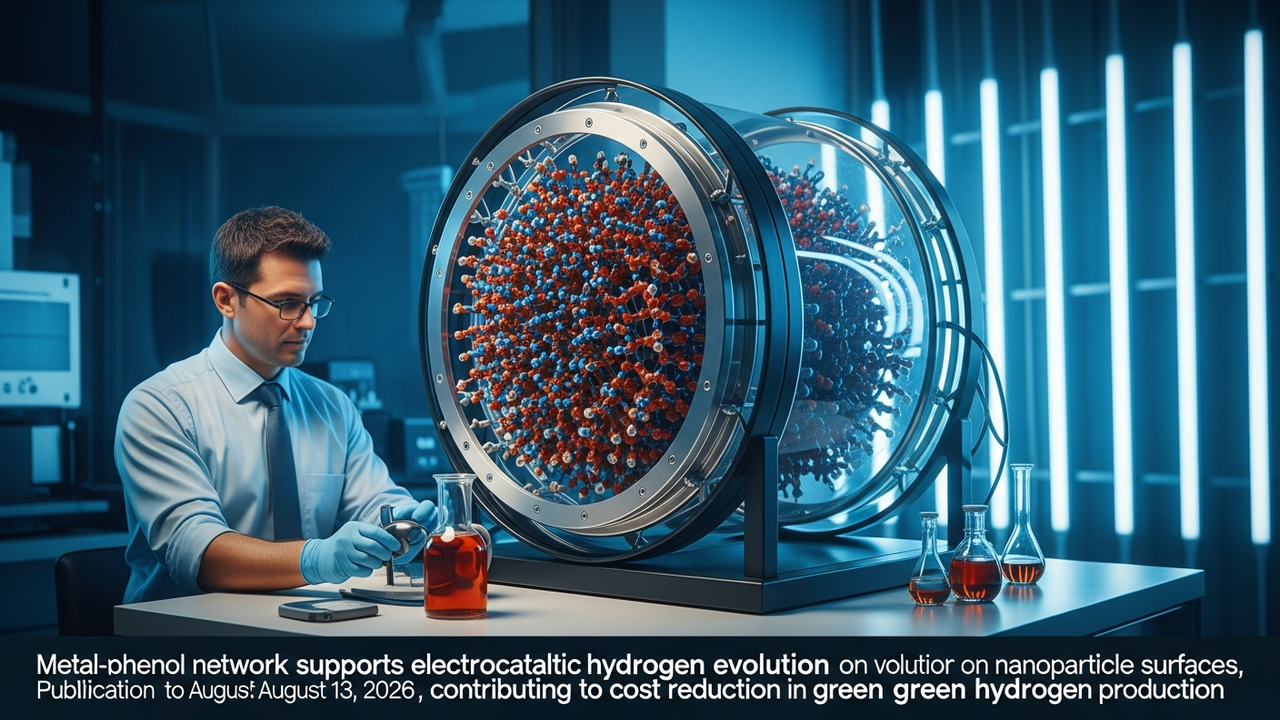
Researchers have achieved highly efficient hydrogen generation through the hydrogen evolution reaction (HER) using core-shell nanoparticles coated with metal-phenolic networks (MPNs). This innovative approach demonstrates that MPNs selectively enhance substrate access to the catalytic nanoparticle surface while simultaneously reducing contact resistance, leading to superior catalytic activity and stability. This discovery marks a critical step towards designing more affordable and high-performance electrocatalysts, which are essential for reducing the cost of green hydrogen production.
Technical Details
In this study, core-shell nanoparticles were developed, featuring inexpensive non-precious metal centers (e.g., copper or nickel) coated with a porous and biocompatible MPN layer. MPNs are polymeric networks formed by the self-assembly of metal ions and phenolic ligands, creating a uniform and robust layer on the nanoparticle surface. During the HER process, the MPN layer acts as a ‘selective barrier’ that facilitates efficient access of reactant molecules, such as water and protons, to the catalytic active sites, while simultaneously preventing the adsorption of impurities that could passivate the catalyst surface. Furthermore, MPNs reduce the interfacial resistance between the catalytic nanoparticles and the electrode, streamlining electron transfer and thereby improving overall catalytic efficiency. This significantly lowers the overpotential, allowing hydrogen to be generated with less energy input.
Background and Industry Context
Green hydrogen, produced by electrolyzing water using electricity from renewable energy sources, is globally recognized as a crucial energy carrier for achieving a decarbonized society. However, one of the primary challenges in current green hydrogen production is the high energy consumption in the electrolysis process and the reliance on expensive noble metal catalysts (such as platinum). Reducing overpotential is paramount for improving the energy efficiency of electrolysis and lowering operational costs. Nanoparticle catalysts hold promise as inexpensive catalyst materials due to their high surface area, tunability, and mechanistic interpretability, but optimizing their stability and selectivity has been a challenge. The MPN-based approach offers a promising solution to these issues.
Strategic Significance and Outlook
The development of these MPN-coated nanocatalysts significantly enhances the commercial viability of green hydrogen production. The advent of inexpensive catalysts capable of substantially reducing overpotential directly translates to lower hydrogen production costs, which will accelerate the establishment of a hydrogen economy. Going forward, researchers will focus on further optimizing the composition and structure of MPNs and evaluating their performance under various reaction conditions and at larger scales. Additionally, this MPN design principle could be applied to other electrochemical reactions, such as the oxygen reduction reaction (ORR) in fuel cells and the carbon dioxide reduction reaction (CO2RR). In the long term, this technology is expected to play an indispensable role in the advancement of clean energy technologies and contribute significantly to building a sustainable future society.
Get our weekly technology intelligence — free
Receive an infographic that lets you judge at a glance whether each field’s analysis report is worth reading.
Subscribe Free — Weekly Tech Intelligence
By subscribing, you’ll receive Troy-Technical’s weekly technology intelligence newsletter.
- Your email and selected fields are used only to deliver the newsletter.
- We never share your information with third parties.
- You can unsubscribe anytime via the link in each email.
See our Privacy Policy for details.
Takes about a minute · Unsubscribe anytime