Key Findings
An analysis by American Century Investments reveals that the space economy is rapidly diversifying and growing beyond the rocket launch sector, which has been significantly influenced by pioneers like SpaceX. This expansion is driven by burgeoning opportunities in satellite communications, Earth observation data services, and advanced biotechnology applications leveraging microgravity environments, creating new and attractive avenues for investors.
Technical / Clinical Details
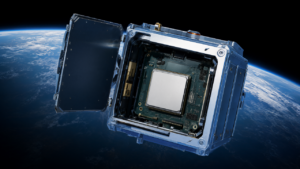
The space environment, particularly microgravity, offers unique physical advantages unattainable on Earth. For instance, microgravity suppresses convection and sedimentation, allowing for the growth of larger, more uniform, and higher-quality protein crystals with fewer defects. This is crucial for pharmaceutical development, enabling precise structural analysis of target proteins, which is essential for designing and optimizing novel drugs. Concrete commercial applications are emerging, such as Varda Space Industries demonstrating in-space pharmaceutical manufacturing and Merck exploring microgravity crystallization for its leading anti-cancer drug, Keytruda. Furthermore, reusable rocket technology plays a pivotal role in democratizing access to space by drastically reducing launch costs. While SpaceX’s Falcon series pioneered this, next-generation fully reusable systems like Blue Origin’s New Glenn and Rocket Lab’s Neutron are under development. Their operationalization is expected to lead to further cost reductions and increased launch frequency.
Background & Context
Over the past decade, the advent of reusable rockets has fundamentally reshaped the space industry. The lowered barrier to launch costs has spurred the creation of numerous new business models, including small satellite constellations, space tourism, in-orbit manufacturing, and space data services. This trend marks a clear shift from government-led space development to a “New Space” era where commercial entities drive innovation. Investors are increasingly looking beyond traditional defense and government contracts towards these diverse commercial applications, recognizing the evolution of the space industry into a more resilient and growth-oriented sector less dependent on any single company.
Strategic Significance & Outlook
In-space manufacturing and research in microgravity hold the potential to yield revolutionary products across various sectors, including biopharmaceuticals, advanced materials, and optical components. Investments in orbital manufacturing facilities and research platforms are expected to accelerate, leading to the commercial-scale production of novel materials and drugs with properties unobtainable on Earth. Further reductions in launch costs and increased access opportunities will facilitate the expansion of space infrastructure and the provision of diverse services, sustaining the overall growth of the space economy. The development of supportive regulatory frameworks and international cooperation will also be crucial in fostering this continued growth.
Source: https://www.americancentury.com/insights/future-of-space-bigger-than-spacex
Get our weekly technology intelligence — free
Receive an infographic that lets you judge at a glance whether each field’s analysis report is worth reading.
Subscribe Free — Weekly Tech Intelligence
By subscribing, you’ll receive Troy-Technical’s weekly technology intelligence newsletter.
- Your email and selected fields are used only to deliver the newsletter.
- We never share your information with third parties.
- You can unsubscribe anytime via the link in each email.
See our Privacy Policy for details.
Takes about a minute · Unsubscribe anytime