The paradigm for data processing in space is undergoing a rapid and fundamental transformation. While earlier discussions centered on the creation of large-scale orbital data centers, the focus has now shifted to more practical and distributed approaches: onboard processing, storage, and communication directly within satellites. This significant change is propelled by an explosion in data generated from high-performance software-defined satellites and the critical need for real-time AI inference in orbit.
Technological Drivers and Shift from Terrestrial Models
Historically, space missions involved collecting raw data with satellites, transmitting it to Earth, and then processing it in ground-based data centers. However, next-generation Earth observation, communication, and scientific missions are now generating terabytes, and even petabytes, of data. Downlinking all this voluminous data to Earth is becoming inefficient due to bandwidth limitations, latency, and processing costs. Furthermore, missions such as military reconnaissance, disaster monitoring, and autonomous navigation demand immediate or near-real-time analysis and response to collected data.
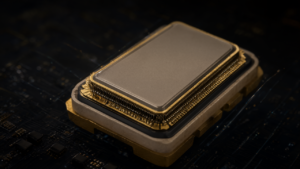
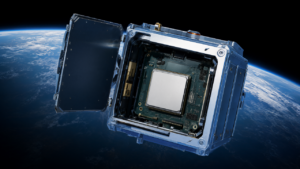
To meet these escalating demands, companies are actively developing solutions that integrate advanced processing capabilities directly into satellites. This includes small, power-efficient computing modules equipped with AI accelerators and Graphics Processing Units (GPUs). These modules require robust hardware and software specifically designed to withstand the harsh space environment, particularly high levels of radiation. Radiation-hardened processors, memory, and error-correcting code (ECC) technologies are becoming indispensable components.
Advantages of Onboard AI Inference
Implementing AI inference capabilities directly on satellites offers several crucial advantages:
- **Real-time Processing**: Eliminates communication latency with Earth, allowing satellites to make autonomous decisions and react swiftly, which is vital for time-sensitive missions.
- **Data Efficiency**: Extracts and compresses only the most relevant information from raw data before transmission to Earth, significantly reducing downlink bandwidth consumption.
- **Mission Autonomy**: Enables satellites to execute complex tasks without continuous ground control intervention, leading to lower operational costs and increased mission flexibility.
- **Enhanced Security**: A substantial portion of sensitive data is processed within the satellite, reducing the risk of interception during transmission to Earth.
Future Outlook
This shift towards onboard computing and AI inference is fostering a new wave of innovation within the space industry. Numerous startups and established aerospace companies are investing in and developing technologies such as radiation-hardened AI chips, software-defined satellite architectures, and in-orbit data processing services. In the future, as these technologies advance, it is expected that satellites will achieve even greater autonomy, becoming ‘smart satellites’ capable of performing missions independently from Earth control. The enhancement of in-space data processing capabilities is set to broaden the scope of all space activities, from exploration to Earth observation and communication, elevating humanity’s utilization of space to an unprecedented level.
Get our weekly technology intelligence — free
Receive an infographic that lets you judge at a glance whether each field’s analysis report is worth reading.
Subscribe Free — Weekly Tech Intelligence
By subscribing, you’ll receive Troy-Technical’s weekly technology intelligence newsletter.
- Your email and selected fields are used only to deliver the newsletter.
- We never share your information with third parties.
- You can unsubscribe anytime via the link in each email.
See our Privacy Policy for details.
Takes about a minute · Unsubscribe anytime