Key Findings
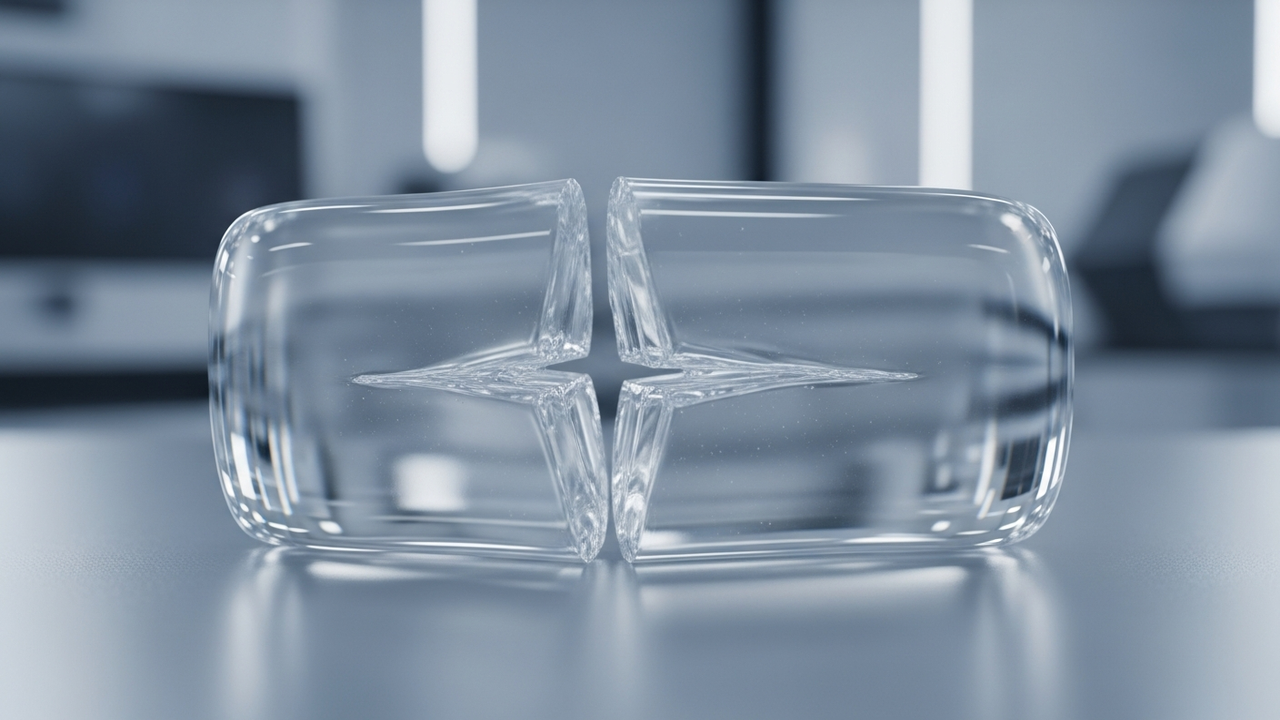
Researchers in Japan have successfully developed a transparent self-healing polymer that can fully repair itself at room temperature, even after being completely severed into two distinct pieces. This groundbreaking material, based on polyether-thioureas, exhibits a rigidity comparable to commercial glass while recovering over 95% of its original toughness within a single day through a simple pressing action.
Technical / Clinical Details
The remarkable self-healing capability of this polymer is attributed to the presence of reversible hydrogen bonds within its polyether-thiourea structure. When the material is fractured, these bonds break, but upon bringing the two broken surfaces into contact at room temperature, the hydrogen bonds spontaneously re-form, effectively stitching the material back together. This mechanism eliminates the need for external stimuli such as heat or light, which are often required by other self-healing materials. The polymer’s simultaneous achievement of high transparency and robust mechanical properties represents a significant advance, overcoming the typical trade-offs seen in previous generations of self-healing materials. The detailed repair mechanism has been elucidated at the molecular level, demonstrating the dynamic rearrangement of these crucial hydrogen bonds.
Background & Context
Self-healing materials are gaining significant attention for their potential to extend product lifespans, reduce waste, and enhance safety, thereby contributing to a more sustainable society. Transparent self-healing materials with superior mechanical properties are particularly sought after for applications in consumer electronics like smartphone screens, automotive components such as windshields and bumpers, and even aerospace parts, where both clarity and durability are paramount. Traditionally, damaged glass or plastics necessitate costly replacements, but self-healing technologies offer a compelling solution for cost reduction and increased user convenience.
Strategic Significance & Outlook
The development of this transparent self-healing polymer marks a substantial step toward realizing the long-sought goal of “unbreakable glass.” Its immediate impact could be felt in the electronics sector, where it could resolve the prevalent issue of cracked or scratched screens, reducing repair costs and extending device longevity. In the automotive and aerospace industries, it promises to enhance safety features and simplify maintenance procedures. Future research will focus on optimizing the material’s long-term durability, scaling up manufacturing processes, and evaluating its performance under a wider range of environmental conditions. These advancements will be critical for enabling the widespread practical application of this transformative technology.
Get our weekly technology intelligence — free
Receive an infographic that lets you judge at a glance whether each field’s analysis report is worth reading.
Subscribe Free — Weekly Tech Intelligence
By subscribing, you’ll receive Troy-Technical’s weekly technology intelligence newsletter.
- Your email and selected fields are used only to deliver the newsletter.
- We never share your information with third parties.
- You can unsubscribe anytime via the link in each email.
See our Privacy Policy for details.
Takes about a minute · Unsubscribe anytime