Key Findings
Scientists at Penn State University have achieved a significant breakthrough with the development of a flexible thermoelectric generator (TEG) designed to convert waste heat from sources such as cars and factories directly into usable electricity. This innovative technology holds the potential to improve fuel efficiency by 5-10%, marking a substantial step forward in energy recovery and sustainability.
Technical / Clinical Details
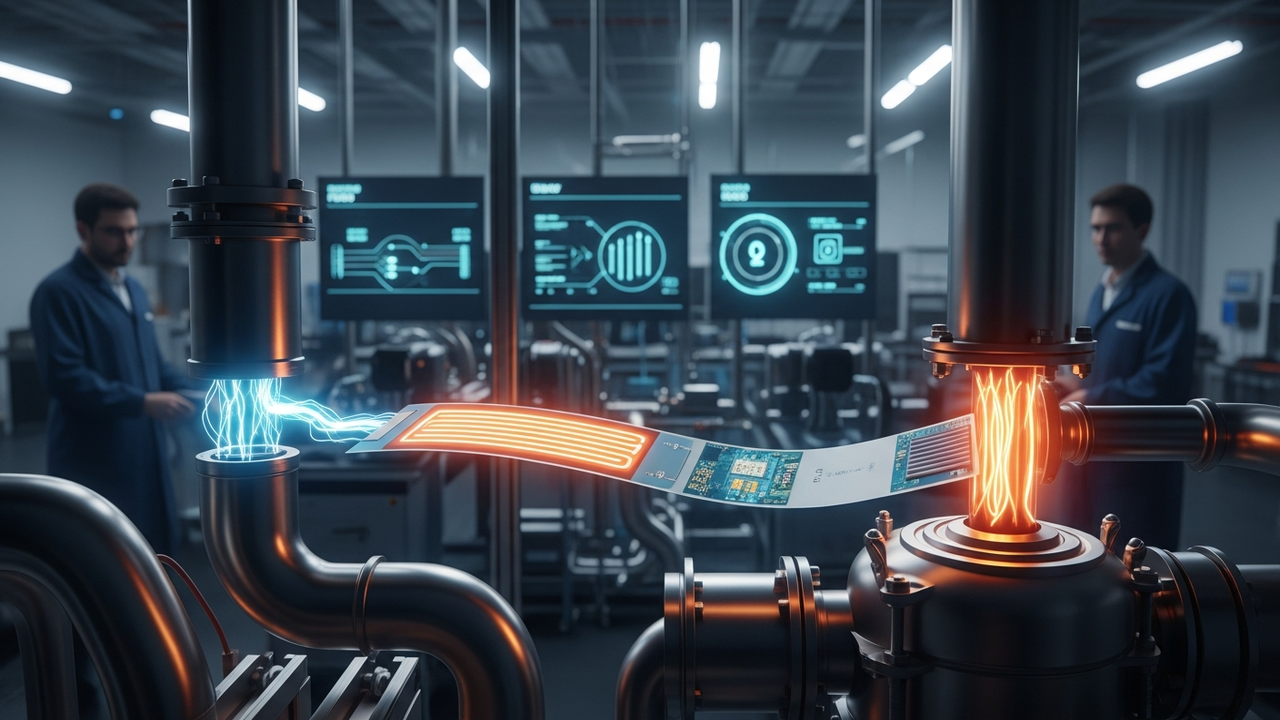
The flexible TEG leverages the Seebeck effect to generate electricity from a temperature gradient. Unlike many conventional, rigid thermoelectric materials, this new flexible design can conform easily to curved or irregular surfaces, making it ideal for integration with previously inaccessible waste heat sources like car exhaust pipes or industrial pipelines. In a separate advancement, researchers at Queensland University of Technology reported a record-breaking 13% efficiency in waste heat conversion by incorporating manganese into silver copper telluride. This represents a substantial improvement over existing thermoelectric materials, opening new avenues for high-performance thermal energy harvesting. Furthermore, a team from Stanford University and MIT pioneered a novel method for low-temperature waste-heat conversion: they demonstrated that an uncharged battery, when heated by waste heat, then charged, and subsequently cooled, can effectively produce electricity.
Background & Context
Globally, enormous amounts of waste heat are generated from industrial activities and transportation, much of which is released into the atmosphere unutilized. This represents not only a significant energy loss but also a contributor to environmental issues. Thermoelectric generator technology, which converts heat directly into electricity, has long been a promising solution to this challenge. Reducing reliance on fossil fuels and building sustainable energy systems necessitates advancements in waste heat recovery technologies. Key attributes like flexibility, high efficiency, and the ability to convert low-grade heat are crucial for the widespread adoption and practical application of thermoelectric generators.
Strategic Significance & Outlook
These advancements in thermoelectric generation are poised to have a far-reaching impact across multiple sectors, including improved fuel efficiency in the automotive industry, enhanced energy recovery in industrial plants, and self-powering capabilities for wearable devices and IoT sensors. Penn State’s flexible TEG offers ease of integration into existing infrastructure due to its adaptable form factor. Queensland University of Technology’s high-efficiency materials will maximize power generation, while the novel battery-based system from Stanford and MIT enables power recovery from previously challenging low-temperature waste heat sources. As these technologies further integrate and mature, power generation from waste heat is expected to become a core technology within clean energy systems, increasing its importance in the global energy landscape.
Source: https://www.facebook.com/groups/1005778496594307/posts/2505719429933532/
Get our weekly technology intelligence — free
Receive an infographic that lets you judge at a glance whether each field’s analysis report is worth reading.
Subscribe Free — Weekly Tech Intelligence
By subscribing, you’ll receive Troy-Technical’s weekly technology intelligence newsletter.
- Your email and selected fields are used only to deliver the newsletter.
- We never share your information with third parties.
- You can unsubscribe anytime via the link in each email.
See our Privacy Policy for details.
Takes about a minute · Unsubscribe anytime