Key Findings
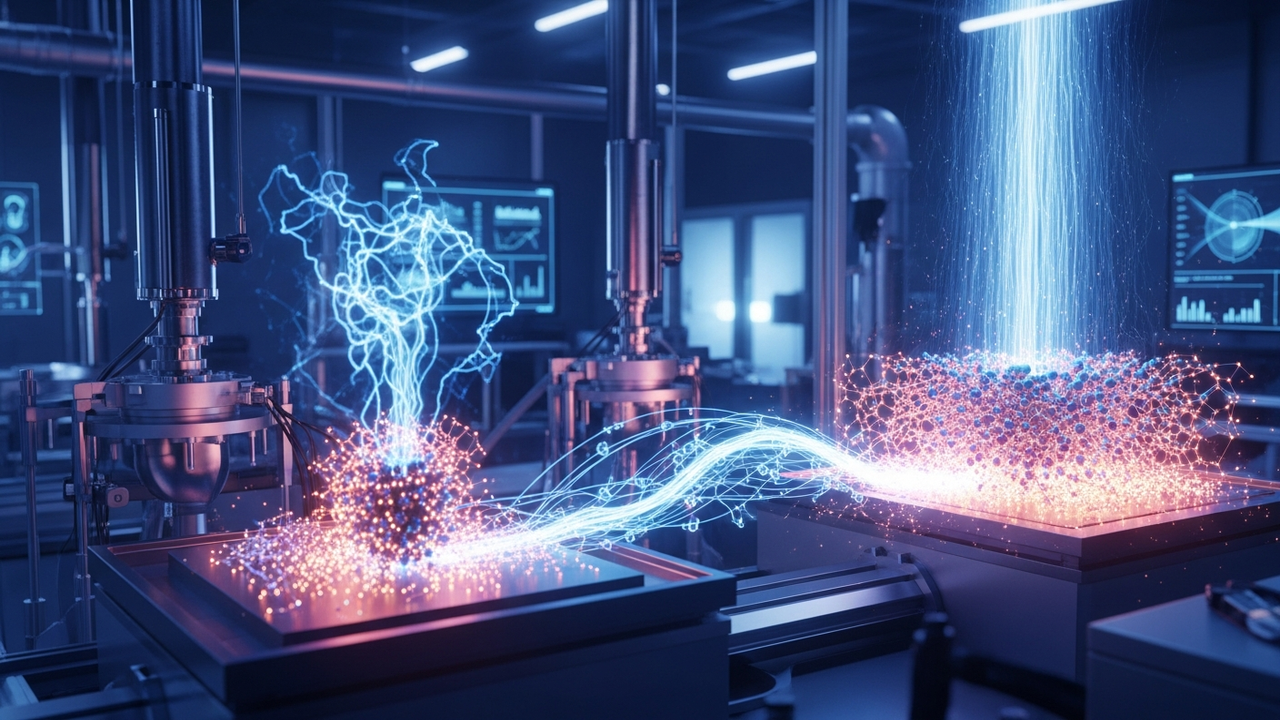
High-entropy alloy (HEA) nanomaterials are rapidly gaining recognition as exceptionally promising catalytic platforms for electrocatalytic multi-electron transfer reactions, which are indispensable for advancing clean energy conversion and chemical synthesis. These materials effectively overcome the inherent limitations of conventional catalysts by offering diverse local atomic environments, tunable electronic structures, and significantly enhanced structural stability, enabling flexible control over complex reaction pathways.
Technical / Clinical Details
The unique advantages of HEA nanomaterials stem from their composition, typically comprising five or more principal elements in near-equiatomic proportions, which creates a highly diverse local atomic environment at the nanoscale. This high-entropy state gives rise to distinct mechanisms such as the “sluggish diffusion effect,” “lattice distortion effect,” and “cocktail effect.” These effects enable precise tuning of the electronic state of catalytic active sites, thereby enhancing selectivity and efficiency for specific reaction pathways. For multi-electron transfer reactions like oxygen reduction (ORR) or hydrogen evolution (HER), HEAs can dramatically improve reaction kinetics by optimizing the adsorption energies of intermediates. Furthermore, the synergistic interaction among multiple metallic elements in HEA nanomaterials results in superior stability and corrosion resistance compared to single-element or binary alloy catalysts, ensuring long-term performance under harsh electrochemical conditions.
Background & Context
The progression of clean energy technologies, particularly fuel cells, water electrolysis, and CO2 reduction, critically relies on the development of highly efficient and durable electrocatalysts. However, existing catalysts, often noble-metal-based, are plagued by high costs, limited supply, and challenges related to activity and stability. The advent of HEA nanomaterials offers an innovative solution to these problems, facilitating a shift towards catalysts composed of cheaper, more abundant elements. This transition holds immense significance for the construction of sustainable energy systems globally.
Strategic Significance & Outlook
HEA nanomaterials possess the potential to be game-changers in the field of electrocatalysis. Future applications are anticipated in more complex multi-electron transfer reactions, such as nitrogen reduction (NRR) and alcohol oxidation. Research will increasingly focus on designing HEA compositions optimized for specific reactions, precise control over nanostructures, and the development of large-scale synthesis methods. This will accelerate the creation of next-generation catalysts balancing performance, durability, and cost-effectiveness for a wide range of devices, including fuel cells, water electrolyzers, and chemical sensors. This technology is expected to play a crucial role in achieving clean energy and sustainable chemical synthesis.
Source: https://pmc.ncbi.nlm.nih.gov/articles/PMC13218051/
Get our weekly technology intelligence — free
Receive an infographic that lets you judge at a glance whether each field’s analysis report is worth reading.
Subscribe Free — Weekly Tech Intelligence
By subscribing, you’ll receive Troy-Technical’s weekly technology intelligence newsletter.
- Your email and selected fields are used only to deliver the newsletter.
- We never share your information with third parties.
- You can unsubscribe anytime via the link in each email.
See our Privacy Policy for details.
Takes about a minute · Unsubscribe anytime