Key Findings
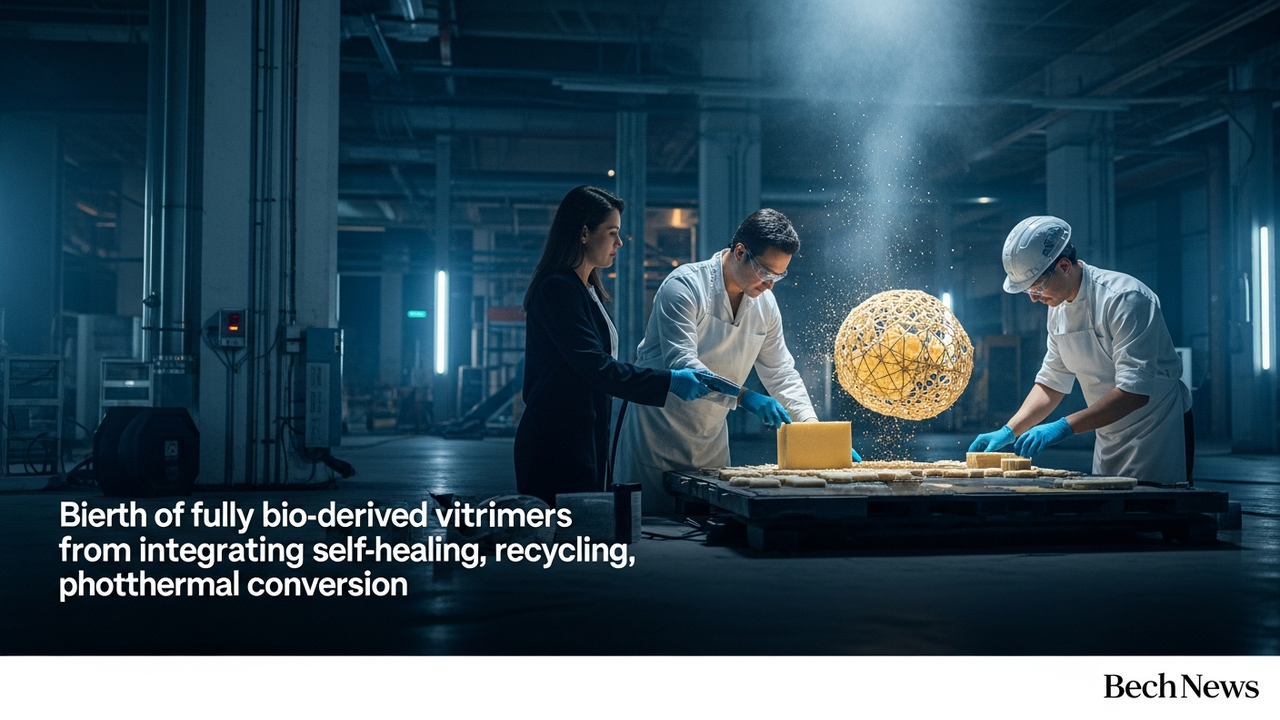
Researchers have successfully synthesized a fully bio-derived vitrimer from lignin, a major component of wood, and soybean oil. This groundbreaking material integrates robust mechanical properties with remarkable self-healing capabilities, excellent recyclability, and efficient photothermal conversion capacity, marking a significant advancement in sustainable materials science.
Technical / Clinical Details
The unique properties of this bio-derived vitrimer are governed by the cooperative exchange reactions of hydrogen and imine bonds within its molecular structure. The material demonstrates rapid self-healing, capable of repairing scratches within 10 minutes when heated to 80°C, showcasing high healing efficiency. Furthermore, it exhibits impressive recyclability, retaining approximately 90% of its original strength after undergoing five reprocessing cycles, which significantly extends material lifespan and contributes to waste reduction. Beyond its mechanical and restorative properties, the vitrimer also functions as an efficient photothermal coating for thermoelectric generation. It can absorb sunlight and convert it into heat, which can then be converted into electricity, demonstrating its potential for solar energy harvesting and its versatility as a multifunctional smart material.
Background & Context
The global push towards sustainable development has accelerated the search for bio-derived materials to replace fossil-fuel-based plastics. Lignin, an abundant byproduct of plant biomass, has traditionally faced limitations in high-value applications due to its complex structure, while soybean oil is another promising renewable resource. The combination of these two to form a vitrimer, endowed with “smart functions” like self-healing and recyclability, opens new avenues for achieving both sustainability and high performance in materials. This innovation addresses the challenges of conventional thermoplastics and thermosets, offering a material that supports a circular economy.
Strategic Significance & Outlook
This lignin and soybean oil-derived vitrimer holds vast potential for applications across numerous sectors, including packaging, automotive components, building materials, and electronic casings. Its photothermal conversion capacity, in particular, could contribute to improving solar panel efficiency and developing eco-friendly thermoelectric generation devices. Future efforts will focus on evaluating its durability under more extreme environmental conditions, developing large-scale manufacturing processes, and optimizing cost-effectiveness. This material has the potential to establish a new paradigm in the effective utilization of bio-derived resources and the design of sustainable, multifunctional smart materials, driving innovation for a greener future.
Get our weekly technology intelligence — free
Receive an infographic that lets you judge at a glance whether each field’s analysis report is worth reading.
Subscribe Free — Weekly Tech Intelligence
By subscribing, you’ll receive Troy-Technical’s weekly technology intelligence newsletter.
- Your email and selected fields are used only to deliver the newsletter.
- We never share your information with third parties.
- You can unsubscribe anytime via the link in each email.
See our Privacy Policy for details.
Takes about a minute · Unsubscribe anytime