Key Findings
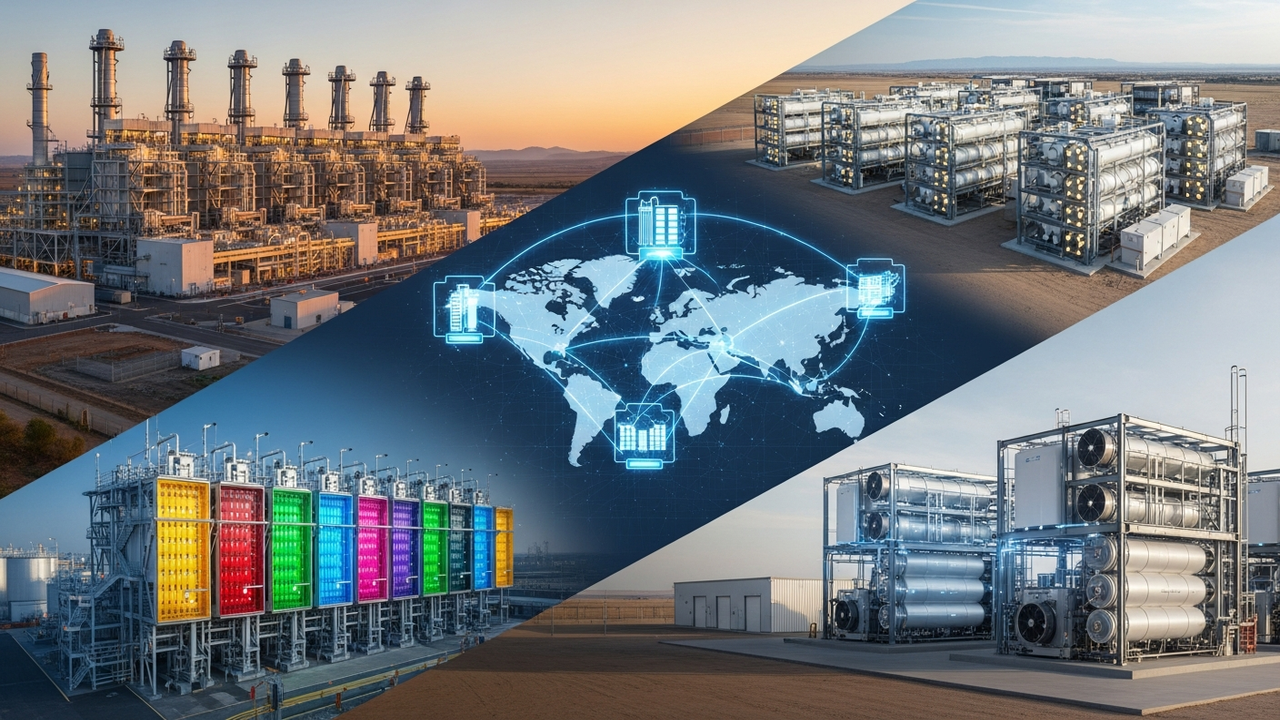
The year 2026 has witnessed a surge in the commercialization and deployment of diverse Long Duration Energy Storage (LDES) technologies. Notably, Delectrik Systems has deployed a 100 MWh vanadium redox flow battery (VRFB) at India’s Khavda Solar Park, while Airengy is actively evaluating a 2.5 GWh compressed-air energy storage (CAES) system in Denmark. Furthermore, China’s CATL has initiated mass production of its Naxtra sodium-ion batteries, and Syntropic Power, in partnership with UNIGRID, is rolling out 1 GWh of sodium-chromium-oxide storage across North America. These developments underscore a significant shift towards a broader array of chemistries and technical solutions entering the commercial phase.
Technical & Clinical Details
The article highlights progress in several key LDES technologies:
- Vanadium Redox Flow Batteries (VRFB): The 100 MWh VRFB deployed by Delectrik Systems at India’s Khavda Solar Park leverages the flow battery’s advantage of independent power and energy scaling, supporting large-scale renewable energy integration. VRFBs are notable for their non-flammability, long operational lifespan of 25-30 years, and minimal performance degradation over time.
- Compressed Air Energy Storage (CAES): Airengy’s 2.5 GWh CAES system under evaluation in Denmark demonstrates the potential for massive energy storage, contributing to grid stabilization. This technology, which compresses and stores air during energy surplus and releases it to generate power when needed, is a mature LDES solution with decades of operational history.
- Sodium-Ion Batteries (SIB): CATL’s commencement of mass production for its Naxtra sodium-ion batteries signals that SIBs, utilizing abundant and inexpensive sodium resources, are entering a full commercial phase. This paves the way for cost-effective grid-scale storage and EV applications.
- Sodium-Chromium-Oxide Storage: Syntropic Power and UNIGRID’s deployment of 1 GWh of sodium-chromium-oxide storage in North America indicates the emergence of novel battery chemistries in the market. This technology, potentially combining specific lithium-free materials, could offer unique performance profiles and cost advantages.
Each of these technologies brings distinct benefits, catering to specific market needs and applications, thereby enhancing the diversity of the LDES market.
Background & Context
The expansion of renewable energy generation introduces intermittency challenges to electricity grids, driving a global demand for LDES solutions. While conventional lithium-ion batteries excel in short to medium-duration storage, they present cost and sustainability hurdles for storage durations ranging from several hours to days, or even seasonally. Consequently, utilities and industries are actively seeking non-lithium and long-duration storage alternatives. These recent developments mark a crucial stage where LDES technologies transition from laboratories to large-scale commercial deployment, becoming indispensable for accelerating the global energy transition.
Strategic Significance & Outlook
The commercialization of diverse LDES technologies introduces new options for the energy storage market, enabling greater deployment of renewable energy sources. This will enhance grid stability, reduce reliance on fossil fuels, and help resolve the issue of energy curtailment. The ongoing innovation and deployment by companies like Delectrik Systems, Airengy, CATL, and Syntropic Power will accelerate the global trend towards building more robust and sustainable energy infrastructure. Ultimately, these advancements are expected to significantly contribute to reducing electricity costs, enhancing energy security, and achieving a decarbonized society.
Source: https://igrownews.com/battery-storage-technology-renewable-energy-2026/
Get our weekly technology intelligence — free
Receive an infographic that lets you judge at a glance whether each field’s analysis report is worth reading.
Subscribe Free — Weekly Tech Intelligence
By subscribing, you’ll receive Troy-Technical’s weekly technology intelligence newsletter.
- Your email and selected fields are used only to deliver the newsletter.
- We never share your information with third parties.
- You can unsubscribe anytime via the link in each email.
See our Privacy Policy for details.
Takes about a minute · Unsubscribe anytime